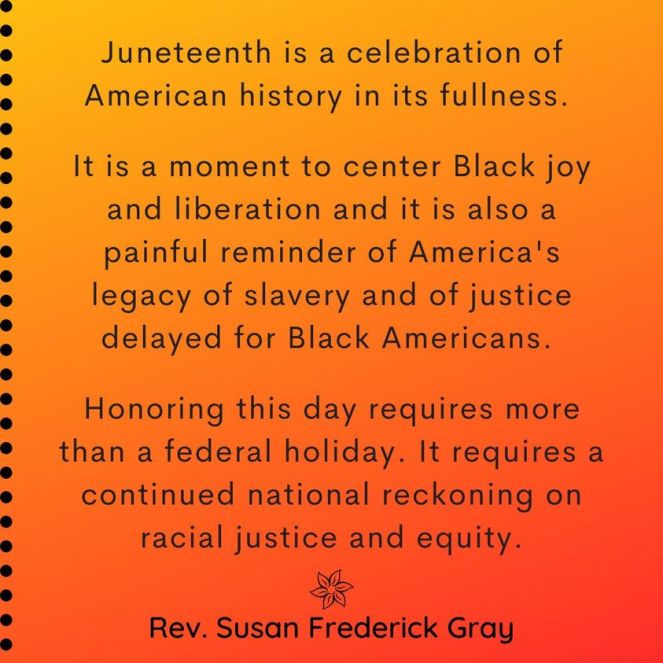
Our new Federal holiday honors the emancipation of enslaved people in the United States – a celebratory reminder that all are … “created equal, that they are endowed by their Creator with certain unalienable Rights, that among these are Life, Liberty and the pursuit of Happiness.”
While Lincoln’s Emancipation Proclamation became the law of the land on January 1, 1863, that land was in the midst of Civil War. It was not until June 19, 1865 (two months after Lee’s surrender at the Appomattox Court House) and the arrival of Union troops in Galveston Bay that thousands of enslaved people in Texas were freed by executive order. Whether called Jubilee Day or Emancipation Day, Juneteenth commemorates the end of slavery and celebrates a second American Independence Day.
Last night Trevor Noah thanked his viewers for keeping him sane and promised he was “…going to take a bit of time to figure out what the new show is going to be.” While a summer hiatus to regroup after 15-months of producing the tightly written, fact-based comedy news program from his New York apartment makes sense, the show-ending Moment of Zen felt deeper than just the conclusion to seeing his colorful collection of hoodies four nights a week.
One of the joys of regional library work, in the days before GoToMeeting or Zoom, was the need to travel, not just in the 11-southeastern counties of Minnesota to visit libraries but all through the state to participate in meetings. During all those decades of windshield time, my listening preference and primary news source was Minnesota Public Radio. And, I paired the unbiased, well researched radio broadcasts with the satirical comedy offered by The Daily Show. While dubbing itself a fake news program, its comedy bits were always laced with poignant reality. We watched through the Jon Stewart era (1999-2015); easily made the transition to Trevor Noah as host, and certainly relied on Trevor’s unique perspective during the uncertainty of COVID and troubling racial times. The Daily Show is a mainstay of our TV viewing.
Even though it has been five years since The Nightly Show aired, I still miss Larry Wilmore acting as my on air guide to a confusing array of topics that may be common knowledge to any number of People of Color but are foreign to me as a middle-aged, financially comfortable white woman of privilege. I definitely need The Daily Show and Full Frontal with Samantha Bee as reality checks, albeit with humor, today and into the future. Just like waiting for the next publication from a bestselling author or holiday release of a favorite movie, we’ll have to wait patiently until September 13 to see what Trevor might offer with a “brand new look”
Whether it is because of a career immersed in libraries or just that libraries provide intriguing settings for the storyteller, I am always drawn to stories (even badly written ones) where the library becomes its own character integral to the plot. For instance:
The Star Trek episode from the 60s set in a dying planet’s library;
When David Tennant, as the tenth Doctor, takes Donna (personally not my favorite of The Doctor’s companions despite her importance in saving all of humanity) to a planet-sized library holding every book every written where they meet River Song (definitely among my most favorite of the Whovian characters);
To Joss Wheadon’s setting for Buffy the Vampire Slayer where the school library is the gateway to magical powers, as well as the entry point for the terrifying beings that only Buffy can defeat;
And the list goes on…leading me to The Midnight Library and the most recent The Directors’ book discussion.
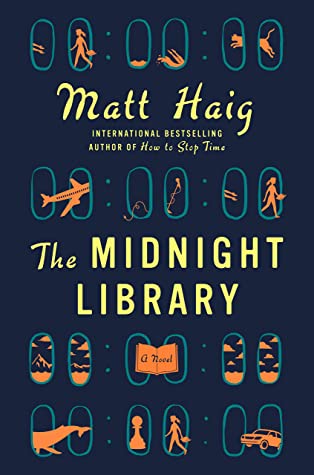
Chosen Best Book of 2020 in the general fiction category by nearly 74,000 Goodreads’ members, The Midnight Library introduces the reader to Nora Seed, a young woman so wracked by regrets she attempts suicide. But in that in-between time – between life and death – she enters the Midnight Library with its infinite collection of green covered books all of which enumerate the stories of her life, each different depending on the subtle or dramatic decisions she made.
Unlike Buckaroo Banzai in one of my favorite movies, The Adventures of Buckaroo Banzai Across the 8th Dimension, where Buckaroo is simultaneously a rock star, neurosurgeon, brilliant scientist, and a test pilot who just happens to save the world from evil alien invaders, Nora experiences one-by-one what might have been as Olympic swimmer, rock star, mother, or glaciologist. Some lives are deeply unsatisfying while others are almost, but not quite, comfortable as she is suddenly inserted into these parallel realities.
Despite an abundance of book challenges, expertly curated title lists and even a fun assortment of book bingos to choose from, The Directors (my library loving, book reading, wine drinking group of retired friends) elected to reverse engineer its own reading challenge. We read a book recommended by one of us and then assign our 2021 reading challenge nomenclature with The Midnight Library dubbed magical realism fantasy.
There is something oh so satisfying when a project is laid out on the blocking squares. And, I can claim double the fun (just like double mint gum) having finished Fiadh, my January-February sweater knit-along (KAL), and my friend’s Halley within just days of each other.
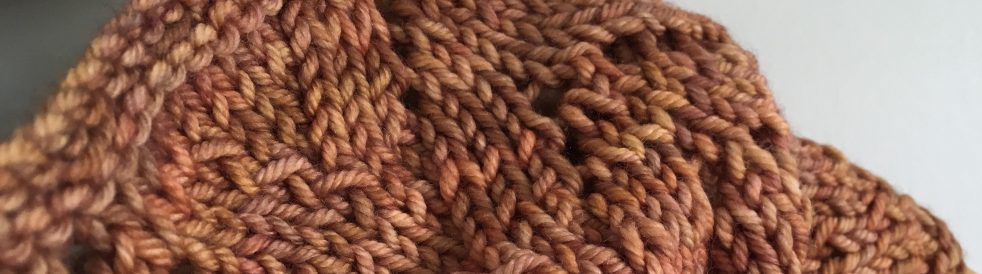
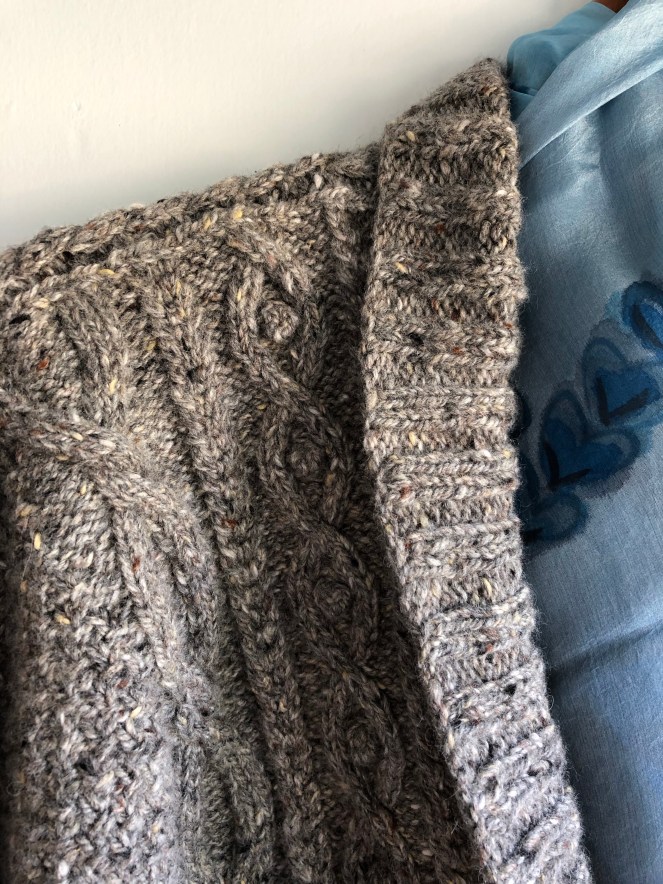
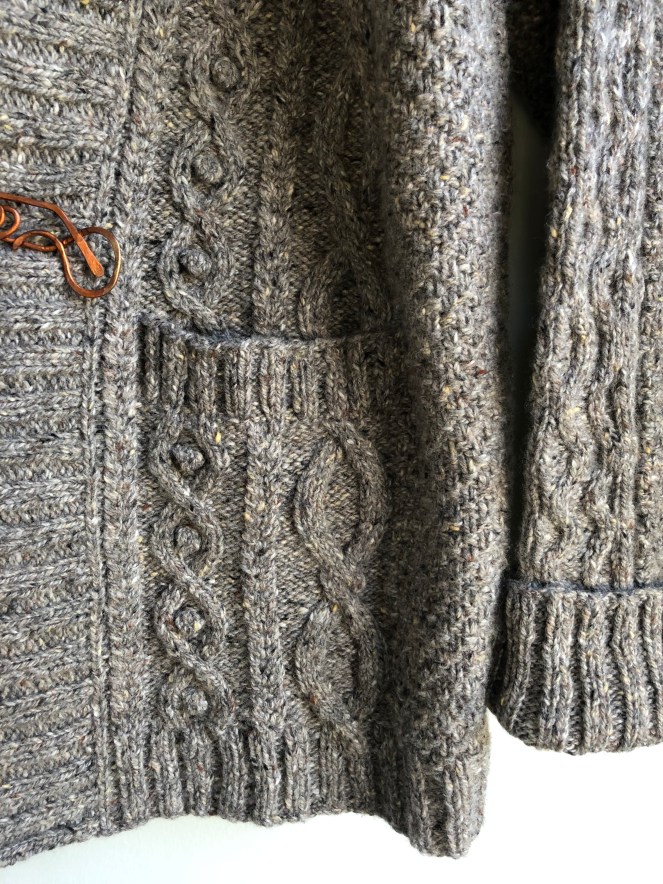
Fiadh is a dense Aran sweater with swirling Celtic cables and funky bobbles designed by Marie Greene and knit using Kelbourne Woolens Lucky Tweed in medium gray with white and black flecks for a very classy look. After some self-psychoanalysis to discover the why behind being stuck on sleeve island, I hunkered down and finished the cabled sleeves, picked up 338 stitches for the ribbed front band, shawl collar, and added the vibrant orange hidden pockets. All just in time for 100 degree days, a very unusual meteorological phenomenon for June in Minnesota.
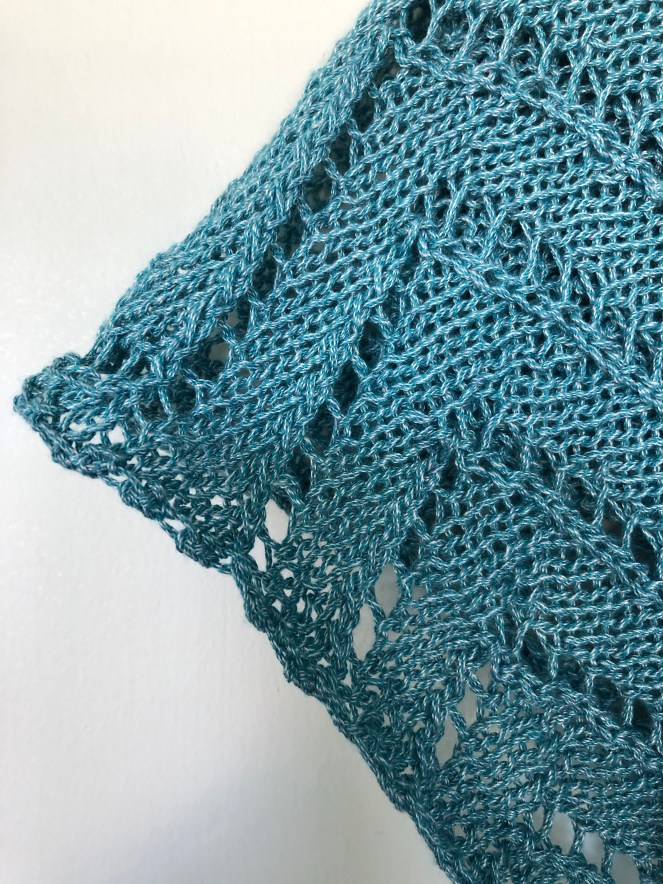
Designed by Martina Behm, another of my go-to designers, Halley incorporates a lacy zigzag reminiscent of Halley’s Comet, as well as stars and meteorites crisscrossing the night sky. Knit using HiKoo Popcycle, an environmentally conscientious blend of 50% bamboo rayon and 50% polyester from recycled plastic bottles.
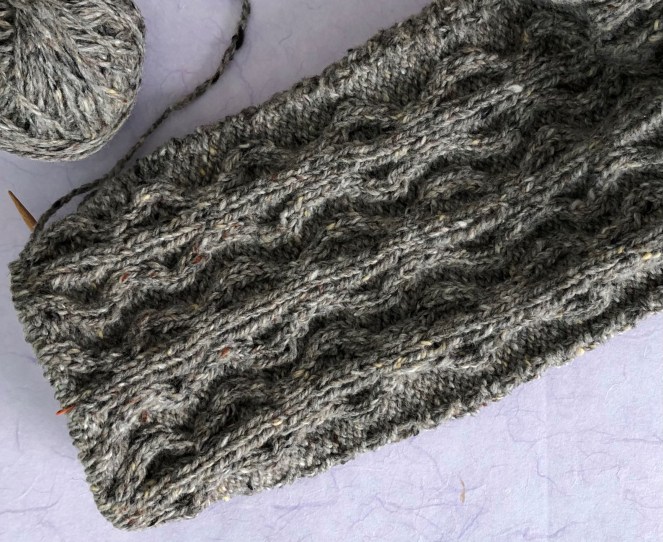
Knitting, reading and a bit of writing have been my primary activities during our pandemic lockdown. As we slowly emerge fully vaccinated from home into public spaces my COVID project inventory totals 35 between March 2020 to June 2021 with Halley and Fiadh being projects #34 and #35, respectively. Quite an assortment of productivity including three sweaters, seven hats, seven shawls, two pairs of socks, nine cowls, six pairs of mittens (fingerless included) and one cabled, reversible scarf. Swatching for Fireworks is complete but I am waiting for the pattern release on July 1 before beginning Marie Greene’s fifth annual 4-Day Sweater KAL. And so I find myself in an unusual state of affairs with nothing on my needles. Time for a quick delve into the project queue.
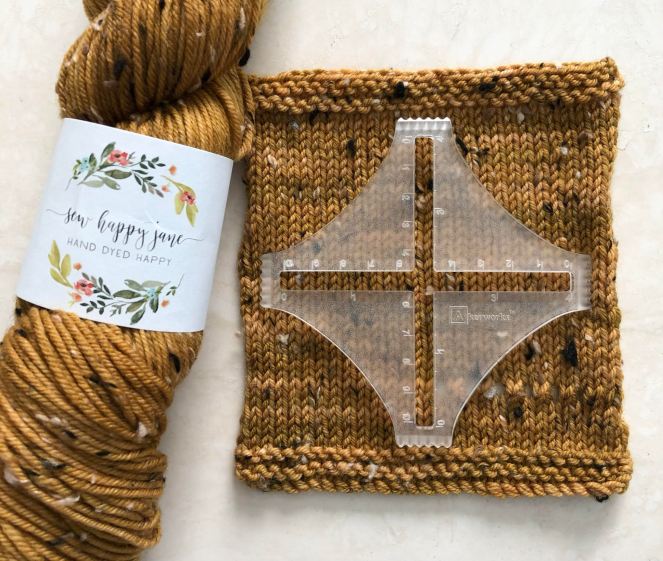
Having become un-Stuck on my January sweater knit-along (KAL) Fiadh, although still not quite finished, I am already gearing up for Marie Greene’s fifth annual 4-Day KAL with Fireworks. My swatches to test gauge are complete and all that is missing is the pattern – which will be released July 1 complete with a celebratory Virtual Cast On Party (with prizes) at 8 am PDT / 10 am CDT for me.
This commitment to a sweater, or any project, sight unseen is highly unusual for me. While my first mystery KAL (where portions of the directions were revealed week by week) actually resulted in a very wearable item, I usually wait days or weeks or even years before joining other KAL knitters just to make sure that the pattern is a good fit with my knitting style and preferences. With great faith in Marie’s classic designs, her well-tested patterns (sometimes by over a 100 test knitters plus technical editing to find every bug) and the cheerleader-like support from the Olive Knit staff and my fellow Knit Campers, I made the plunge and purchased seven skeins of luxurious DK weight, merino yarn hand-dyed by Heather Jane at sew happy jane before the pattern reveal.
While dubbed a 4-Day KAL, pacing can be my own after all, I am the boss of my sweater. There will be those who will slam through but I plan a more sedate summer project spent on the screened porch with ice cold libations close at hand while listening to our new solar fountain bubble. This will be 4-Day number three for me. Foxtrot (2019) took over two months but I greatly reduced my completion time to 22 days for Soundtrack during our COVID lockdown. Who knows what Fireworks will bring?
WIP – Fiadh left sleeve just inches from knitting the cuff
It is not often I admit to feeling “stuck” while knitting. My list of frogged projects is surprisingly small as only two have moved from my needles back into balls of yarn and into the realm of never more. Three colorwork projects have drifted lower on my queue awaiting more research on stranded knitting and five are hibernating with yarn purchased just needing time to start.
While cast on with great gusto in January, my Fiadhsweater is still mid-sleeve with front band and pockets yet to be started. I am oh so close but so not done. The only other time I remember feeling this stuck was my first (and to-date only) felted project. The pre-fulled mittens made it off my needles. As the pattern directed, the mitts were much larger than any hand (unless the hand belonged to an MMA fighter) but I was intimidated by the wet felting process, so they sat for seven years. But my sweater delays cannot be blamed on a lack of technique. I have the stitches covered.
I keep trying to analyze how my January enthusiasm for the interlocking cables and framed bobbles waned. At first, I attributed my glacial-like progress to the spring temps and the urge to get herbs into the backdoor pots. That my Fiadh sleeves were stuck mid-bicep, then at the elbow and now just before the cuff because I was gardening rather than knitting seemed a valid rationale. But not really. I was not gardening after dark and I was knitting every night and even during the day if there was a Cubs baseball game or Formula 1 free practice, qualifying, or race to watch. Just not working on this sweater.
I finally realized I deeply associate Fiadh with the many months of our social distanced, masked quarantine. Previously in awe of intricate Aran designs, the COVID lockdown gave me license to tackle something big and beautiful. My “stuck-ness“ may be a visual example of my own version of re-entry anxiety; that somehow the completion of this sweater and my re-entry are linked even though I know I control when and how I choose to re-engage.
The revised Re-Gathering Guidelines for church begin with this practical yet inspiring statement. And, when applied to my everyday life, these words remind me to treat myself kindly and help re-infuse my enthusiasm for Fiadh cables and bobbles.
With care for each other’s health – body, mind and spirit – we will move into new phases gradually while valuing inclusion, science, flexibility, and grace.
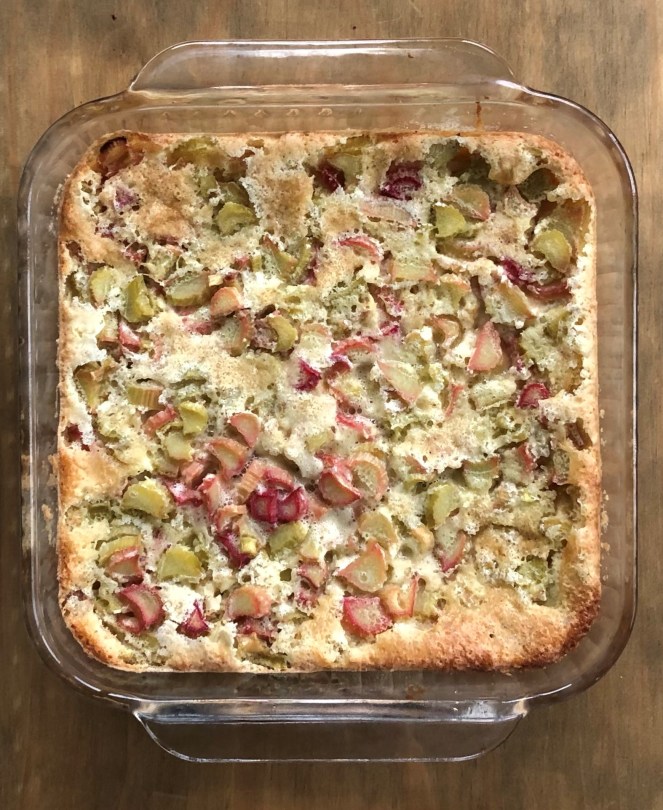
Having returned from Eau Claire with a large bunch of tartness, tonight we will enjoy a freshly baked crisp, topped with newly mixed Crème fraîche and served with Rhubarb Daiquiris. Mom’s patch is overflowing with hefty stalks, so full my harvest went undetected. In contrast, our small cluster of thin stems barely able to support the large triangular leaves struggles. I suspect the ginormous root system of the neighbor’s black walnut to be the unhealthy culprit. While the tree is gone, the natural chemicals genetically designed to give this once deciduous giant an advantage, may still be contributing to unhealthy dirt. After all – who cannot grow rhubarb?
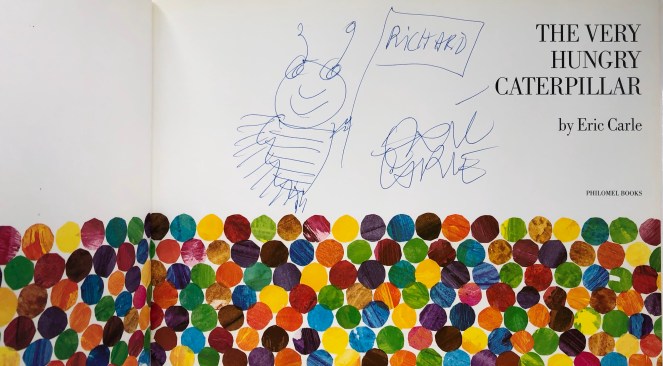
Depending on the day and the conference, visiting library vendor exhibits might be hard work with promises for future negotiations or a simple pleasure. Some days I could afford the time to stand in line to purchase a signed copy of a much loved book. There were also those serendipitous moments when I discovered the unlikely opportunity to nab a quick gift for Richard in a nearly empty booth; when the entire encounter from handing the cash to the publishing house rep, to a brief conversation with a favorite writer, to carefully stashing the prized conference loot all occurred within just minutes. Such was my very brief encounter with Eric Carle one ALA conference day.
The world is blessed to have had this genius of children’s literature whose many stories and brillant textured art evoked rich reading opportunities and colorful playfulness.
The excitement over my first, post vaccination day trip to St. Paul in April and lunch out with a friend in a restaurant which followed strict (and therefore reassuring) COVID protocols, slipped into what can only be dubbed COVID malaise. While our neighbors have been in their yard for weeks, adding raised beds and planting, I can only claim a minimalist effort having helped Richard turn over the six, 4×4 foot vegetable squares, sans seeds or seedlings. While the chilly temps and night time frost advisories offered the cover of an excuse, I simply lacked my annual dose of springtime, get-in-the-dirt time enthusiasm.
But then, Michelle inspired me. During last night’s A Late Show with Stephen Colbert, our former First Lady offered her heartfelt comments about coping with pandemic anxieties. I took her words to heart: “… push beyond … just the doing gets you out of the funk.” After stops at two green houses for healthy plants and an assortment of vegetable seeds, we spent the afternoon planting. Today’s in the ground tally of various varieties includes:
Tender tomato & basil plants
Cucumber – 6
Tomato – 5
Basil – 5
Pepper – 4
Zucchini – 2
Kale – 1
Tomorrow’s goal (assuming the rain holds off): Potatoes, beets, lettuce, radishes, beans, nasturtiums, and a flavorful collection of potted herbs: more basil, plus dill, leeks, oregano, parsley, sage, rosemary and thyme. Michelle was right – “just the doing” was the prescription I needed.
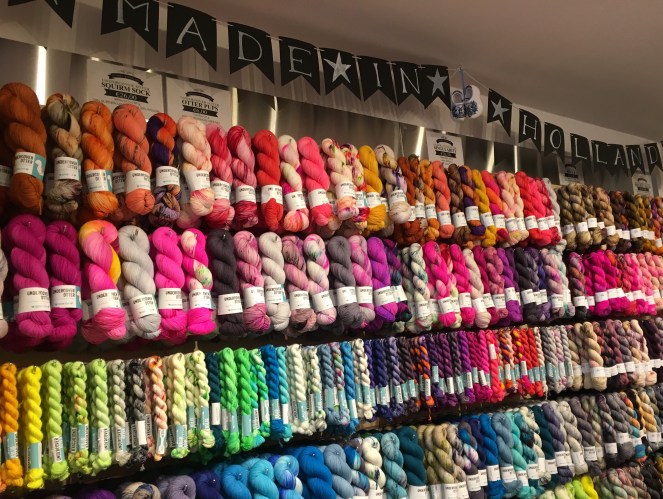
Made in Holland – A Wall of Yarn at Stephen & Penelope, Amsterdam, August 20, 2018
Among those that acquire ever increasing amounts of yarn, almost as harbingers of some soon-to-occur cataclysmic event in which there ceases to be sheep or wool or yarn, I am on the low-end of the quantity spectrum. This may be due in part to the storage limitations of our small house or the practicality of my Swiss heritage, but I have only once purchased a sweater’s quantity of yarn without a specific pattern or project in mind. And, I offer my Foxtrot (my first 4-Day Knit Along (KAL) with Marie Greene) as exonerating proof that I have since turned an impulse buy of approximately 1,400 yards of blended alpaca, merino, and silk into a very wearable sweater.
Early in my knitting days, most of my purchases were simply experiential. I would visit a yarn store and go home with those skeins that had called out, like a sensory siren, to be touched. The frustration came later when I found the perfect pattern but had an insufficient quantity and could not match the dye lot when I needed to purchase more. I started to take a more strategic approach by identifying a potential project and then buying to the designer’s specifications. There are exceptions – of course – as I always treat myself to a skein of something local when traveling. That is how I came to get advice from Stephen West as I stood somewhat befuddled before a wall of “Made in Holland” color on our jet lagged first day in Amsterdam.
I am intrigued by how designers and dyers market their products especially to online customers. Much of what I know about marketing was not learned in a library school admin class but rather as a fan of Mad Men where Don Draper’s genius took a product (any product), identified an audience, created a demand, and always made his ad agency loads of profit. I can only hope two of my favorite sellers are as successful
frabjous fibers & Wonderland Yarns offers the De-STITCH-nation Yarn Kit of the Month Club which features an exclusive colorway based on a travel poster from an earlier era, as well as a pattern appropriate for the weight and quantity, a post card replica of the featured destination poster and steamer trunk stickers. Rather than simply commit to a new skein every month (although that would be fun!) I exhibit restraint and limit my purchases to those locations I have visited. Thus far: Amsterdam, Egypt, Germany, London, and Zurich.
Kristen in Stitches showcases the creative designs of Kristen Ashbaugh-Helmreich. During 2020, her National Park Hat subscription allowed my COVID quarantined brain to remember the beauty of the parks we’ve explored and dream about parks we have yet to visit.