Knitting

A Day to Celebrate Yarn

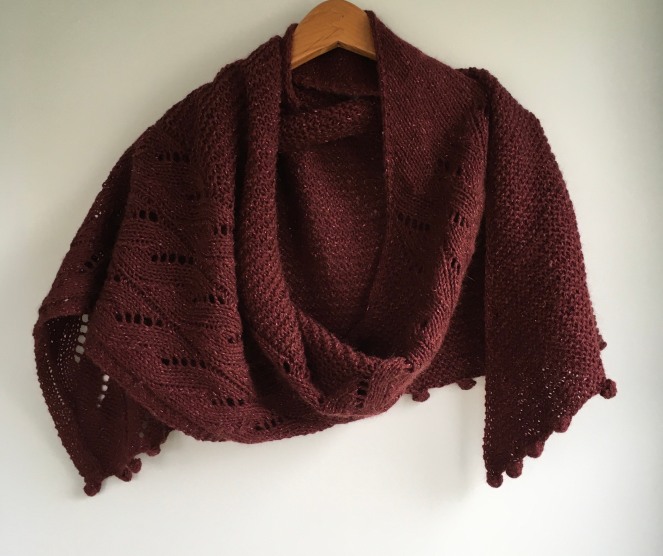
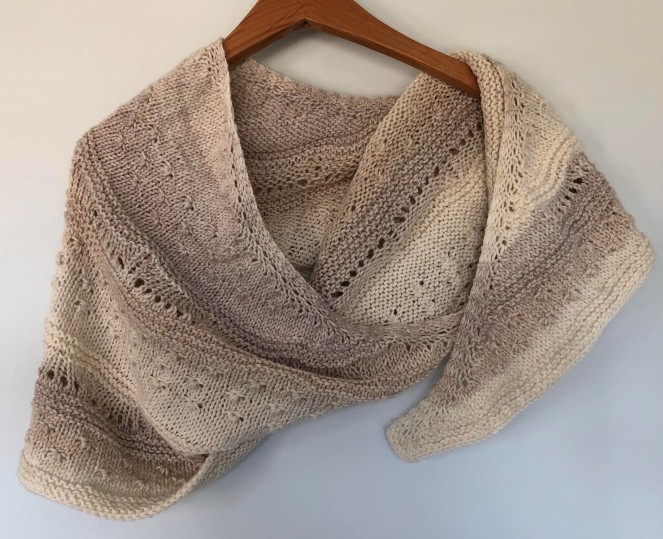
Or, more correctly, a day to support yarn stores.  Today is the brick-and-mortar shop appreciation day designed to bring together fiber lovers of all types whether they knit (my personal passion), crochet, weave or spin as we celebrate our craft and give a most appreciative nod to local entrepreneurs. 

Small businesses have it tough in any era slugging it out against big-box stores and online ordering but COVID has dramatically increased those challenges.  Kudos to my (almost local) local yarn store, Northfield Yarn, for carefully following COVD guidelines to help keep me healthy and for their marketing flexibility.  My online and phone orders arrived pronto via priority mail and, once in store shopping resumed, Cynthia and her trusted sales crew tucked away my special orders until I could find a bright sunny day to travel the rural Minnesota countryside.

Happy Local Yarn Store Day!

Reading · Spirituality

Another Minnesota Shooting

The news that a Brooklyn Center police officer fatally shot Daunte Wright during a traffic stop Sunday afternoon haunts my thoughts this week.  There is a shocking dissonance in this spring time, this vaccination time, when we should be focusing on new beginnings as the sun shines longer, crocuses offer a burst of color and vaccinations rates are increasing, that we are once again facing the ugly underbelly of an unjust society.

Last summer, I was appalled by the sinful video footage showing George Floyd’s murder on a Minneapolis street.  After the death of so many black men and, as we know from the shooting of Breonna Taylor in her own home, the shooting of black women, I wondered, how can this happen?  With those first thoughts of outrage I wanted to place responsibility for what we as a society were becoming on the rhetoric of the past four years.  But life is not that simple.  I knew we did not simply become a racist society with the results of one election.  I recognized that it was only as the hateful rhetoric went viral and the incidents of violence against People of Color went virtual that I became increasingly aware of what is and what has always been a dramatic difference between my safe white environment and threatening world faced daily by People of Color.

I did take some hope that we may have reached a tipping point last summer as people across the world spontaneously marched.  White celebrities sat down with Emmanuel Acho for Uncomfortable Conversations with a Black ManLewis Hamilton wore a Black Lives Matter t-shirt on the starting grid and on the winner’s podium even as racers sprayed champagne.  And, Formula 1 cars now carry a #WeRaceAsOne logo as a visible display of a new “initiative aimed at tackling the biggest issues facing the sport and global communities – the fight against COVID-19 and the condemnation of racism and inequality.”

Over the past seven months, our Common Read at church delved into the hard and realistic truth that the injustice playing on our screens again this week is not new but is as old as the country itself.  As we read, we were reminded with each well crafted paragraph, each page we turned that injustice is deeply woven into the fabric of our society.  That violence happens every day.  We need only look to other April days to recall shocking events: 

  • April 1873 – A white mob massacred an estimated 150 Black voters over the results of a hotly contested gubernatorial election;
  • April 1956 – Four white men attacked signer Nat King Cole while he was on stage performing for a white audience;
  • April 1968 – Dr. Martin Luther King, Jr. was assassinated.

Earlier, I blogged about one of our Common Read titles, a powerful anthology, A Good Time for the Truth:  Race in Minnesota.  It is an eye-opening collection of personal stories shared by 16 Minnesota authors of Color that sheds light on life in our state and in our time.  In the book’s introduction, poet Sun Yung Shin, who edited A Good Time for the Truth, offers both a challenge and words to help guide us.

Good people need to take action continuously, and I would say daily, until [racism] is dismantled.  Because lives are at stake, every day; on sidewalks, in doctor’s offices, in the waiting room of the bank, and, most importantly, in classrooms.

I believe we can do it.  I know I am not alone in this conviction.

People of color and Indigenous people know with a specific, agonizing intimacy that racism was constructed and upheld by white society (in spaces such as the police precinct, the courtroom, school board meetings, newsrooms, Hollywood studios, mortgage loan offices, and everywhere power has resided in America) in order to confer unearned advantages on white people.  It is as simple as that.  It’s not a law of nature.  It’s culture.  It’s something we made, invented, maintained.  Since it was made, like a vast machine, it can be unmade, and it must. ...

Change is necessary.
Other items of interest · Travel

Squares Challenge: Bright with BeckyB

While following BeckyB of Winchester in the WordPress blogosphere, I became intrigued by her Squares Challenge.  The directions are simple:  Post a photographic square every day, or once a week, or even just occasionally.  Her April theme is Bright with a definition covering a wide spectrum of adjectives “sparkling, polished, shining, clever, cheerful, colourful, astute, brilliant, sunny, glorious, translucent, distinct and clear.”  Inspired by her Bright and Early in Portuguese Moments on April 1, I’ve selected a small collection of far and wide travel pictures some on sunny days and others just capturing the bright wonder of the moment.

Travelogue:

  • Cathedral of God’s Mother’s Birth at the Curchi Monastry, Orhei, Moldova – October 15, 2018
  • Phoenix Botanical Garden – March 23, 2019
  • Lake Como, Bittersweet National Forest, Montana – May 17, 2017
  • Westminster Abbey, London – October 12, 2018
  • Chicago – June 18, 2019
Reading

Check our your library!

Libraries have always adapted to the changing world by expanding resources and services, even more so in these Covid times.   Celebrate National Library Week, April 4 – 10!  Visit your library online or in person (if allowed) to learn how you can check out books, technology, multimedia content, educational programs and so much more to help you be your best self.

Happy National Library Week!

Baking

Altar Bread

There are those special foods that simply speak to tradition, to holiday, to holyday. 

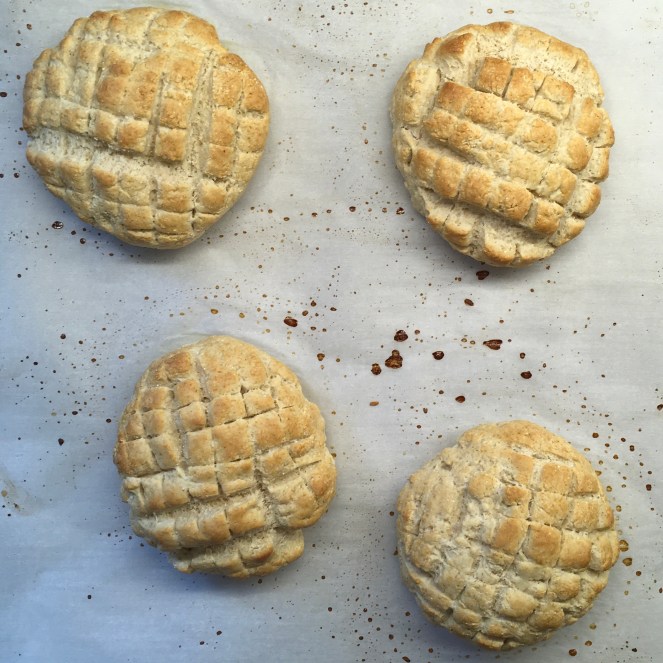
four round loaves of bread resting on baking parchment

There is absolutely no reason that Mom’s mouth-watering Pecan Crisps could not be baked year round but we only have them at Christmas and only Mom takes on that loved-filled task to bake a double batch to be stored in the yellow cookie jar.  The same is true when making Altar Bread using a recipe from Father Fred Devett, TOR (Franciscan Friars of the Third Order Regular.)  Years ago, while in library school, baking altar bread was a biweekly task for Sunday Mass at St. Paul’s Catholic Student Center shared between my friend Hedy and me.  While my grad school days are a reminiscent blur of classes, daily flavors of Babcock ice cream, and sunny afternoons on Memorial Union Terrace sitting on the iconic Sunburst chairs, this recipe holds a deep celebration of Spring.

Again, a simple recipe that could certainly be made anytime but now I only bake it for Maudy / Holy Thursday.  Not quite truly unleavened as required for Pesach / Passover, while this recipe does not include yeast thus eliminating the time required for it to rise but it does include baking powder to give a little volume and lighten the texture.  The blend of unbleached and whole wheat flour, baking powder, just a pinch of salt, milk, and honey combine for a sweet, dense communion bite. 

Happy Spring!

Other items of interest

Shoulda been…

It is March and we have been in pandemic quarantine for a year.  For me, our world shifted on March 15.  I know others may mark a slightly earlier day of that same week, but I started counting on a “Sabbath Sunday”.  That first day when we stayed home with a Covid purpose, treating Sunday as if it was a snow day, without gathering at church but still creating quiet time for reflection and meditation.

Like others, I could not have envisioned I would be writing this post 365+ days later.  Our Covid journey has been varied.  Days when it simply felt right to be home and other times when anxiety took hold in my temporal lobe and I wondered would it ever be safe to be together.  Now, with the first vaccines in our systems and second doses coming next week, I am starting to think beyond our small Kutzky Park environ, especially today when we shoulda been celebrating John and Hannah’s wedding in person rather than online.  Maybe we will all gather for an anniversary party next year but, in the meantime, Lynn Ungar’s poem, written as we went into lockdown, still offers sustenance.

Pandemic
What if you thought of it
as the Jews consider the Sabbath—
the most sacred of times?
Cease from travel.
Cease from buying and selling.
Give up, just for now,
on trying to make the world
different than it is.
Sing. Pray. Touch only those
to whom you commit your life.
Center down.
 
And when your body has become still,
reach out with your heart.
Know that we are connected
in ways that are terrifying and beautiful.
(You could hardly deny it now.)
Know that our lives
are in one another’s hands.
(Surely, that has come clear.)
Do not reach out your hands.
Reach out your heart.
Reach out your words.
Reach out all the tendrils
of compassion that move, invisibly,
where we cannot touch.
 
Promise this world your love–
for better or for worse,
in sickness and in health,
so long as we all shall live.
 
–Lynn Ungar 3/11/20

Reading

My Book Clubs – Number Growing

four open books stacked on one another with pages of top book fanned in the light
Photo from Pexels-pixabay

I promised myself retirement would be like my favorite summer, 1976, filled with lots of reading and time with friends.  That was the only summer after high school where I was not taking college classes or working or both.  Nearly four years into this relaxed life, my plan is working although Covid has put the nix (at least for now) on face-to-face time with friends but I am exceeding my reading goals, albeit mostly easy titles that don’t require deep contemplation.  Aiding me in the task of diversifying my reading pleasure have been three book clubs and One Book One Minnesota.

The Directors’ – My library loving, book reading, wine drinking group of retired friends who, in pre-Covid times enjoyed an outing every 2-3 months but now gather every two weeks via Zoom, decided 2021 was the right time for a book club.  While our first two titles have been mysteries with earlier posts, The Thursday Murder Club and The Bookseller, we are switching genres. Next up – Cicely Tyson’s memoir, Just As I Am.

Knit Camp Reads Club – A new venture for Knit Camp knitters who want to read (or listen) together.  The first selection is fiber related, Casting Off by Nicole R. Dickson, a nice tie in with the Knit Camp January workshop and group knit, Fiadh.

UU Common Read – With a focus on justice, the October through April titles have included An Indigenous Peoples’ History of the United States by Roxanne Dunbar-Ortiz (although I admit I opted for the young people edition); Just Mercy by Bryan Stevenson with a movie by the same name; and A Good Time for the Truth: Race in Minnesota – a powerful anthology written by 17 Minnesota authors of color that I blogged about in December.

Knitting

Staying warm until winter is really over

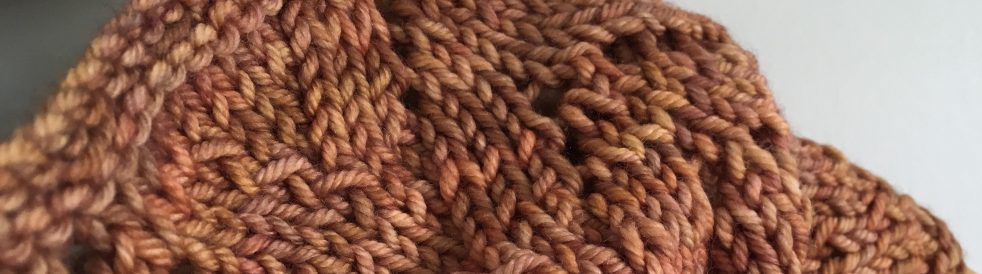
With spring-like temperatures, the need for wool beanies greatly diminishes although, since this is Minnesota, the weather can quickly snap from balmy to blustery.  In a December Year of Projects post, I reported the forthcoming Selwyn Beanie was in my project queue.  While I waited for the pattern drop from designer Marie Greene, my early winter evening TV knitting was the matching cowl, dubbed Selwyn Petit as it was a smaller (cables only) version of the original Selwyn knit in heather gray.  The Petit cowl and beanie uses a vibrant sunflower heather yarn from Kelbourne Woolens.  Good for shooing away the winter blues. With cowls and beanies complete, now the challenge is determining the lucky recipients.

Reading

Weeding Takes Fortitude

Like pulling weeds from one’s garden, weeding a collection is often done to make space.  But unlike the in-the-dirt activity, weeding books is tough.  When you pull that volume off the shelf you are not simply ridding the lettuce patch of all those pesky maple whirly-birds that seem to have taken root over night.  Weeding books severs a tactile connection between the written word that once transported the reader to an imaginary realm or conveyed clear instruction or the creative content of any genre in between.  There is something special about the art of book collecting.  Removing titles is tough.  So difficult that librarians will procrastinate for years until bulging shelves, with no room for new purchases, demand attention.  So difficult that we dub the work, de-selection, since it requires as much (maybe more) discrimination then demonstrated at the time of acquisition.  

I have a small but growing collection of knitting books, a mix of instructional titles and pattern collections authored by well-respected designers.  For a number of years, they were stashed on the floor under a Hutton Sculpture bench in our TV room.  Not the best location but handy until the quantity outgrew the space available – but where to move them?  Our first thought was to buy more shelving but space is at a premium in our 96-year old house with less than 1,000 square feet which generated today’s task – weeding books.

We each contributed to the newly freed shelf space.  Gone are eight management titles that I will not re-read in retirement and nine, four-ring Porsche binders.  We sold our white 1987 Porsche 944S in 2003 but kept the repair manuals as a visual reminder of the time spent at driver education events when we focused on corner apexes, acceleration points, and tach readings.  Photos, trophies and the infrequent scent of brake dust will have to suffice.  We even created enough space for new acquisitions as the inches of items weeded exceeded the number of inches needed.  Happy reading!

Reading

Fond Memories of Nancy Drew

I am old enough that while working my first library job librarians were still debating the efficacy of Nancy Drew and Hardy Boys mysteries.  At the time, there were two distinct camps:  Those that felt children should only read “quality” literature and those that believed that any reading was good.  This dichotomy played out in library selection meetings and at library conferences around the country as the debate waged over spending precious tax dollars for what, by some, were deemed titles just slightly above pulp fiction.  (Note:  The distinction that books by Carolyn Keene were not pulp was based solely on the hard covers of this series versus the paperbacks of such authors as Philip K. Dick or Edgar Rice Burroughs.  Remember – At the time, a similar debate waged over the merits of paperbacks, perceived as ephemeral and not worthy of being in a library collection, regardless of the author!)

I definitely fell into the latter category; after all, I had loved Nancy Drew mysteries.  My childhood friend, Julie B., introduced me to this strong female heroine and her two best friends and ever faithful sleuthing partners, Beth and George, when she lent me her copy of The Hidden Staircase.  I thought Julie was immensely lucky as she owned a wonderful collection of 10-13 titles which she began lending to me.  Her collection consisted of early titles in the series, so, with my allowance and every birthday and Christmas, I acquired the later books in the series.  Our goal was to own every Nancy Drew title, that by combining her early titles and my later ones, our collection would meet in the middle.

There are those avid readers who pride themselves on never re-reading a title and those that re-visit well loved books time and again.  On this topic I fall in the middle as I generally don’t re-read books simply because, in the words of Frank Zappa, “So many books, so little time.”  But I do remember the first book I ever re-read.  It was a sunny day during summer vacation and I read The Clue in the Old Stagecoach three times, cover-to-cover.  The magic of the words transported me into Nancy’s search for hidden treasure.  Having just re-read The Bookseller for The Directors’ Book Club, my list of re-read titles (not inlcuding library storytime favorites) is now a dozen plus a few: 

  • The Bookseller by Mark Pryor
  • Bridge to Terabithia by Katherine Paterson
  • The Clue in the Old Stagecoach by Carolyn Keene (Three times in one day!)
  • Dune by Frank Herbert
  • Harry Potter, #1-7 by J.K. Rowling (First as the titles were released & re-read before each movie premiere.)
  • His Dark Materials, #1-3 by Philip Pullman (For the summer science fiction book club.)
  • Outlander by Diana Gabaldon (Just because what is not to love about a time travel romance between Claire and Jamie aka Sam Heughan with his own blend of whisky.)