Reading

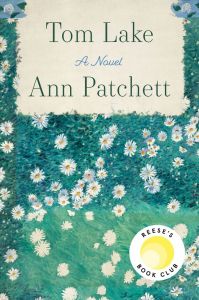
Book Club: Tom Lake

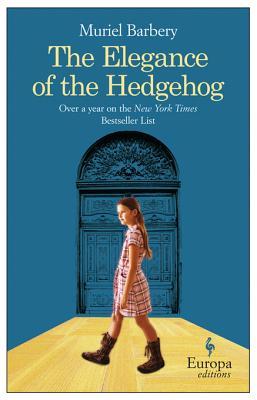
Having migrated from Zoom sessions during those closeted days of Covid self-quarantine, The Directors gathered yesterday at a lunch locale for wine toasts, shared desserts and a book discussion.  While unusual but delightfully so, we discovered that this library loving, book reading, wine-drinking group of retired friends had landed on a title that we all enjoyed – Ann Patchett’s Tom Lake.

While I have become a regular audiobook listener when knitting, I know I would score miserably low should I take an Iowa Basic Skills comprehension test for any of those titles.  I still gravitate towards a hard cover for book club selections.  However, for Tom Lake, I was intrigued by the prospect of hearing Meryl Streep read this story and wondered if I would I hear the actress or the voice of the main character?  I opted to both read and listen.  I read a few chapters and then listened to those same chapters in the audiobook format.  At times, I recognized the text well enough that I could anticipate the next phrase and, then again, a detail I missed in reading the ink on paper would be a surprise in my ear.  Even though reading2 is time consuming, I may repeat this paper copy / audiobook combo for future book club selections.

Synopsis:  Three daughters listen and question their mother’s stories about her long-ago budding acting career on stage and screen, her first love, a spotlight on summer-stock, and her life choices; some made with intention and others by happenstance.  From the New York stage to poolside Hollywood to a cherry orchard in northern Michigan, the story gently shifts between past and present. Patchett artfully reveals common threads and the different hopes and dreams of each family member.
Reading

A Gathering of Poetry | February 2024

When I think about poetry in February, the images of red and pink children’s valentines from the mid-1950s spring to mind or syrupy sweet verses, so I took a different approach for this month’s Gathering of Poetry and visited Shel Silverstein’s Where the Sidewalk Ends for Love.

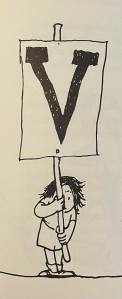
cartoon image holding a sign with a large V

Love

Ricky was “L” but he’s home with the flu,

Lizzie, our “O,” had some homework to do,

Mitchell, “E” prob’ly got lost on the way,

So I’m all of love that could make today.

And, thanks to Kat for reminding me that it is time for a third Thursday poetry post.

Bibliographic credit:  Silverstein, Shel. Where the Sidewalk Ends: the poems and drawings of Shel Silverstein.  Harper & Row. © 1974.

Reading

A Gathering of Poetry | January 2024

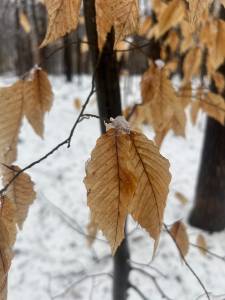
branches of yellow leaves against snowy backdrop

As always, Carrie Newcomer offers inspiration in song and verse.  I have been saving her poem, Blessings, to share with you on this third Thursday of January, Gathering of Poetry. Perfect as the old year ends and new days unfold…

Blessings

May you wake with a sense of play,
An exultation of the possible.
May you rest without guilt,
Satisfied at the end of a day well done.
May all the rough edges be smoothed,
If to smooth is to heal,
And the edges be left rough,
When the unpolished is more true
And infinitely more interesting.
May you wear your years like a well-tailored coat
Or a brave sassy scarf.
May every year yet to come:
Be one more bright button
Sewn on a hat you wear at a tilt.
May the friendships you’ve sown
Grown tall as summer corn.
And the things you’ve left behind,
Rest quietly in the unchangeable past.
May you embrace this day,
Not just as any old day,
But as this day.
Your day.
Held in trust
By you,
In a singular place,
Called now.

You can join the poetic fun every third Thursday as shared by Bonnie and Kym.

Bibliographic notes:  From The Beautiful Not Yet:  Poems, Essays and Lyrics.  Available Light Publishing.  ©2016 Carrie Newcomer.

Photo credit:  © Carrie Newcomer

Reading

A Gathering of Poetry | November 2023

blue vintage china, loaf of bread, and tin coffee pot sitting on a wooden table by a window

I recently found A Gathering of Poetry which encourages poetry loving bloggers to offer a personal salute to a favorite poem or a recently discovered poet by sharing the verses on the third Thursday of the month.  (If this is not correct, I hope Kym or Kat will gently nudge me in the right direction.)

As I will help with Sunday morning worship on Thanksgiving weekend, I moved from poem to poem this week seeking that “perfect” reading suitable for this food focused holiday but with a goal not to mention turkeys, pumpkin pie, or marshmallow sweet potato casserole.  Our former poet laureate, Joy Harjo, provided the inspiration.

Perhaps the World Ends Here

The world begins at a kitchen table. No matter what, we must eat to live.

The gifts of earth are brought and prepared, set on the table. So it has been since creation, and it will go on.

We chase chickens or dogs away from it. Babies teethe at the corners. They scrape their knees under it.

It is here that children are given instructions on what it means to be human. We make men at it, we make women.

At this table we gossip, recall enemies and the ghosts of lovers.

Our dreams drink coffee with us as they put their arms around our children. They laugh with us at our poor falling-down selves and as we put ourselves back together once again at the table.

This table has been a house in the rain, an umbrella in the sun.

Wars have begun and ended at this table. It is a place to hide in the shadow of terror. A place to celebrate the terrible victory.

We have given birth on this table, and have prepared our parents for burial here.

At this table we sing with joy, with sorrow. We pray of suffering and remorse. We give thanks. Perhaps the world will end at the kitchen table, while we are laughing and crying, eating of the last sweet bite.

Bibliographic notes:  From The Woman Who Fell From the Sky (W. W. Norton, 1994) by Joy Harjo. Copyright © 1994 by Joy Harjo.

Photo credit:  Pexels-pixabay

Reading

On the Road with Banned Books

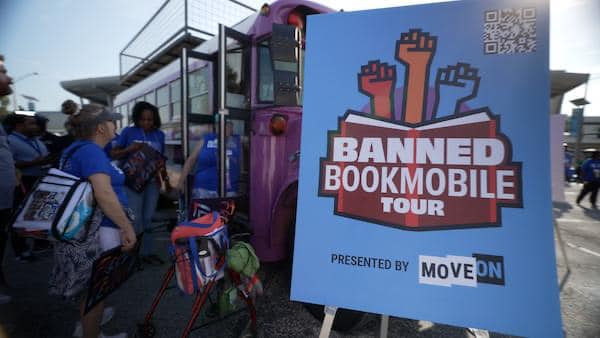
purple bookmobile with people in blue shirts waiting to enter and a sign that reads - banned bookmobile tour

Long ago, my bookmobile days were spent on the byways of rural west central Georgia and southeastern Minnesota.  The custom-built school-bus sized vehicles carried a general collection of books and media for children and adults; fiction and non-fiction and, maybe, some of same titles that are on the new Banned Bookmobile.

Unlike a traditional bookmobile where materials are available for check out and must be returned to the mobile library when the route repeats every few weeks, the mission of the Banned Bookmobile is simply to get banned titles into the hands of readers.  The titles in this giveaway collection include those most frequently challenged in schools and libraries.  Titles like Toni Morrison’s The Bluest Eye, Amanda Gorman’s The Hill We Climb and the delightful picture book, and Tango makes three, based on a true story and re-told by Justin Richardson and Peter Parnell.  When the Banned Bookmobile made its debut in Orlando on July 5, all of the copies were gone in just 10 minutes! 

In the coming weeks, the Banned Bookmobile will visit Florida, Georgia, Illinois, North Carolina, Ohio, Pennsylvania, South Carolina, Tennessee, Virginia, and Wisconsin with a goal of “giving people access to books that are inclusive of the full diversity and experiences of all of our communities.”  In addition to distributing free books, the tour will be customized by location and include presentations by authors whose works have been banned, as well as working with local officials and activists to encourage the freedom to read.  

Photo credit: MoveOn

Knitting · Reading

2022 Highlighted in Knitting & Books

Taking an inventory of the old year is by no means a unique task.  It is, however, not something I have done previously in this blog.  So here are a few highlights of my 22 knitting projects (some of which you will have already seen) and my titles read – 82 – although to be honest, I indulged in a number of quick read YA fantasies and enjoyed a variety of easy-listening titles while driving to-and-from Eau Claire and hours spent gardening last summer in order to reach this quantity.

Reading · Travel

American Bloomsbury

I have a copy of Michael Holroyd’s definitive biography of Lytton Strachey.  A gift from a friend, the two-volume boxed set serves as a bookend anchoring a shelf of history titles.  My friend was a Bloomsbury aficionado.  He read everything he could about these post-Victorian intellectuals even waiting patiently to purchase The Letters of Virginia Woolf published in six volumes; book-by-book over 10 years.  He also gifted me his extra copy of The Loving Friends: A Portrait of Bloomsbury by David Gadd.

When the Pilgrimage to Massachusetts reading list (yes – an actual two-page bibliography of primary and secondary sources) included American Bloomsbury by Susan Cheever, I thought this title could be the primer I needed (just as The Loving Friends had been) to better understand our American literary giants.  As the subtitle describes, American Bloomsbury focuses on the lives, loves, and work of Louisa May Alcott, Ralph Waldo Emerson, Margaret Fuller, Nathaniel Hawthorne, and Henry David Thoreau. 

These profoundly talented people moved among each other, sometimes living together, sharing books, reading what each other wrote, and relishing in deep philosophical discussions.  In the introductory “Note to the Reader” Cheever describes her intent to work chronologically but to do so from each of her primary character’s perspectives thus her timeline moves back and forth as she describes overlapping incidents and conveys the stories of their lives life in Concord and the surrounding environs during the 1830s – 1890s.

Their individual accomplishments – Little Women, The Scarlett Letter, Walden, Or Life in the Woods – create for us a tableau of 19th century life; a young country, a growing divide over slavery; and women’s rights still but a wishful glimmer only in some minds.  But, taken as a whole, these hearty New Englanders defined a literary, philosophical, religious, and political movement that we call Transcendentalism with its core belief in the inherent goodness of the individual and nature. 

I leave early (4:45 am) tomorrow to see their homes and haunts.

Reading

Small Kindnesses

This spring, I learned about a new creative project led by Suleika Jaouad that encouraged participants to “create one tiny beautiful thing each day” for 100 days as a way to bridge the isolation of Covid and return to an as-yet-to-be defined new normal.  The choice of how to excite the imagination was to be determined by each participant.

When I was young, I enjoyed reading poetry but somewhere along the way, poems assumed an impenetrable guise and poetry become something I rarely read.  Although I did take a significant plunge into well written verses during the summer of 2012 when I joined Karen Sandberg and Rose Mish in presenting a summer service comprised entirely of poetic readings.  With the 100-Day Project the timing seemed right to revisit poetry.  I decided I would read a poem each morning and discover (or re-discover) a poet every day.

I created a poem calendar to track my daily progress complete with hyperlinks so that I could re-read the gems I discovered.  One such beautiful verse is Small Kindnesses by poet Danusha Laméris.  She asked 1,300 teenagers about the small kindnesses that make a difference to them and then used their answers to write this poem:

Small Kindnesses

I’ve been thinking about the way, when you walk
down a crowded aisle, people pull in their legs
to let you by. Or how strangers still say “bless you”
when someone sneezes, a leftover
from the Bubonic plague. “Don’t die,” we are saying. 
And sometimes, when you spill lemons
from your grocery bag, someone else will help you
pick them up. Mostly, we don’t want to harm each other. 
We want to be handed our cup of coffee hot,
and to say thank you to the person handing it. To smile
at them and for them to smile back. For the waitress 
to call us honey when she sets down the bowl of clam chowder,
and for the driver in the red pick-up truck to let us pass.
We have so little of each other, now. So far
from tribe and fire. Only these brief moments of exchange.
What if they are the true dwelling of the holy, these
fleeting temples we make together when we say, “Here,
have my seat,” “Go ahead—you first,” “I like your hat.”
Knitting · Reading

Book Club: Knitlandia

cover art for Knitlandia by Clara Parkes

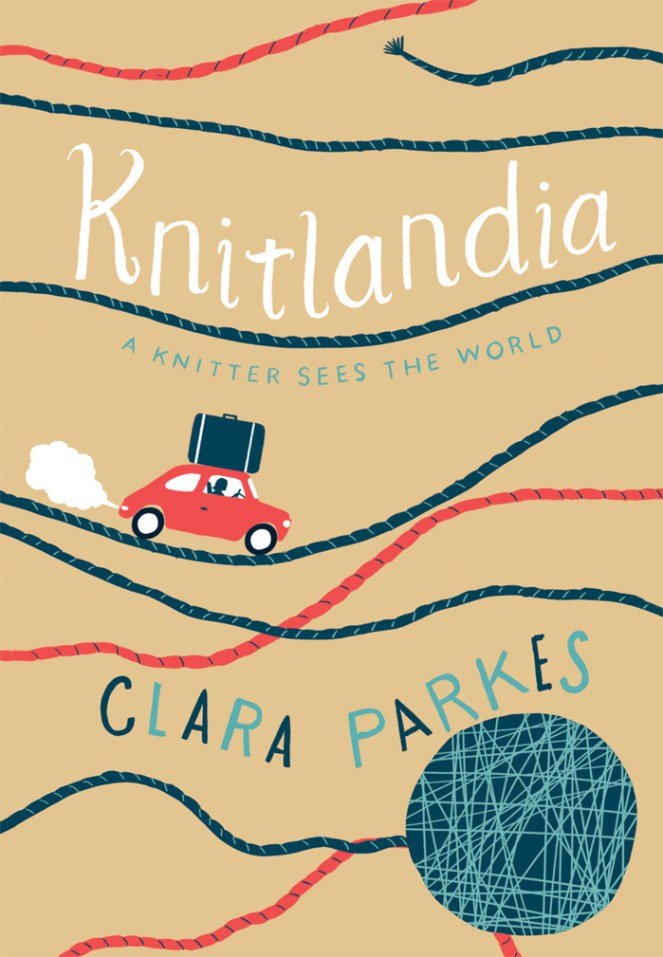
A retirement gift from my friend Amy, I re-read-Knitlandia:  A Knitter Sees the World by Clara Parkes for this month’s Knit Camp Reads book club.  This collection of travelogues necessitated a different type of discussion as we could not rely on old standby questions about character development, unexpected mystery twists, or conflict resolution.  Instead, we talked about which chapter or chapters resonated with each of us.  Mine were the chapters on New York and Iceland. 

My visits to New York have been limited but each trip holds a Cinderella moment – meandering slowly down the grand concourse of the Guggenheim all by myself at 16, the breathtaking view at a top floor reception in the World Trade Center, my first (and only) taste of caviar in the Waldorf Astoria ballroom.  As well as remembering that sense of relief when cresting the Hampton hills just north of Zumbrota on my homeward trek after a summer trip and seeing green which washed away the overwhelming vision of nothing by undulating yellow sheet metal racing and then screeching to red light stops. 

Unlike the New York chapter where I could draw upon memories of real sounds and smells, Parkes’s description of her Icelandic fiber tour moved into the realm of wishful thinking but Covid dashed hopes.  In 2019, I booked a Rowan Tree Travel tour to Copenhagen and the Faroe Islands but the 2020 and the 2021 September trips were canceled and I eventually opted out of the April 2022 rescheduled tour.  While I recognize Denmark and Iceland are distinct countries with unique cultural differences, they share a Nordic heritage and a deep appreciation of northern clime woolens.  I could easily imagine myself with Clara visiting an Icelandic sheep farm just as I had hoped to spend a day in the home of a Faroese fiber artist with Rowan Tree Travel guides Heather and Suzie.  I do have one tangible connection to Iceland in the form of four skeins of yarn purchased by Amy (the same person who gifted me this book) when she was in country for a destination wedding; yarn I later knit into a Solène Le Roux Cable Promenade Cowl.

As we slowly emerge from our Covid existence, I take to heart Clara’s advice: “There is a time for sitting at home in your pajamas, watching and clicking and quietly forming connections in your mind.  And, there’s a time for getting out and being with others, for reaching into the picture and becoming part of it.

Reading

Poetry Avoided

For nearly half a century I avoided poetry.  

three books against wood background

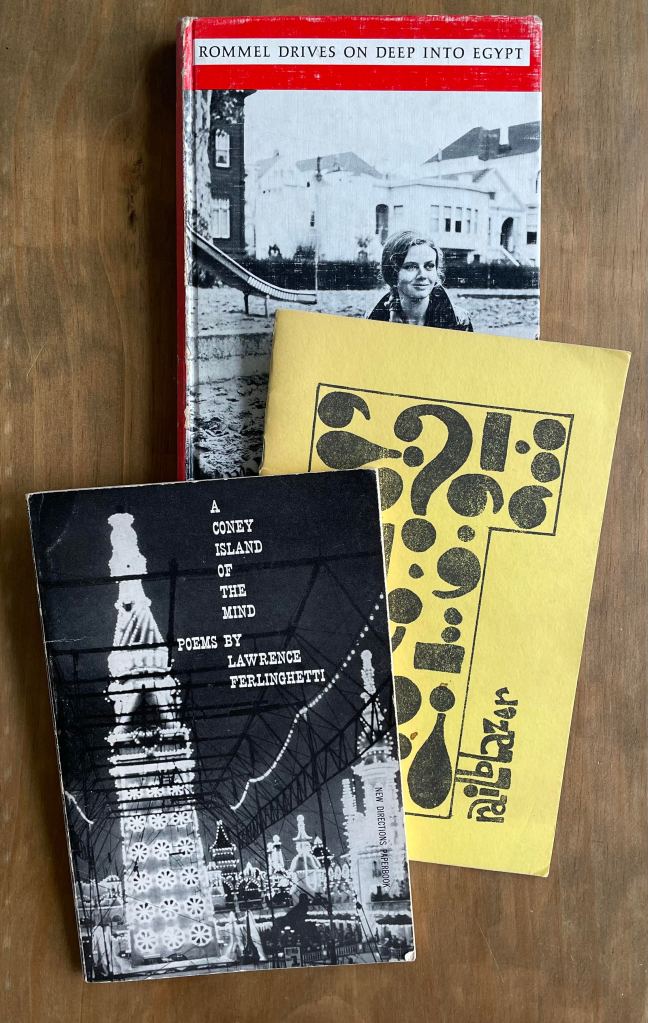
I have fond memories of rhyming verses in Mrs. Miggawa’s third grade class.  I wrote a published poem senior year in high school.  (Although, to be honest, the small pamphlet printed as part of my Catholic all-girls high school curriculum had a minuscule readership.)  And, Lawrence Ferlinghetti’s Coney Island of the Mind is one of my favorite books.  But somewhere between early enjoyment and today, poetry assumed an impenetrable guise.  I blame this on too many instructors asking “What does it mean?” then being dissatisfied with my blue book reply when the real question was “What do I believe it means?” and, having missed his, her, their personal interpretation, my exam response messed with my college GPA.

My version of The 100-Day Project with Suleika Jaouad will be to read poetry.  It may be a single poem each morning but I want discover (or re-discover) a poet every day.  I intend to banish the judgmental “What does it mean?” question from my vocabulary and let the poem simply rest on the page.  The poet’s meaning may leap off that page or remain mysteriously obscure, either will be fine.