Knitting

An Alpaca, Goat & Yarn Adventure

Not everything is simply knit and purl stitches.  Sometimes the fiber arts includes a field trip with friends on a rainy spring day.

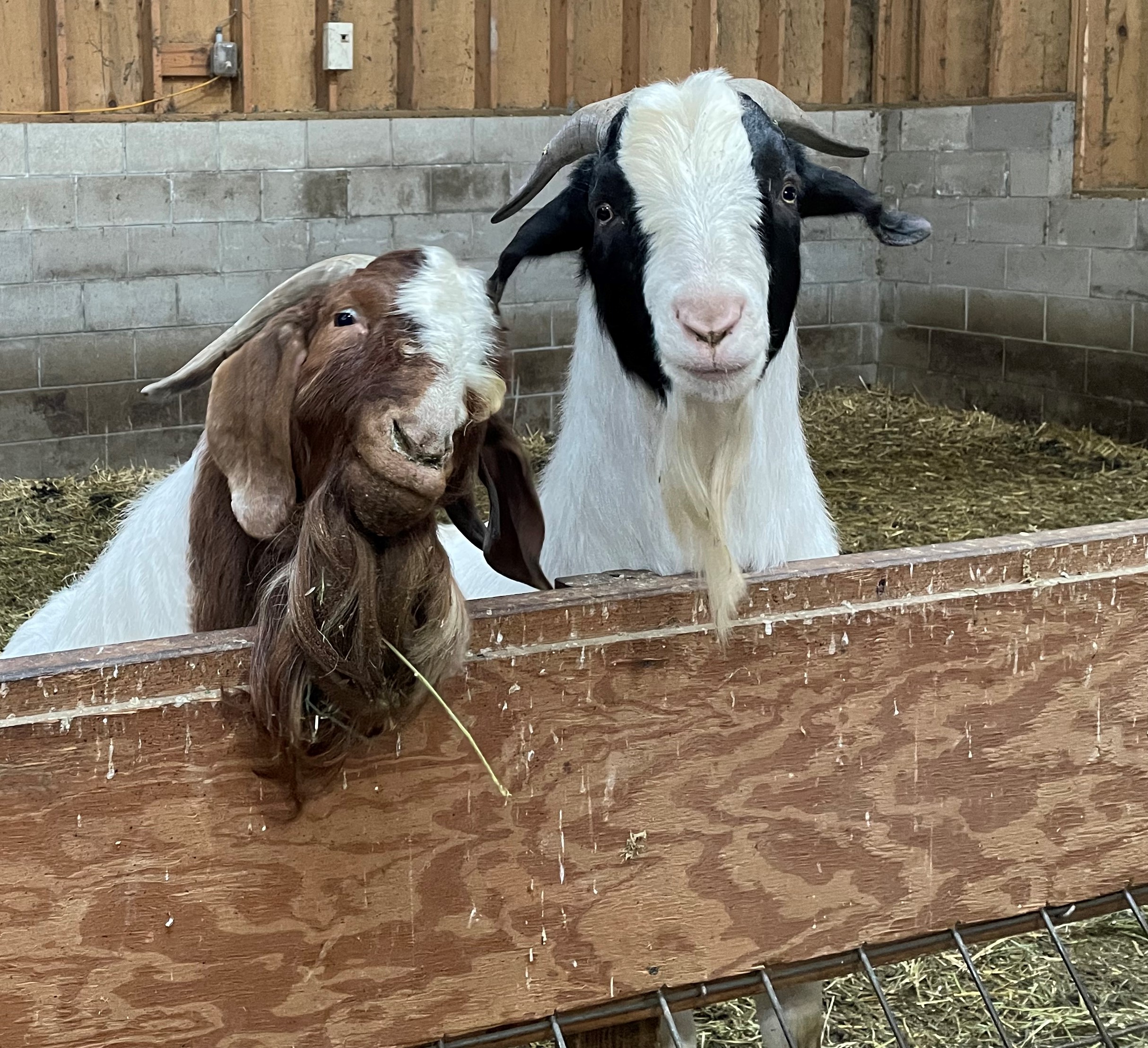
After reading Vanishing Fleece: Adventures in American Wool by Clara Parkes, I had an ever so slight understanding of the intricate transformation required to place a skein in my hand.  Yesterday’s visit to Rach-Al-Paca Fiber Processing in Hastings moved Parkes’s words from paper into real life.  Our exploration began in the barn where I handfed corralled alpacas (no spitting allowed.)  We ooh-ed and aah-ed at the herd of goats and kids and then moved into the plant for a discussion of practical tasks like washing, before viewing the mechanical processes of carding, spinning and plying (all requiring lots of math, as well as physics.)  We did eventually reach the shop where, yes, we bought yarn.  

And, our fiber adventure was only half-begun as after lunch we visited MUSE2320 Fiber Co. and met Sara, an entrepreneurial color artist extraordinaire with ties to northern Wisconsin.  Even though she was in the midst of dyeing hundreds of special order skeins following last week’s Minnesota Yarn Shop Hop, we chatted about color, yarn, the river, and the naming of her shop:  muse – a source of inspiration and 2,320 – the approximate length of the Mississippi River.  I am enamored of the MUSE2320 palate. This shop will definitely become a regular source of beautiful yarn.

Happy knitting!

Knitting

The Aquarelle Shawl

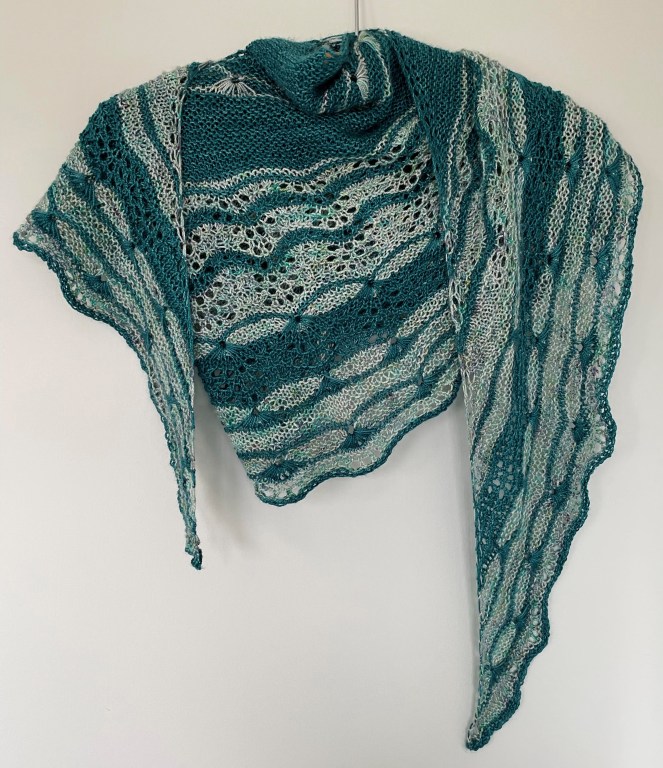
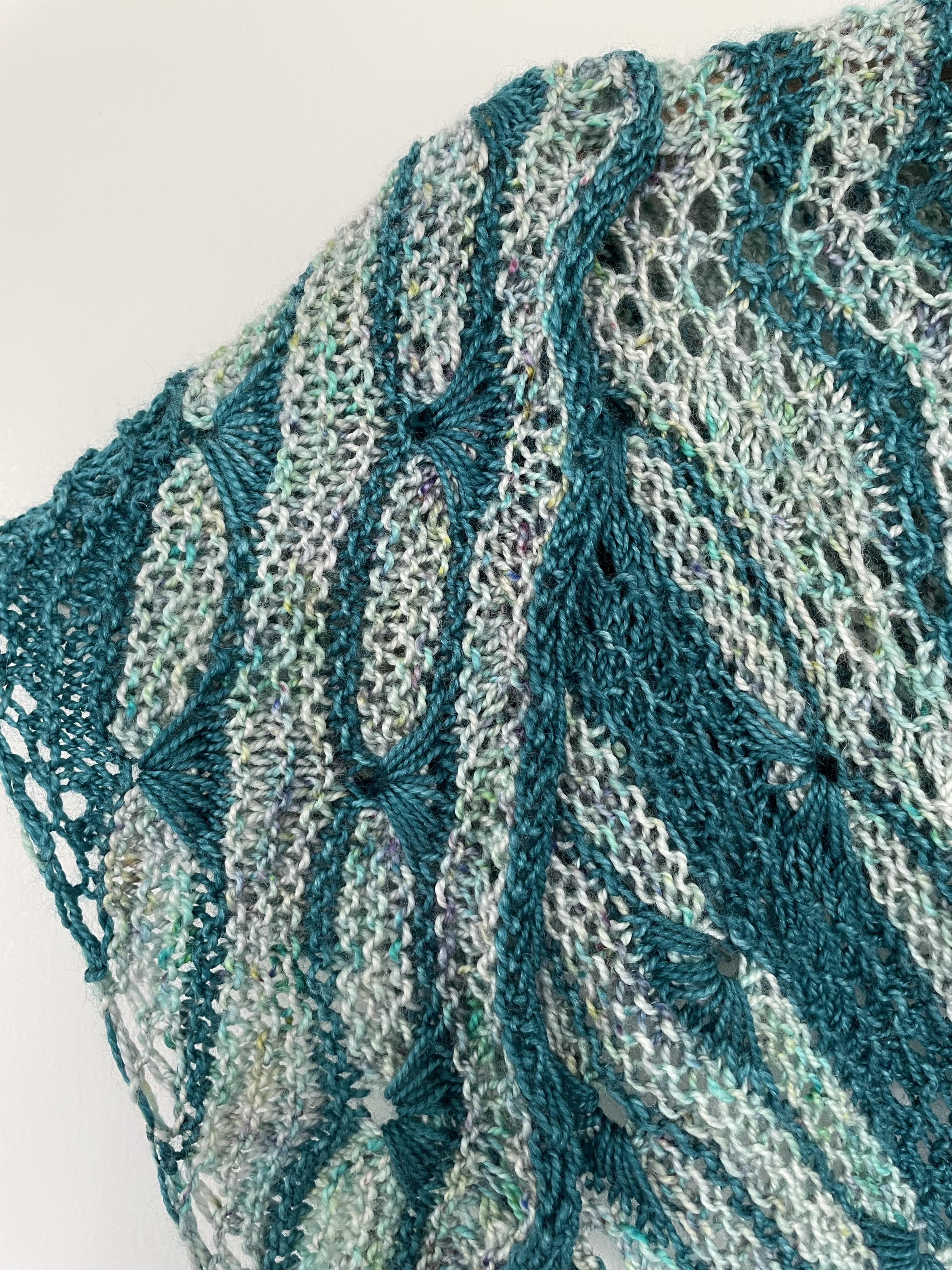
Reminiscent of a walk along the beach collecting shell treasures, Marie Greene describes her latest design as “watercolor-inspired waves opening into shells and scallops”. Using a lovely merino wool and silk blend, The Aquarelle Shawl is my most recent mystery knit along (KAL) project.

Trusting the designer, I cast on in real time with other Knit Campers on April 1 (no fooling) and watched my project evolve without benefit of knowing a final design other than its crescent shape. The pattern was released over two weeks in four mystery clues and revealed shells constructed with yarn drawn over rows of stitches and then mirrored in lace. The long rows of garter stitch, which anchor the decorative design elements, remind me of tides lines lightly scored in water packed sand.

In addition to the fluidity afforded by the silk, the contrasting colors of the two skeins ripple through the fabric alternating between a solid rich teal and a complimentary fingering with ivory, blue and green tones. The colors flow quite like John Lurie’s watercolors on HBO’s Painting with John proving that The Aquarelle Shawl is true to its painting namesake, aquarelle – a “technique of painting in transparent, rather than opaque, watercolours” as defined by Encyclopedia Britannica.

Knitting

Strategic Stasher

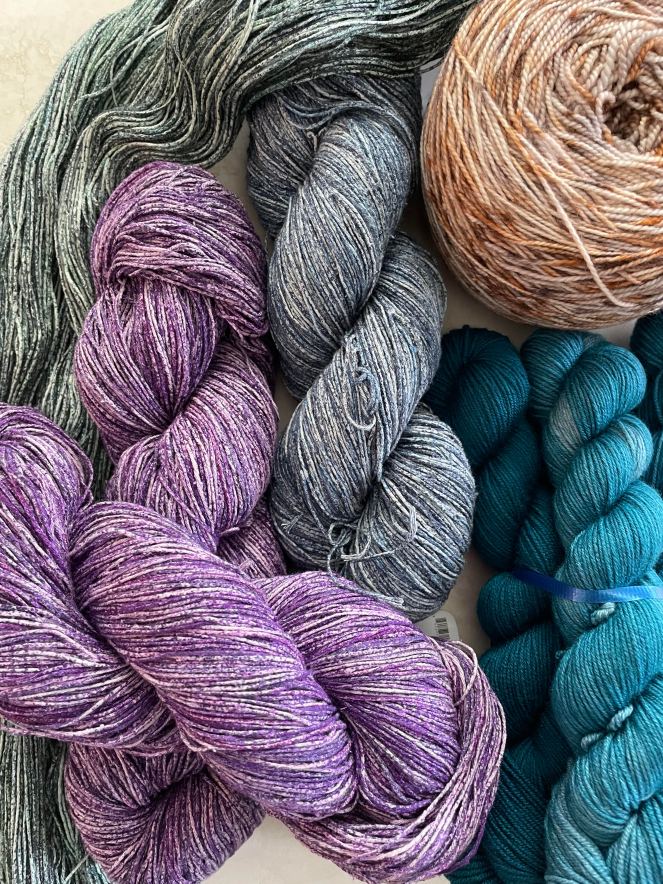
skeins of yarn in multiple colors

While the list of survey questions is not nearly as extensive as a Myers Briggs personality test, the Knit Camp Stash Sprint quiz does incorporate aspects of actual psychological analysis.  Of Marie Greene’s three basic yarn collector types, Fiber Sentimentalist, Optimistic Acquirer, and Strategic Stasher, my profile falls strongly into this last category.  Individual traits include:

  • Well organized stash.  (I pride myself on having every skein carefully cataloged on Ravelry with important details duly noted such as weight, color, dye lot, purchase price and date, including a photo for quick visual ID.)
  • Well planned projects and purchases.
  • Likely to use exactly-the right-yarn for the job which often necessitates purchasing new yarn rather than substituting.
  • Willing to relinquish yarn if a project changes direction.  (As proof, 14 skeins found their way to new homes as prizes for the Zumbro River Fiber Arts Guild: Knitting Group’s first ever annual Winter Finishing Fest.)

During my Stash Sprint class I handled every skein with a discerning eye.  While deciding what to keep and what to give, I made some discoveries.  Fingering weight comprises a third of my reserves but then many of Martina Behm’s designs require this weight and Hitchhiker is my favorite pattern.  DK makes up the next largest quantity but that makes sense as well as it is a great weight for sweaters and my first (and to date, only) dyeing project used this weight.  I have never knit anything in lace weight yarn and gave away two skeins but sentimentally kept two simply because of when and where I purchased them.  Since my access to the Knit Camp Stash Sprint class never expires, it will be interesting to see how my stashing patterns evolve and whether, after taking this online course, if I reframe my approach to yarn acquisition.

Happy knitting!

Knitting

Boost the FOF Tally

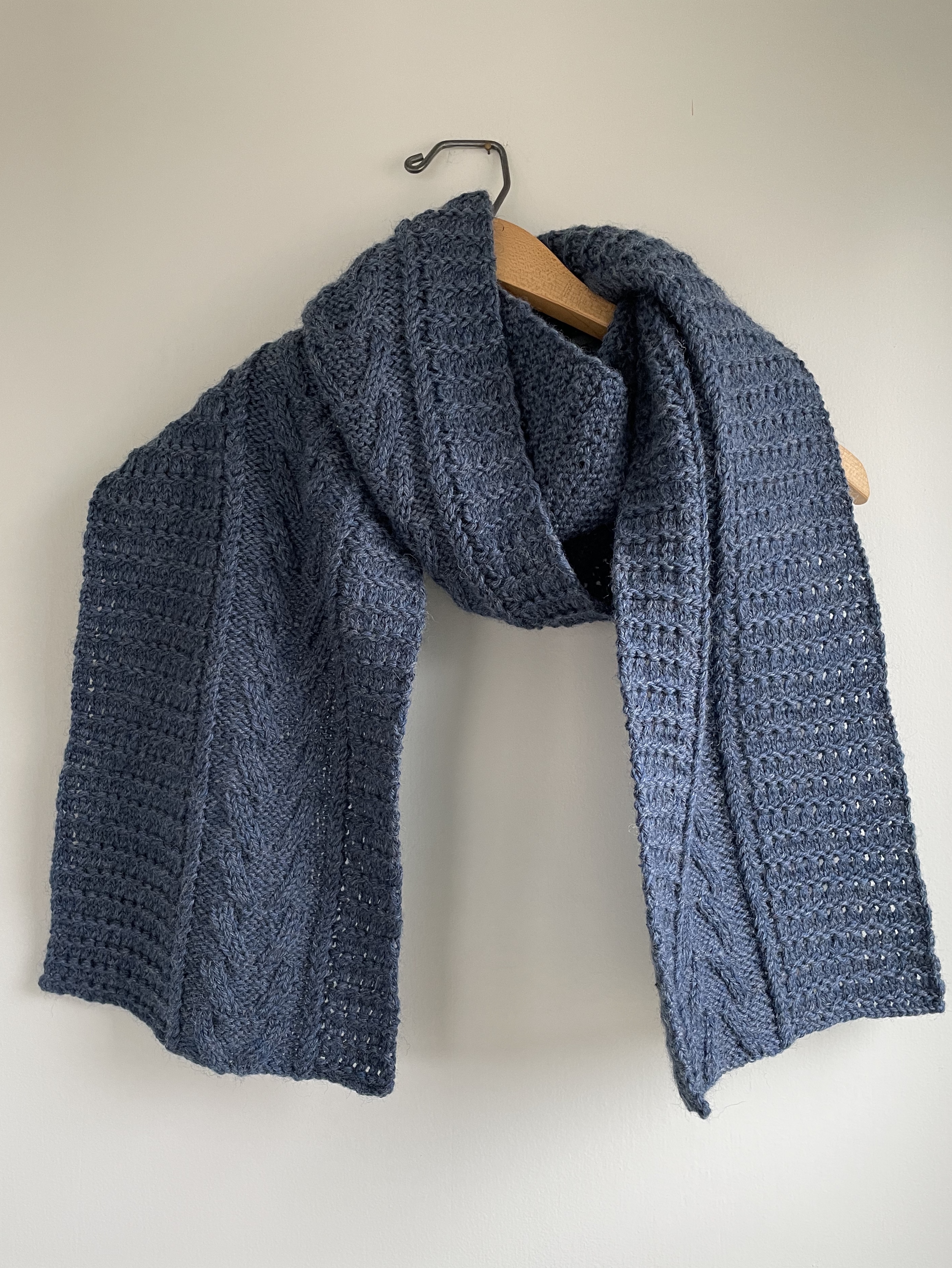
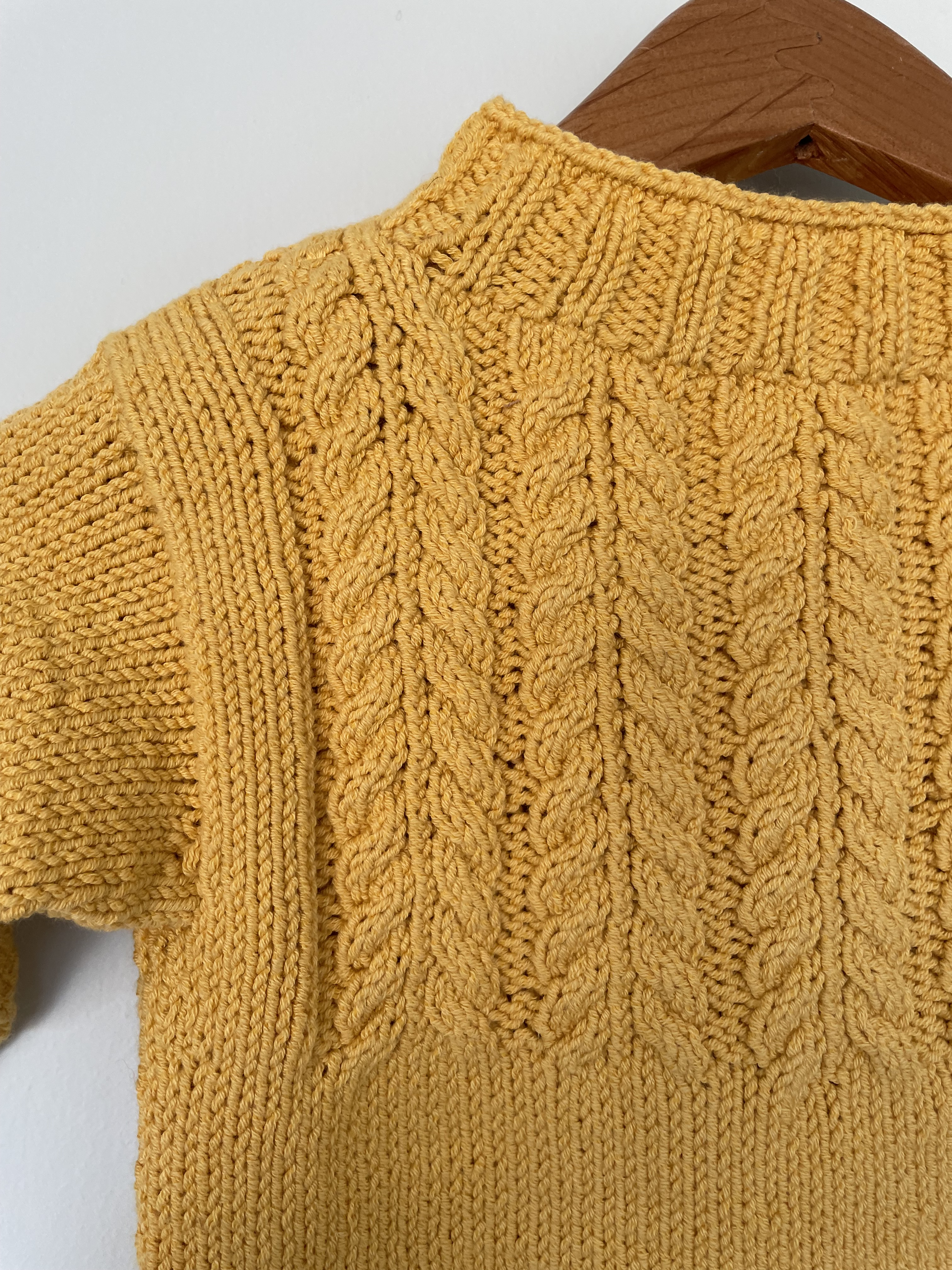
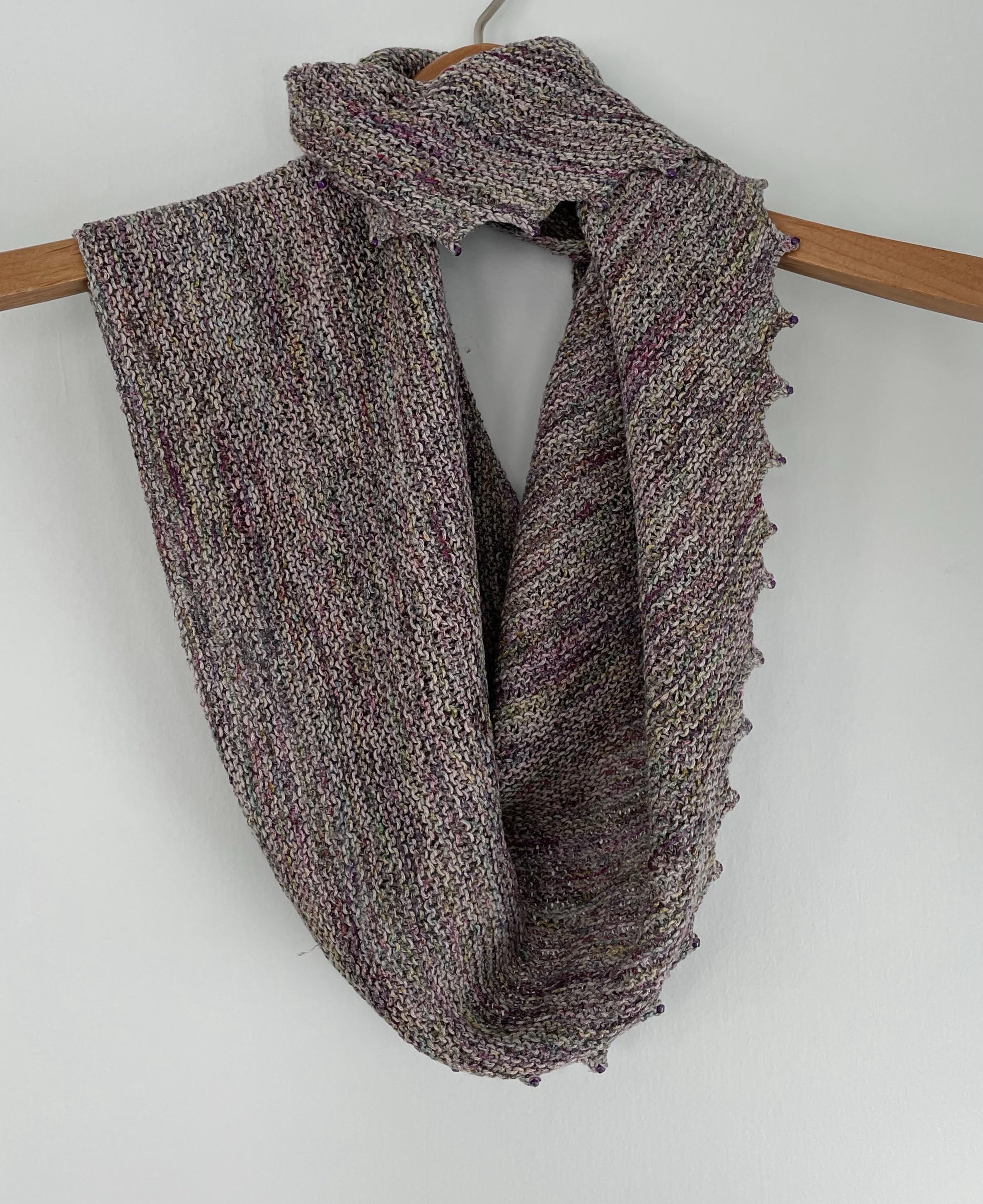
Just in time to tackle a spring mystery knit-along (MKAL) with Marie Greene and to learn brioche with members of the Zumbro River Fiber Artists Guild’s Knitting Group, my WIP (Work-in-Progress) count has been reduced by three on this Finished Object Friday (FOF).  The deep heather blue scarf and muted lavender shawelette have yet to find homes but the vibrant yellow sweater will be gifted to a great niece or nephew arriving in May.  (Shhhh!  It is still a secret for the mom and dad-to-be.)

The small Gansey sweater, designed by Marie Greene, incorporates a cabled yoke for bit of decoration on the practical pullover knit using an easy to care for cotton, nylon, rayon, and silk blend.  Knit in a size 2-4, my new great-great niece or nephew will have something to grow into and, hopefully, will have many days of warm wear.

The blue wool scarf is another of Marie’s designs.  Reminiscent of barrel staves and trellised grape plants, the French Oak pattern reveals off-center cables traveling the length of the scarf like grape vines.  And, I am starting out a new year with another Hitchhiker, perfect for a special person knit in 100% rustic silk with Czech glass beads decorating each tip.  This is Hitchhiker #23 in my collection of hand-knit gifts.

Knitting

Vivi Off the Needles

In keeping with the theme of #FOFriday – finished object Friday – I am showing off my finished Vivi from the January/February sweater knit-along (KAL) with Marie Greene.  Based on progress postings and Zoom meeting reports, hundreds of other knitters enjoyed this project as much as I did.

This January Workshop KAL is the fourth of Marie’s annual offerings – something new for the New Year.  Through her integrated curriculum, this community-based project allows knitters to explore the fiber arts from a faraway place; a virtual vacation each year.  During the two month KAL, Marie offered technical lessons on topics such as shoulder construction, provided historical background on Danish “night” sweaters, and even shared scrumptious traditional pastry recipes – Yumm!

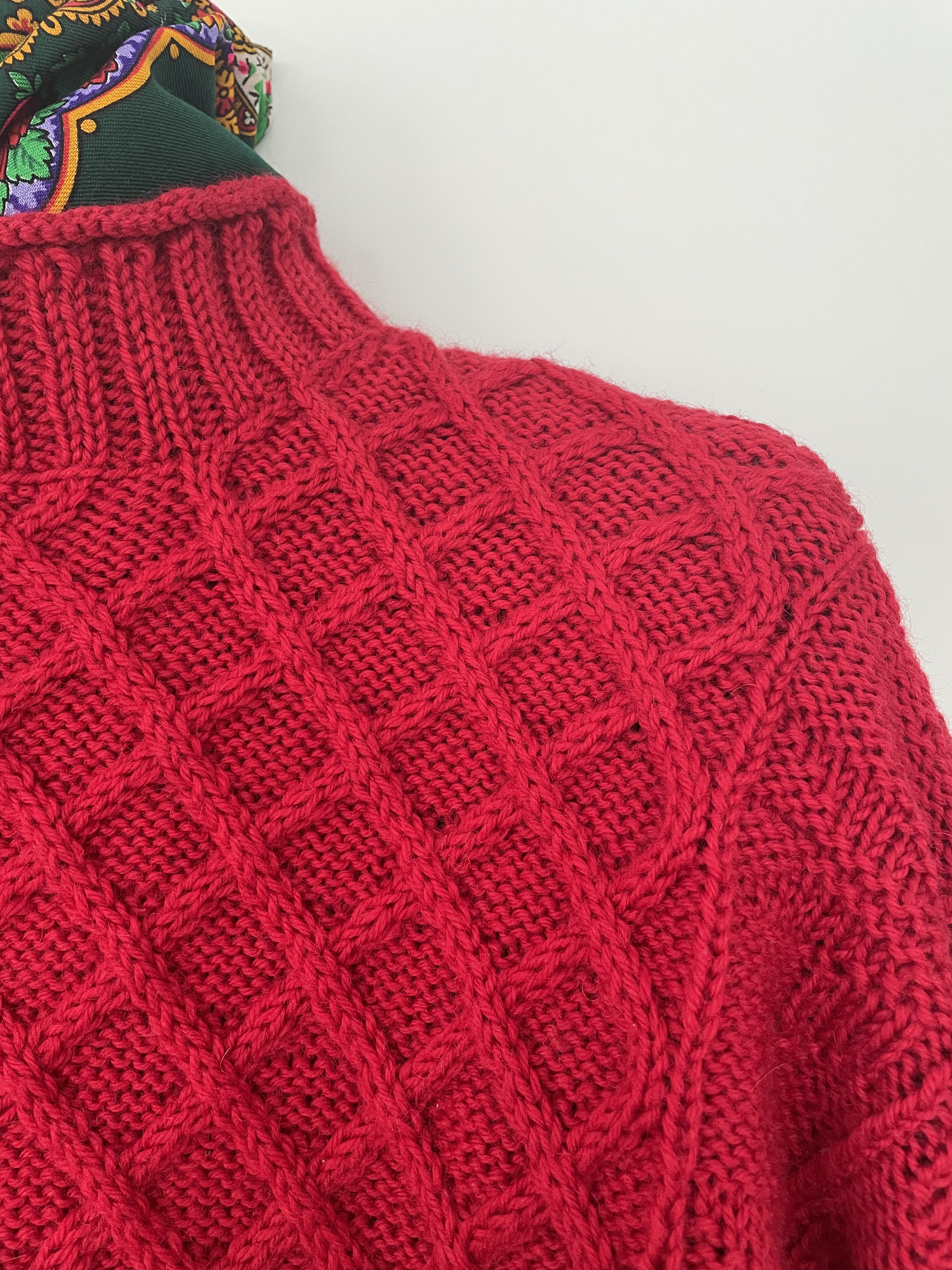
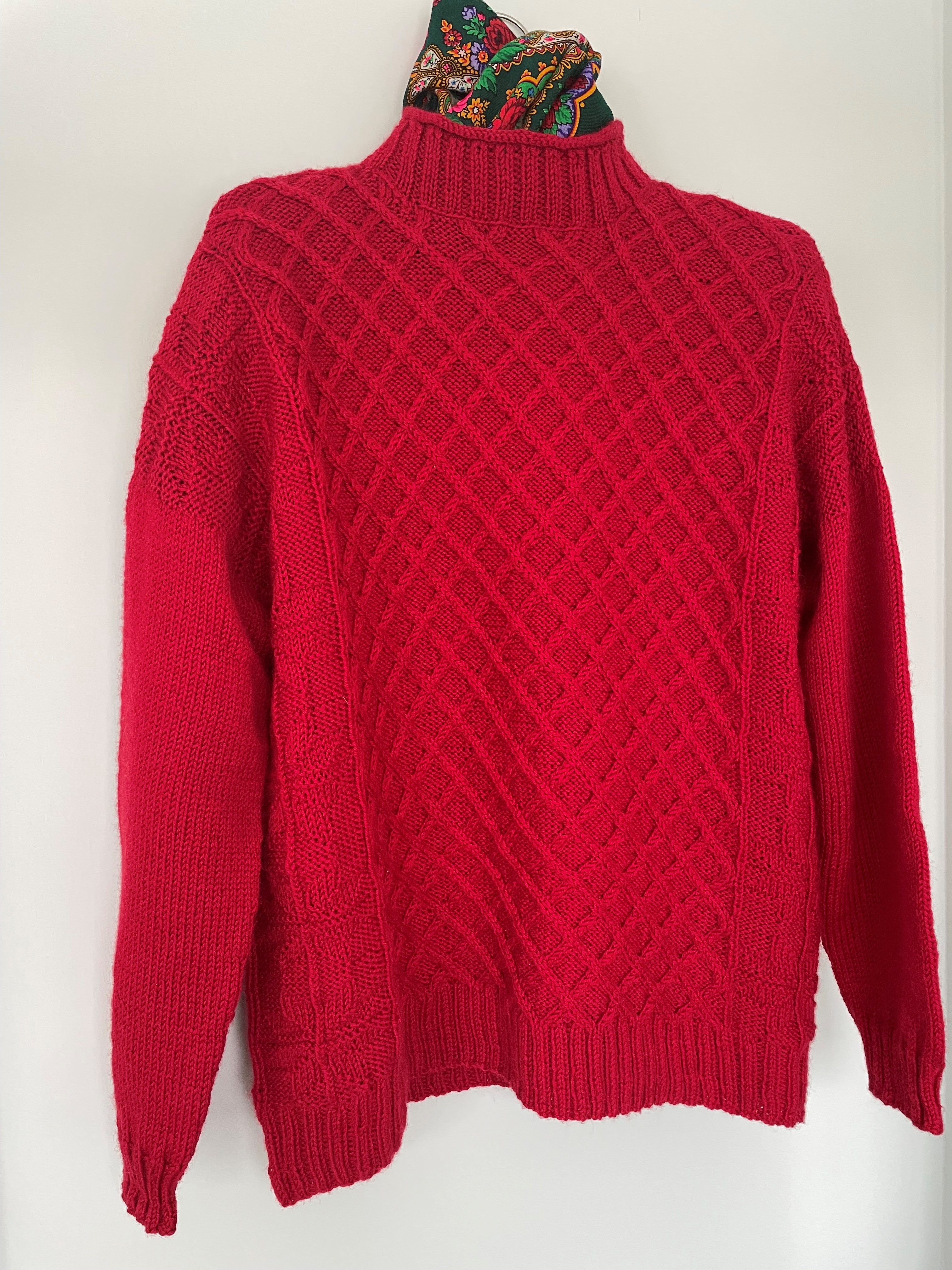
The KAL officially launched January 1 although Knit Campers (that’s me) were awarded an early pattern release by a few days.  On December 30, I casted on 292 stitches of worsted Berroco Ultra Wool in Chili Red to start this bottom-up construction and I worked my last bind off cuff stitch on February 26.  Squishy soft after blocking and plenty warm for chilly spring days.

Happy knitting!

Knitting

Snuggly Warm

gray knit afgan on blue leather chair

I tend to be a monogamous knitter, that is one big project on the needles at a time, but this winter was different. As our world contended with yet another Covid variant and surging infection rates, I stayed home knitting and reading. (Are there any better cold weather tasks?) I alternated between my red Knit Camp knit-along (KAL) sweater, Vivi, and a gray gansey afghan.

The Cambridge English Dictionary defines gansey as “a thick, knitted sweater made of yarn, of a type originally worn by fishermen; synonym – guernsey.”

Originating over 400 years ago on the Channel Islands, traditional ganseys were tightly knit for warmth and as a resistant barrier against cold sea winds and salty sprays. Stitch patterns were inspired by everyday objects aboard ship – lines (ropes), ladders, and nets. My afghan incorporates repeats of garter ribbing, double moss, and diamond brocade stitches on either side of a diagonal chevron zigzag pattern; when put together with Berroco Vintage Chunky (for ease of washing) the result is snuggly warm.

Happy knitting!

PS – If you are looking for a romantic, period piece with a good story which also depicts the isolation of island life, check out The Guernsey Literary and Potato Peel Pie Society.

Knitting

Together / Zusammen

I can attest that the normal excitement felt when the FedEx truck parks in front on your house is compounded when knowing that the only expected delivery is an international priority from Damsdorf, Schleswig-Holstein, Germany.  My Strickmich! Club yarn arrived today making it a Valentine’s Day treat!  Inside the FedEx mailer were four individually packaged projects.  The recyclable opaque paper bags were designed to keep the mystery alive, but carefully color coded 1-4 to match the Strickmich! Club logo and the corresponding cast-on dates.

  • February 26
  • May 21
  • September 17
  • November 19

The four (just begging to be opened) bags hold one-of-a-kind skeins representing the artful collaboration between four independent European dyers and designer Martina Behm.  Each exclusive skein was specially colored to compliment a new original pattern.  But even if I succumb to a sneak peak (which I have not, as yet) the patterns will remain a mystery since they will only be released electronically on the specified cast-on dates.  And, on those dates, just as this year’s club theme Together celebrates, I will join other knitters from around the world as Martina hosts two Zoom parties – one in German and corresponding to Central European Time (CET) followed by an English workshop at a time conducive to US participants.   As Martina explains:

In Strickmich! Club 2022, the people who make our yarns come from very different places, and every project I design for the club will reflect that. But what’s important is that knitting brings them – and us – together. That’s why our motto for 2022 is “Together”, and we will celebrate that with every design and club project we knit.

Just 12 days until I can open package #1.  Happy club knitting!

Photo credit: © Martina Behm

Knitting

Stash Sprint

Twice before I have started but not completed Stash Sprint with Marie Greene; described as:  “A 6-week stash discovery workshop – complete with stash management tools and resources for happier stash knitting.”  I am not sure what interfered with my intentions on previous enrollments but I hope this blog post will create a sense of responsibility to you, the reader, to make this third time the charm.

You don’t make art out of good intentions.

Gustave Flaubert
yarn stored in containers

An early workshop assignment asks for a stash picture so that workshop participants can cheer on individual progress as organization takes hold.  For purposes of this photo shoot and to honestly share what I have where with my fellow Stash Sprint specialists, I’ve pulled from two locations.  No craft room for me – our house is just too small.  The two 34 inch x 15 inch plastic bins on the left “hide” under the bed – yes, I know that is negative feng shui. Three containers (two woven wicker baskets and one hand thrown pottery pot) on the right are stashed (pun intended) behind my Ekornes Stressless recliner in the TV room where the majority of my knitting occurs.  Ravelry records my stash as 106 different yarns, mostly single skeins but some in quantities of two-s or three-s.  Enough of each for a hat or a cowl or hat & cowl set.  The division (right now) is by weight so I can find what I need based on a pattern’s recommended weight but we will see what changes with Stash Sprint.

Knitting

Vivi KAL 2022

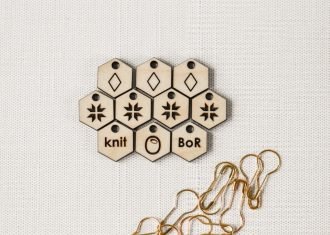
ten laser cut knitting stitchmarkers and gold coil-less safety pins on linen background
Vivi custom stitch markers from Olive Knits

After a wardrobe review, I admit I do not need another sweater. Having knit two in 2021 that I wear infrequently due to our continued Covid stay at home-ness, I initially decided to pass on Marie Greene’s 4th annual January Workshop KAL (knit-along).  But then I was swept up in the enthusiasm of my fellow Knit Campers’ yarn selections and color choices, plus Marie’s newest design features (my favorite) cables!

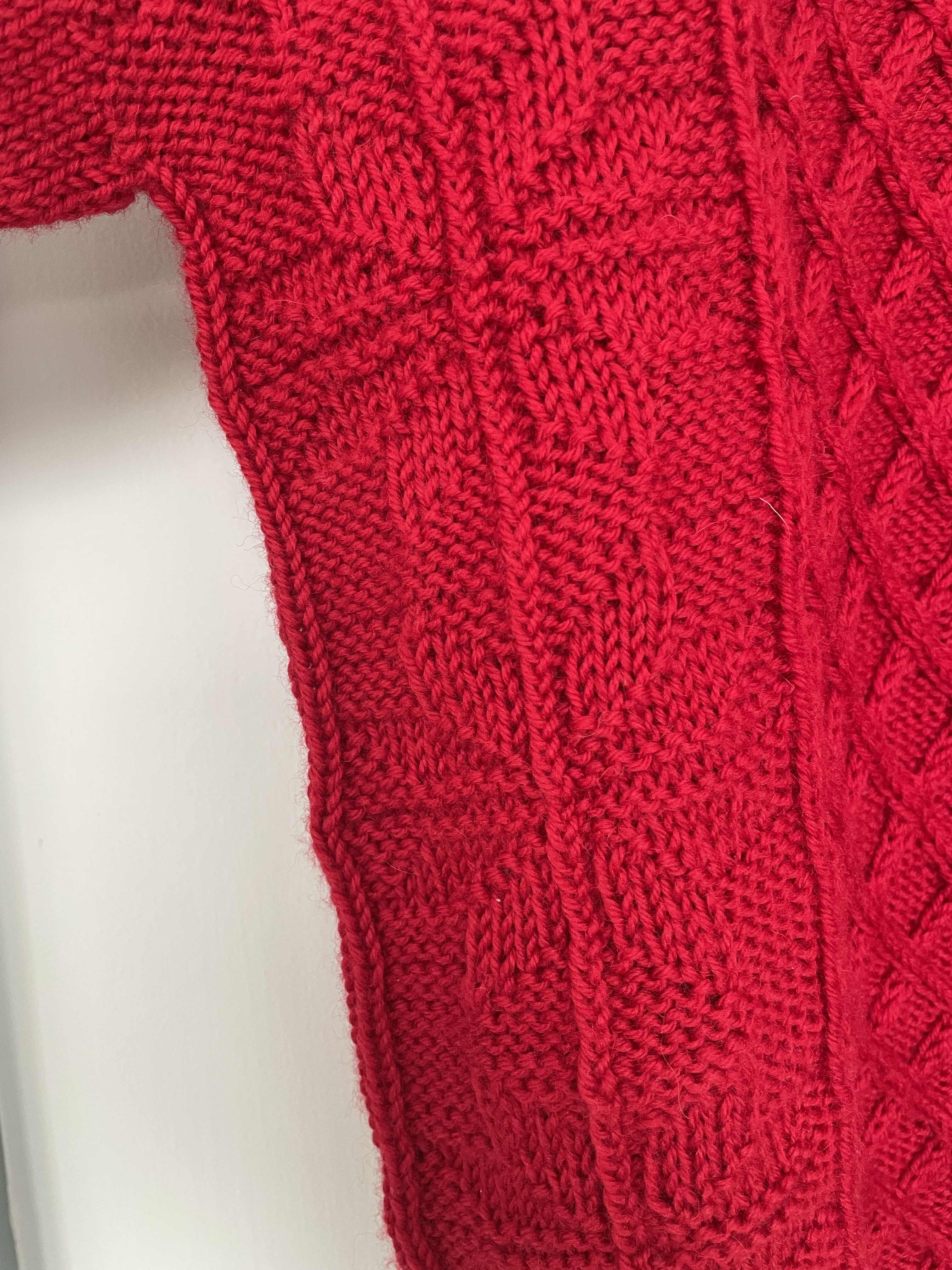
Ironically, while my September trip to Copenhagen and the Faroe Islands was cancelled, I will enjoy Danish artistry virtually with Vivi. Pattern pictures reveal a lattice of cabled diamonds gracing the sweater’s front and Danish stars decorating the sides.  Unlike the intricate colorwork of Scandinavian cousins, these Danish designs rely on subtle stitch definition against a monochromatic backdrop.  And, as always, during the eight weeks of this annual workshop KAL, Marie will share historical background, new techniques via video tutorials, and ethnic recipes for culinary exploration, as well as a large dose of “hygge” – perfect for this lingering pandemic.

Happy knitting!

Photo credit: © Marie Greene

Knitting · Spirituality

Mistakes Encouraged

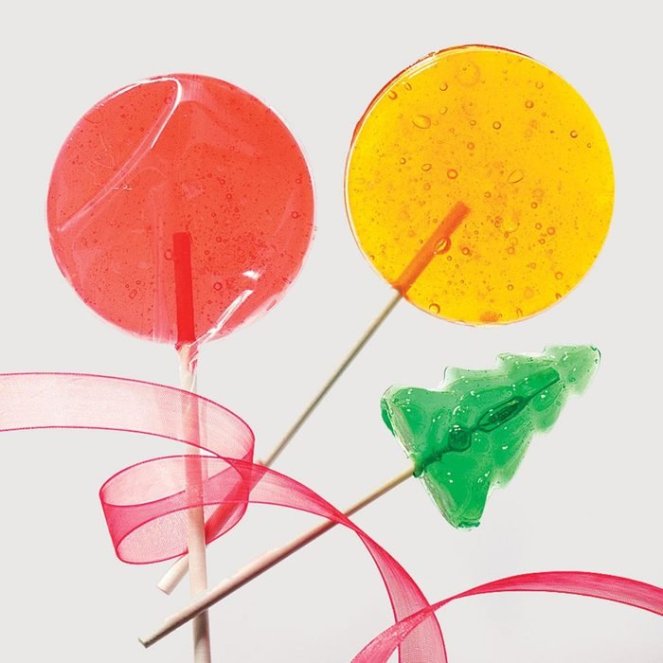
red, yellow and green pine shape lollipops with red ribbon

When I was little girl, I used a variety of rhymes to help make choices.  You may have as well.  A syllable paired with each point of the finger to choose the grape or the cherry lollipop or to determine which of two sides would kick first in kickball.  Back then, the very act of recitation felt quite magical.  A difficult decision simplified.  As adults we know the decision was made with the first point of the finger because of a set number of syllables.  

And yet, even knowing that in many aspects of our lives there are a set number of syllables, I am always surprised when what appears to be the disparate aspects of my life come together.  How is it that liturgical preparations and searching for a new knitting pattern can blend so seamlessly?

Living with Intention is the theme of my spiritual reflections this month and I discovered very similar language in these meditations and recent blog posts by two of my “go-to” knitting designers.  Christina Campbell in Iowa and Solène Le Roux in France both infuse nature into their designs, whether incorporating leaf patterns or revealing rippling water as yarn is transformed from skein to knitted object.  Both designers take a very holistic approach to their craft.  It is not about just the design or the fiber, but the whole experience; encouraging the reader, the knitter to pause, to develop the muscle of inspiration, to connect with nature and each other; encouraging the knitter, encouraging the person to act with intent.

In Navajo weaving every thread tells a story.  The weaver brings the strands together not just to accomplish a function – a finished blanket or rug – but with the specific intention to communicate the culture, the land, a way of life.  Traditional Navajo weaving requires the weaver to incorporate a mistake.  This is done in homage to the belief that only the creator is perfect and acknowledges the weaver is not.  To live with intention or in this case to weave with intention. 

Now, I admit I have a difficult time with mistakes when I am knitting.  I have been known to rip out an evening’s work – rows and rows, thousands of stitches when I discover a break in the design, something that jumps out as an eyesore.  Even with all my experience knitting the same row again and again, I cannot claim that I have ever come close to knitting anything without error and I am certainly not good enough to emulate the Navajo weavers such that the mistake becomes a design element enhancing the final piece.  And so the advice from English writer, Neil Gaiman, spoke to my heart and hands and I hope his words will resonate with you as well as we move into a new year; a new year in which there are sure to be plenty of unknowns.  Gaiman writes:

I hope that in this year to come, you make mistakes.

Because if you are making mistakes, then you are making new things, trying new things, learning, living, pushing yourself, changing yourself, changing your world. You're doing things you've never done before, and more importantly, you're Doing Something.

So that's my wish for you, and all of us, and my wish for myself. Make New Mistakes. Make glorious, amazing mistakes. Make mistakes nobody's ever made before. Don't freeze, don't stop, don't worry that it isn't good enough, or it isn't perfect, whatever it is: art, or love, or work or family or life.

Whatever it is you're scared of doing, Do it.

Make your mistakes, next year and forever.

Photo credit: Old Fashion Lollipop Recipe from Taste of Home