A fundamental question was raised during last week’s sermon. A question appropriate to living our individual lives as we continue to navigate the details of re-gathering amidst viruses and variants (and move into what is predicted to be a virulent flu season) and especially poignant for a welcoming congregation:
“How are we making a wide arrival? Enough space for all our grief, our stories, our uncertainties; how to find passageways of life in this changed and changing world?”
Admittedly, in the Hutton household and, I am sure, at your house too in these nearly but not quite post-Covid days some tasks are easier to navigate than others. Some days we find ourselves almost back to a routine that feels comfortable like a well-worn flannel shirt on a cool September day or going to church on Sunday morning. But then we arrive in that sacred space and see smiling masked faces and we must admit it is the same but different.
In the midst of these ambiguous days, Richard and I decided we would add more uncertainty to our daily life. Since July, our house has been in some form of disarray due to three (count them – 3) renovation projects. Just to be clear, all of the work has been undertaken by choice and not a crisis with our nearly 100 year old house – built in 1925 and moved in ’27. All the work is being done so that we might continue to “age gracefully in place.”
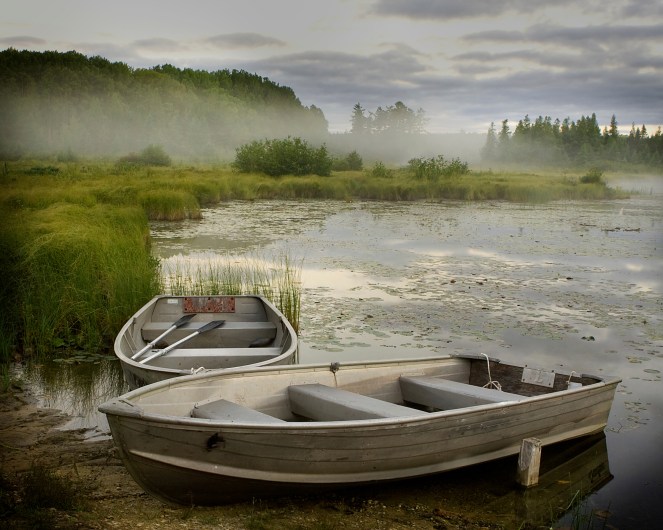
Last Sunday’s homiletic imagery of drifting on the water, anchored, but with a shifting shoreline accurately described our days. Carpenters arriving on a date set two months earlier – anchored. Getting a call late Friday that the team of painters and plasterers would arrive early the next week – definitely felt like bobbing on choppy water as we scrambled to move all of the furniture from four rooms, take our eclectic collection of art off the walls, and remove all the electric faceplates.
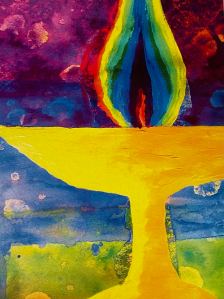
Knowing our renovations were close to completion but with more work still to be done, I arrived at church last Sunday and felt anchored as we poured our collected water tributes into the large blue bowl and music rang joyfully. Anchored again this morning seeing familiar faces and welcoming new members as we make “a wide arrival”.
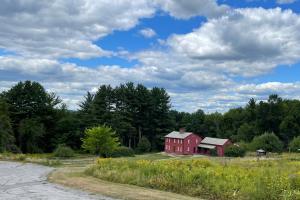
Alcott house during a 7-month failed utopian experiment at Fruitlands
My first travel discovery was a shift in language; the journey defined not as a trip, or a vacation or even a history tour but as “pilgrimage.” For the 15 of us, this was a time to immerse ourselves in stories; to amble the same path as Henry David Thoreau trod along the shores of Walden pond; to climb the same steep, narrow wooden stairs to the Arlington Street Church bell tower and ring the same bells that would have gathered people to hear William Ellery Channing speak; to saunter through Sleepy Hollow Cemetery and touch the gravestone of Louisa May Alcott.
Some highlights of our days of pilgrimage:
New England stone wall on the Emerson-Thoreau Amble
King’s Chapel – touched the last bell cast and hung by Paul Revere
Arlington Street Church – tried my hand at ringing three of the 16 bells
Mount Auburn Cemetery – left memorial bouquets at the graves of William Ellery Channing, Hosea Ballou, John Murray, and Margaret Fuller
Walden Pond – walked the entire pond and left a Winona river rock at the stone cairn close to the site of Thoreau’s cabin where he lived for 2 years, 2 months and 2 days
Old Manse – saw the desks where Hawthorne wrote The Scarlet Letter and Emerson wrote Nature
Sleepy Hollow Cemetery – discovered that as they were neighbors in life, so too they are neighbors today as we visited Authors Row and the family plots of the Alcotts, Thoreaus, Emersons, and Peabodys leaving pencil homages for Louisa May Alcott, Henry David Thoreau, and Elizabeth Peabody.
First Parish in Concord after vespers on the evening of our departure
Our days were filled visiting churches, graveyards and cemeteries (learning these two are different from one another) and touring the homes of literary giants. All the while hearing concise history lessons laced with anecdotes that put flesh and bone to revered names and made them quirkily human. We benefited from bookstore visits, invigorating conversations, time for quiet reflection, and the recitation of poetry.
The Road
The road waits.
... when it invites you
to dance at daybreak, say yes.
Each step is the journey; a single note the song.
-	Arlene Gay Levine
P.S. And six of us hopped the green line to Fenway for a Red Sox win. The green monster is really monstrously tall!
I have a copy of Michael Holroyd’s definitive biography of Lytton Strachey. A gift from a friend, the two-volume boxed set serves as a bookend anchoring a shelf of history titles. My friend was a Bloomsbury aficionado. He read everything he could about these post-Victorian intellectuals even waiting patiently to purchase The Letters of Virginia Woolf published in six volumes; book-by-book over 10 years. He also gifted me his extra copy of The Loving Friends: A Portrait of Bloomsbury by David Gadd.
When the Pilgrimage to Massachusetts reading list (yes – an actual two-page bibliography of primary and secondary sources) included American Bloomsbury by Susan Cheever, I thought this title could be the primer I needed (just as The Loving Friends had been) to better understand our American literary giants. As the subtitle describes, American Bloomsbury focuses on the lives, loves, and work of Louisa May Alcott, Ralph Waldo Emerson, Margaret Fuller, Nathaniel Hawthorne, and Henry David Thoreau.
These profoundly talented people moved among each other, sometimes living together, sharing books, reading what each other wrote, and relishing in deep philosophical discussions. In the introductory “Note to the Reader” Cheever describes her intent to work chronologically but to do so from each of her primary character’s perspectives thus her timeline moves back and forth as she describes overlapping incidents and conveys the stories of their lives life in Concord and the surrounding environs during the 1830s – 1890s.
Their individual accomplishments – Little Women, The Scarlett Letter, Walden, Or Life in the Woods – create for us a tableau of 19th century life; a young country, a growing divide over slavery; and women’s rights still but a wishful glimmer only in some minds. But, taken as a whole, these hearty New Englanders defined a literary, philosophical, religious, and political movement that we call Transcendentalism with its core belief in the inherent goodness of the individual and nature.
I leave early (4:45 am) tomorrow to see their homes and haunts.
One week from today I leave for Boston. My flight out of Rochester (RST – MSP – BOS) departs at an inhumane hour that requires leaving home around 4 am. Admittedly, this was my decision as there are other departures with connections heading east but I opted to use already paid for Covid miles/dollars held in escrow by Delta for canceled trips to Phoenix, Providence, and Denmark. 2020 was to have been a travel-cious year.
I considered using Knit+ Librarian as a daily travelogue so you could join me vicariously as I visited historically important sites in Boston, Cambridge, Concord, and Gloucester but then re-thought this potential commitment. As with most guided tours, our August 9-15 itinerary is full enough to make me wonder just how much time I will have to write; there is no guarantee of strong Wi-Fi needed for posting; and, while I know technically it can be done, I lack any desire to blog on my iPhone. Plus, I have to wonder if you really want to read about the minutia of my days. Rather, I’ll give you a succinct postcard summary complete with an appropriate selection of photos (no – dinner plates, I promise!) after I return to Minnesota.
A sampling of anticipated highlights may include: King’s Chapel, Old North Church, Harvard Square, the Sargent-Murray House, Walden Pond, and Sleepy Hollow Cemetery but you will have to wait until the end of my trip to know for sure.
This spring, I learned about a new creative project led by Suleika Jaouad that encouraged participants to “create one tiny beautiful thing each day” for 100 days as a way to bridge the isolation of Covid and return to an as-yet-to-be defined new normal. The choice of how to excite the imagination was to be determined by each participant.
When I was young, I enjoyed reading poetry but somewhere along the way, poems assumed an impenetrable guise and poetry become something I rarely read. Although I did take a significant plunge into well written verses during the summer of 2012 when I joined Karen Sandberg and Rose Mish in presenting a summer service comprised entirely of poetic readings. With the 100-Day Project the timing seemed right to revisit poetry. I decided I would read a poem each morning and discover (or re-discover) a poet every day.
I created a poem calendar to track my daily progress complete with hyperlinks so that I could re-read the gems I discovered. One such beautiful verse is Small Kindnesses by poet Danusha Laméris. She asked 1,300 teenagers about the small kindnesses that make a difference to them and then used their answers to write this poem:
Small Kindnesses

I’ve been thinking about the way, when you walk
down a crowded aisle, people pull in their legs
to let you by. Or how strangers still say “bless you”
when someone sneezes, a leftover
from the Bubonic plague. “Don’t die,” we are saying.
And sometimes, when you spill lemons
from your grocery bag, someone else will help you
pick them up. Mostly, we don’t want to harm each other.
We want to be handed our cup of coffee hot,
and to say thank you to the person handing it. To smile
at them and for them to smile back. For the waitress
to call us honey when she sets down the bowl of clam chowder,
and for the driver in the red pick-up truck to let us pass.
We have so little of each other, now. So far
from tribe and fire. Only these brief moments of exchange.
What if they are the true dwelling of the holy, these
fleeting temples we make together when we say, “Here,
have my seat,” “Go ahead—you first,” “I like your hat.”
For a large portion of my professional career I managed a library cooperative. The cooperative’s life blood was meetings; meetings to discuss when to offer ebooks; when to discontinue the 16mm rotating film collection; whether or not to charge fines. You get the gist – lots of discussions about everything.
Since my days were already full of agendas, I was judicious when agreeing to anything involving yet more meetings during my sparse personal time. Even at church, I was selective. I chose activities I deemed enjoyable although some might doubt my sanity since “fun” included three stints on a bylaws committee. But, for the most part, I stayed on the sidelines of church governance. I always offered tacit support by voting at every annual meeting but then, having voted, I stepped back and let the Board members do the work. Until one Sunday (thank you Amy N.) when I realized I needed to do more.
With the next election, I moved from the sidelines to the Board, first as member at large, then as secretary, vice president and most recently having been granted the privilege of serving as president for two years which, despite Covid challenges and wonky Zoom connections, a tenure that proved very rewarding. And now, eight years after agreeing to have my name placed in nomination, I have handed the gavel to another and rejoined the sidelines of church governance. Along the way I have grown spiritually, learned more sincerely about the impact of injustice, and felt supported in the hard work of striving for justice.
Several stanzas in a prayer entitled The Grout by Marcus Harlief capture my sense of purpose as I leave the Board:
. . . Religion not only lies in the beautiful mosaic bits and pieces but also in the grout – that chalky, gritty stuff squeezed between the cracks. . .

In a mosaic, the grout holds the image together, unifying disparate pieces into a whole.  The grout of a community takes years to lay and settle.  Grout happens in board meetings and committee meetings and endless emails. . .

And so we pray - Hold us, O Grout.  Gather us in, through time and space, and make all our broken pieces whole in community.  In our multiplicity, make us one.  From each of our jagged edges, give us the shape of a communal beauty.
When hearing the unfathomable and sadly knowing Uvalde, like Sandy Hook and Red Lake and so many more lost futures, will be just another “notch” on America’s gun stock. Let us not just pray but act.
For the sacred souls lost,
and the hearts shattered beyond repair;
for the ways we perpetuate violence
with gun access
with toxic masculinity
with refusing to adequately fund and provide
resources for mental health
for all of us in systems of violence,
may we remember we each have
some way, however small, to respond:
our votes, our prayers,
our broken hearts strengthening our resolve
until we all do the work
of laying down anything
that supports swords and shields
and we study war no more.

     Rev. Luke Stevens-Royer, May 24, 2022
I cannot remember the conference city or the name of the hotel lobby bar where I joined my friend for a late afternoon glass of wine but, even after all these decades, my memory of our discussion is clear. My friend Estelle arrived agitated and ready to resign from a prestigious committee. As I tried to discover what had caused her distress, she kept telling me I would not understand. I, of course, argued I would. Finally, she said “I am tired of being responsible for representing an entire race of people.” And she had been right, I didn’t understand.
Even when serving as the sole female on an otherwise all male committee, no one thought I spoke for all women. But Estelle was constantly expected to speak for all people of color. As a talented black woman, often the only person of color in a sea of white, she was put in that untenable situation; expected to know of the needs of an entire community as if the rich, complexity of life was a simple monolith and she held the key.
There is a challenge within every cultural exploration; to learn and celebrate the beauty of that which is different without inadvertently co-opting a tradition not our own. To not to fall into that misguided complacency that created such stress for my friend. While I can revel in the lyrical quality of an Amanda Gorman poem; agonize over the brutal reality of black life in white America as portrayed in a cinematic adaptation of an August Wilson play; even get caught up in a who-dun-it following Walter Mosley’s infamous detective Easy Rawlins through the grime and glitter of LA, I must remember – whether fiction or fact – that those descriptions are just a brief glimpse into lives different from my own.
The challenge is to appreciate the uniqueness of each person’s life, to recognize that each difference in upbringing, family food tradition, or the myriad of diverse life choices that make a whole person, is to recognize that the opportunities for personal growth are endless. That with each book I read, movie I see, or story that I hear, I only hold a very small thread in a rich tapestry of another’s experience.
When I was little girl, I used a variety of rhymes to help make choices. You may have as well. A syllable paired with each point of the finger to choose the grape or the cherry lollipop or to determine which of two sides would kick first in kickball. Back then, the very act of recitation felt quite magical. A difficult decision simplified. As adults we know the decision was made with the first point of the finger because of a set number of syllables.
And yet, even knowing that in many aspects of our lives there are a set number of syllables, I am always surprised when what appears to be the disparate aspects of my life come together. How is it that liturgical preparations and searching for a new knitting pattern can blend so seamlessly?
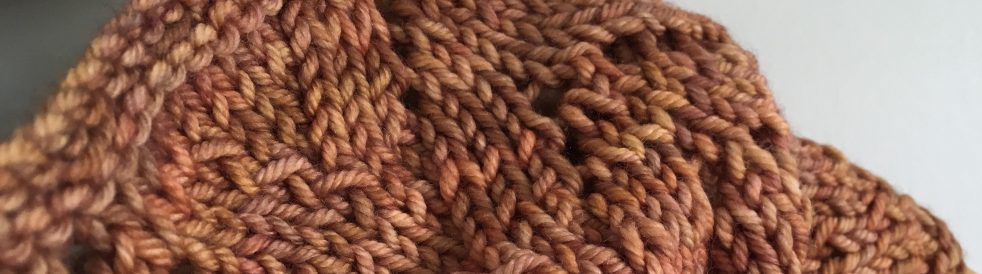
Living with Intention is the theme of my spiritual reflections this month and I discovered very similar language in these meditations and recent blog posts by two of my “go-to” knitting designers. Christina Campbell in Iowa and Solène Le Roux in France both infuse nature into their designs, whether incorporating leaf patterns or revealing rippling water as yarn is transformed from skein to knitted object. Both designers take a very holistic approach to their craft. It is not about just the design or the fiber, but the whole experience; encouraging the reader, the knitter to pause, to develop the muscle of inspiration, to connect with nature and each other; encouraging the knitter, encouraging the person to act with intent.
In Navajo weaving every thread tells a story. The weaver brings the strands together not just to accomplish a function – a finished blanket or rug – but with the specific intention to communicate the culture, the land, a way of life. Traditional Navajo weaving requires the weaver to incorporate a mistake. This is done in homage to the belief that only the creator is perfect and acknowledges the weaver is not. To live with intention or in this case to weave with intention.
Now, I admit I have a difficult time with mistakes when I am knitting. I have been known to rip out an evening’s work – rows and rows, thousands of stitches when I discover a break in the design, something that jumps out as an eyesore. Even with all my experience knitting the same row again and again, I cannot claim that I have ever come close to knitting anything without error and I am certainly not good enough to emulate the Navajo weavers such that the mistake becomes a design element enhancing the final piece. And so the advice from English writer, Neil Gaiman, spoke to my heart and hands and I hope his words will resonate with you as well as we move into a new year; a new year in which there are sure to be plenty of unknowns. Gaiman writes:
I hope that in this year to come, you make mistakes.

Because if you are making mistakes, then you are making new things, trying new things, learning, living, pushing yourself, changing yourself, changing your world. You're doing things you've never done before, and more importantly, you're Doing Something.

So that's my wish for you, and all of us, and my wish for myself. Make New Mistakes. Make glorious, amazing mistakes. Make mistakes nobody's ever made before. Don't freeze, don't stop, don't worry that it isn't good enough, or it isn't perfect, whatever it is: art, or love, or work or family or life.

Whatever it is you're scared of doing, Do it.

Make your mistakes, next year and forever.
Photo credit: Old Fashion Lollipop Recipe from Taste of Home
A new map of the world: With all the new discoveries by Captain Cook and other navigators (Ornamented with the Solar System, the eclipses of the sun, moon & planets) *
My sixth grade studies included a year of world history. We began in Egypt with pharaohs and pyramids, moved to Greek city-states, before traveling across the Adriatic Sea to Rome and eventually migrating throughout Europe. As mine was Catholic parochial school education, interspersed with historical events such as the Battle of Hastings or the signing of the Magna Carta, there was a generous amount of information on popes and the lives of the saints. While in geography class we knew there were countries around the globe, our history curriculum was Eurocentric – that is until 1492 when Columbus sailed the ocean blue after which our study of world history broadened from one track to two and included a large dose of American Manifest Destiny.
I don’t share this story in condemnation of that hard working teacher. I will not judge Mrs. Menard’s teaching methods by a modern litmus test. She used the tools she had at hand, at a very different time than today. She was enthusiastic. She made learning about history fun (albeit a narrowly focused history). It is well documented that most of our curricula, not just that of my childhood and adolescence but continuing in today’s classrooms, regardless of the intended age group, still highlights European accomplishments over those of other cultures.
When Black History Month was first designated in the early 1970s, the library where I worked created a book display pulling together titles scattered throughout the collection. I wondered why a special month when these important contributions should simply be integrated into the normal flow of information. Now, I better understand the need to spotlight lives and achievements whether it is in March as part of Women’s History Month or during the 30 days of November for Native American Heritage Month. These months of celebration are not intended to diminish mainstream accomplishments but rather are a simple acknowledgement that the sheer volume of information and resources presented from a white, male perspective creates an almost impenetrable monolith whether it is history or literature, science or art.
Each of these designated months gives us permission to explore an author, a musician, a filmmaker, that would not be a normal “go-to” source. My study plan for November includes:
Reading a book of poetry by Joy Harjo of the Muscogee (Creek) Nation and Poet Laureate; and
Viewing the films featured as part of this year’s Native Cinema Showcase sponsored by the National Museum of the American Indian.
Join me in “Holding History” by organizing your own personal mini history course and learning more about the rich culture and history of Indigenous People.
* Kitchen, T. , Junior, and John Evans. A new map of the world: with all the new discoveries by Capt. Cook and other navigators: ornamented with the Solar System, the eclipses of the sun, moon & planets &c. London: I. Evans, 1799. Map. Retrieved from the Library of Congress, <www.loc.gov/item/2003630537/>.




 Knit+ Librarian