Writing

A Valentine Twist

white and blue stamped and sealed envelopes framed by pick roses

The simple Christmas letter. A theme for stand-up comics and it has probably been the subject of an SNL skit or two. It is received with excitement as the chance to catch up but may elicit unintentional groans as it is withdrawn from the envelope, depending upon the letter’s length.

Certainly not of sociological merit to warrant research, but what do we know of its demise? Is it simply the victim of postage rate increases? Or, no longer needed in these TikTok days? A quick comparison of two of my personal lists – the 80-plus addresses comprising the mailing labels in the top drawer of my desk and my social media “friends” (air quotes appropriate) reveals few crossovers.

As I reported earlier, I am not inclined to make New Year’s resolutions but as 2023 slipped into a new January, I promised to try (emphasis on “to try”) and write more in the days ahead. I intended these written expressions to take the form of blog posts but I am now inclined to expand my medium from electronic page to printed paper. What unwritten rule prescribes that the holiday letter must be Yuletide greetings? Better timing might be a Fourth of July letter, a mid-summer missive, amid sparklers, s’mores or, as Nat King Cole croons “…[during] those lazy, hazy, crazy days of summer; [to] dust off the sun and moon and sing a song [that is a letter] of cheer.” Or a crazy concoction of Christmas letter and sweet childhood valentines. Cannot you just hear James Bond sophisticated confidence: “Shaken not stirred” so as not to disturb the delicate lacy heart shaped edges?

This oddly timed February letter would be written while still in winter’s hibernating time – before pruning blueberry bushes; before green garlic shoots force themselves through the composting leaves; before lilac bouquets – all while endeavoring to blend holiday greetings and catch-up letter. And, if I start drafting such a composition now, I would still be just days from the previous year so that events of 2023 would not be old news and, paired with plans for the coming months, could update family and friends scattered across two continents. A letter composed in mid-winter stillness rather than frenzied holiday preparations; a greeting without chocolates, without perfume (I am seeing the Versace Eros fragrance commercial in my mind) and without complicating the florist’s second busiest day of the year.

Halfway through January, nearly two-dozen days from New Year’s Eve, I may have landed on an additional resolution – one that is easy to accomplish by mixing time, HP printer ink, and Forever stamps in a cocktail shaker of Valentine’s Day greetings.

Photo credit:  Nur Yilmaz from Prexels

Writing

Lean into Generosity

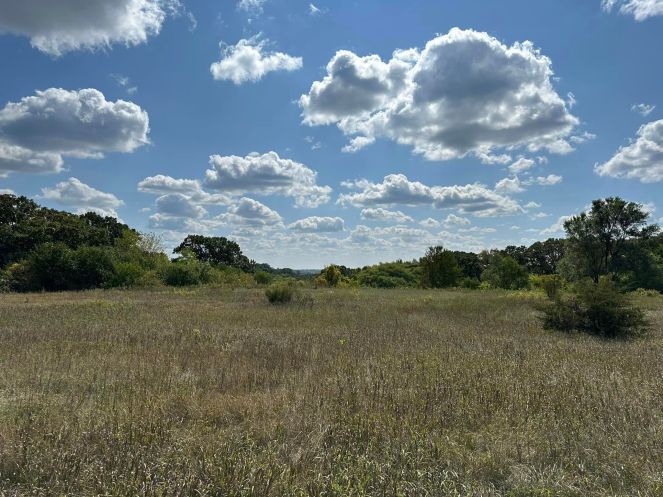
blue sky with clouds, prairie with trees on the horizon

Stuffing or Dressing?  When planning holiday menus at my mother’s house, we call the herby bread mixture “stuffing” even though it is usually never stuffed but baked as a side dish, which technically makes it dressing.  This is one of those times when the word I use doesn’t really matter other than to clarify or maybe create culinary confusion.  But there are times when the words I chose are important and I appreciate the generous nature of my building team members who, with gentle nudges, assist in broadening my vocabulary.

Initially, I referred to the land at the corner of Viola Road and East Circle Drive – the location of our new church home – as property.  After all, our elected board president and treasurer signed legal documents, F&M Bank holds a mortgage, and we are already making improvements to the site as we mow hiking paths and undertake buckthorn eradication – all actions associated with owning “property.”  But we are not so much the “owners” as the stewards, the caregivers, especially when we consider what the land generously offers to us – the wonder of the wetlands, the bounty of old apple trees, and the glory of an oak savannah. 

Even as I am successful in this naming or re-naming feat there are more language challenges.  There are ongoing discussions as to how we might generously allow access to the land but still be mindful in preserving the fragile ecology of the sedge meadow.  How to minimize our liability without posting No Trespassing signs, especially once we recognized the racially charged history surrounding the posting of land; how this practice only began after the Civil War to prohibit the movement of recently emancipated slaves, to make their journey to safer territory longer, as well as offer legal recourse to incarcerate those individuals of color who were caught trespassing.  How can we be generous in sharing the uniqueness of nearly 40 acres of wilderness within the context of our litigious society?

When faced with these and other niggling questions I take consolation and direction from the words Rev. Michelle Collins offers in her blessing entitled Freely Shared:

Let us be reminded of the many things that are freely shared with us
And that we freely share with others.
May we lean into generosity shared from the hearts.

I love that phrase “lean into generosity.”  Our principles encourage us to share from our abundance and our church mission challenges each of us to generosity.  There are times when we may plunge headlong into a fight against injustice and there are those times we can move with care “leaning” into the questions with mindful deliberation.  As our congregation continues its journey of Building Our Future – Beyond Ourselves and I participate in tough discussions, I do so with the knowledge I can lean on the kindness of others freely shared and offer my support generously from my heart.

Photo credit: Robin Taylor

Spirituality

A Year of Choices

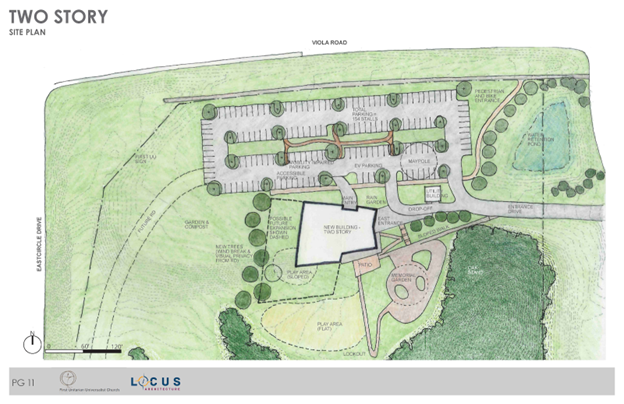
architectural drawing showing the potential layout on the new church property prepared by Locus Architecture
A preliminary design from Locus Architecture and one of many choices

After years of discernment during which we studied what was merely possible, defined what might be potential, and created a long wish list, 2023 has become a year of choices.  Two congregational votes clearly defined our direction.  Our first choice being the “stay/go” vote in January which set us firmly on the path to leave a building that has been home for 55 of our 157 years in Rochester.  Then came the second and equally momentous April vote authorizing the purchase of 38 Acres on Viola Road – that intersection of public witness and preserved wilderness – our choice of place where this liberal faith community may thrive.  And, our choices continue.

Locus Architecture presented two preliminary designs earlier this month after wading through a very long wish list, reviewing pages and pages of notes which captured the ideas voiced at more than 15 listening sessions held this spring, and participating in hours of conversation with the Building Our Future team.  The emphasis being on “preliminary” since our task of choosing continues:  1-story or two?  What constitutes the best blend of adjacencies?  Sanctuary and large gathering space on one level or large gathering space leading directly to the wide outdoors?  Ground or roof-mounted photovoltaic system or a combination?  Do we simply meet “code” or exceed minimum building requirements, especially if we feel the code crimps our values.  And, through all these discussions, just out of sight but waiting in the wings, are the financial decisions.  Just what will it take to realize our choices and turn our vision into constructed reality?

Based on the voices of the congregation, the Building Our Future team crafted a Vision Statement for the Building and the Land.  This statement introduced the architects as they presented their preliminary designs to the congregation; it was shared again at the dedication of the land on a sunny Sunday afternoon, September 17, and it is frequently chosen as chalice lighting words to focus our work at building team meetings.  Every day these words guide our choices.  In the days, weeks, and months ahead, more opinions will be needed from each member and friend of the congregation before we break ground in September 2024 and dedicate a new building a year later.  We do so with the hope that each choice will work towards our vision.

A Vision Statement for the Building and the Land

May we:
Welcome people with inclusive spaces and universal access.
Nurture spirituality and personal growth with beauty, art, and inspiration.
Practice justice with eco-restorative design.
Expand our community with flexible and multi-purpose space.
Create joy and resilience with places for play.
Care for sacred space to honor ancestors and nature.
Grow by embodying the intersection of public witness and preserved wilderness.

May it be so.  Amen.

Graphic credit:  © Locus Architecture

Other items of interest

Building Notes

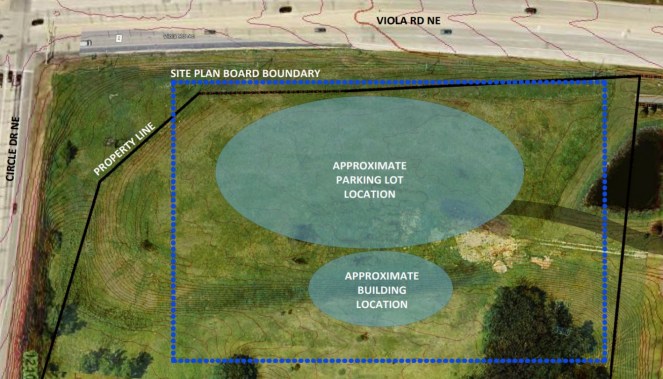
satellite map with two large areas marked for parking and building site

When I worked with the architects (nearly 25 years ago) to design the SELCO building, I blended all that I knew about library operations, office flow, and the ILS (integrated library system) connecting over 70 libraries with the practicality garnered through decades of home renovation projects.  While some features, such as the Novabrik™ exterior, were unique to the project, the construction was conventional enough that I never hesitated.  Five years into retirement and having agreed to co-lead the Building Our Future team at church, I am a bit more realistic about my learning curve.

I had anticipated the need to study solar reverse metering or options for EV plug-ins but I was surprised when the first term I needed to check in the dictionary was charette – a meeting in which stakeholders attempt to resolve conflicts and map solutions.  Our church architects suggested this opinion gathering process as a way to define key proximity questions. 

With proportionally sized, color-coded wooden blocks, church members placed the blocks on a site map.  They shared their rationale for each placement or shift as they discussed the spatial relationships for such questions as:  One story or two?  Where is the gathering space in relation to the sanctuary?  Are the classrooms near the kitchen?  How to keep the little ones near but still give parents “adult” time during coffee hour?  While each of these questions (and many more) still needs resolution, the architects came away with insights into the everyday practical use of church space and the participants have a greater understanding of the challenges inherent in designing a new church building.

An interesting historical tidbitCharette is derived from the French word for “little cart” & a time when beaux arts professors in Paris collected student drawings.

Photo credit: Locus Architecture

Knitting

Tempted but not this summer

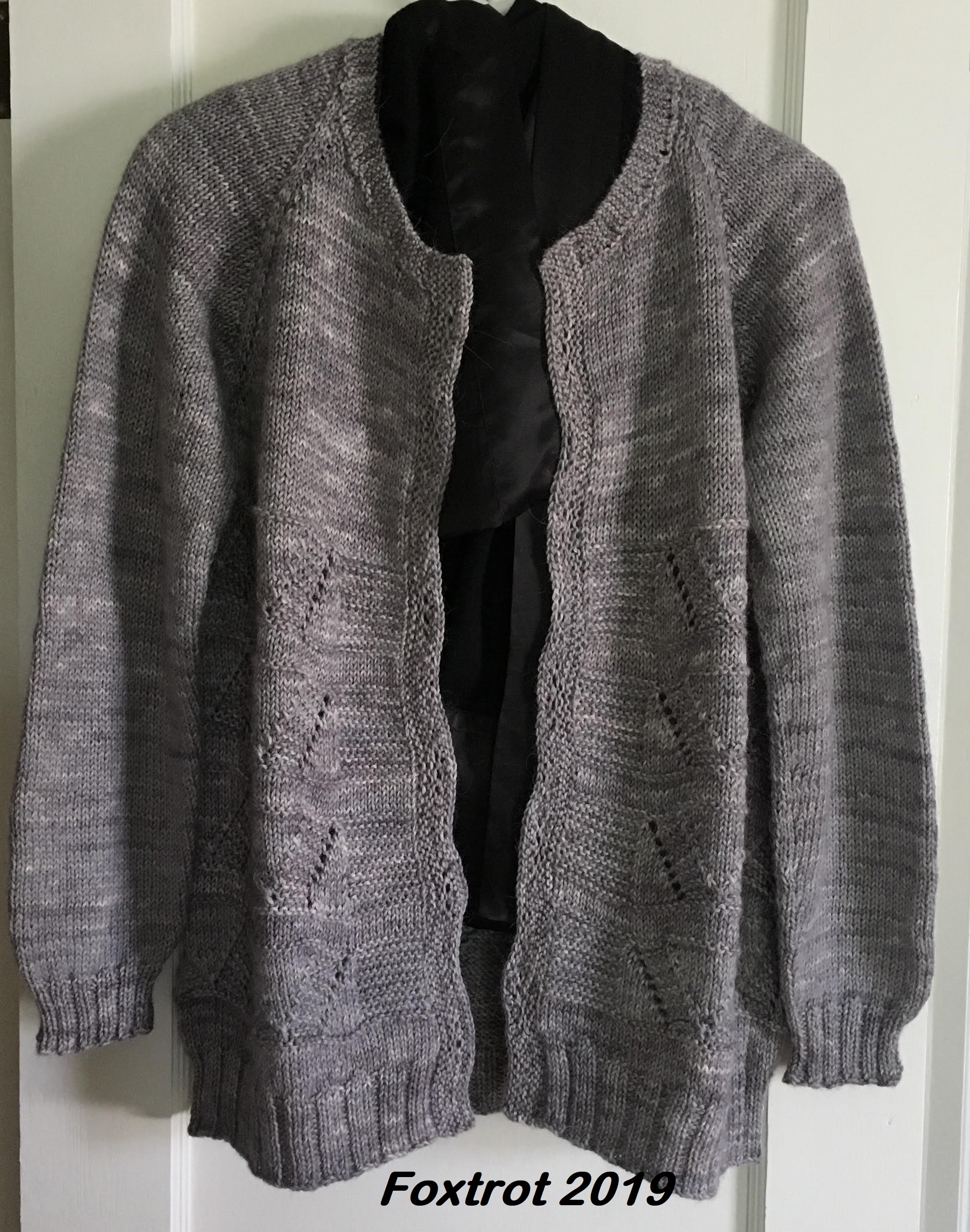
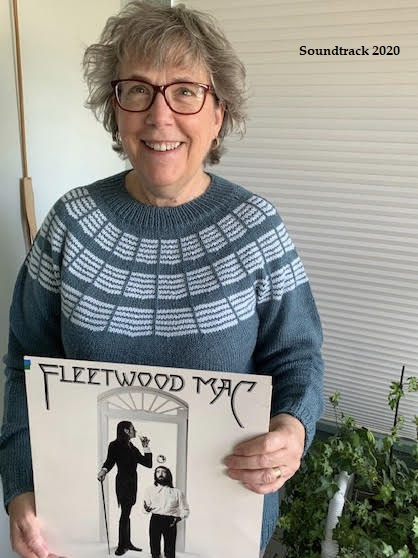
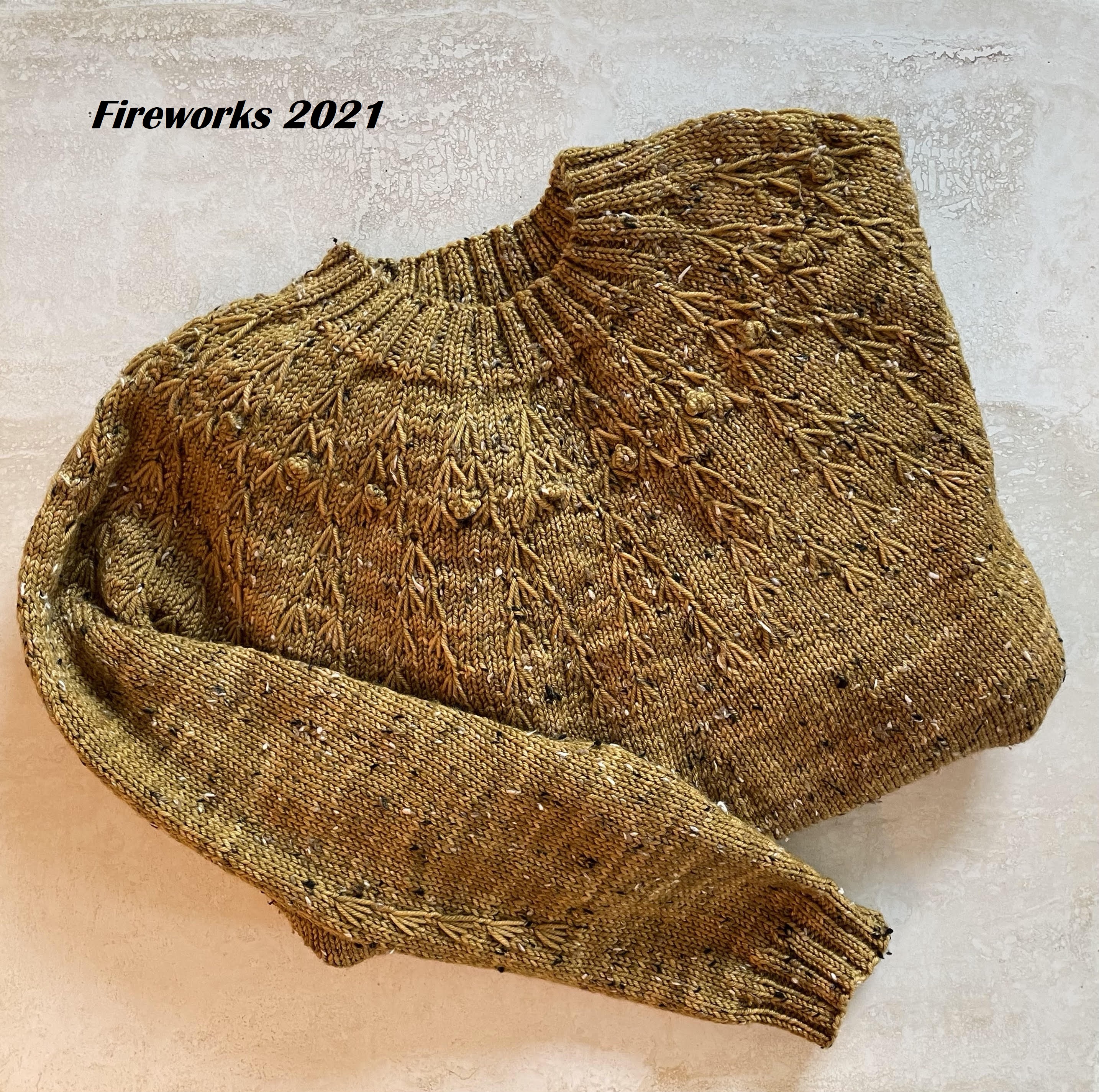
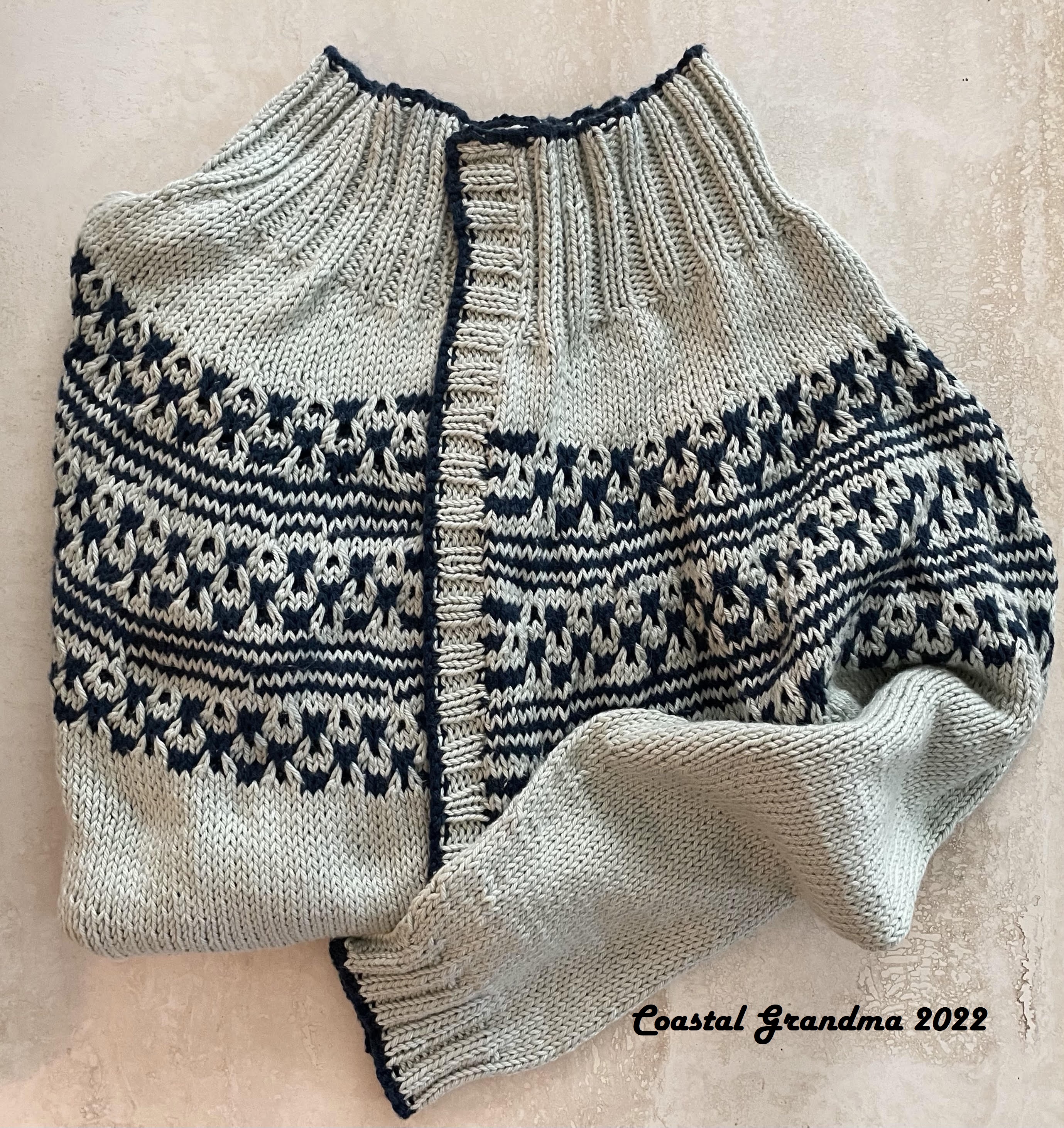
Step back to a May (nearly June) day one year ago, or two, or three, or four years and you would find me studying pattern release notes and making yarn and color choices for Marie Greene’s annual 4-day sweater knit-along (KAL) but not this summer.  Instead, with July’s arrival, I will observe rather than participate in this summer’s KAL since I have a full task list as the co-lead of the church building team.

After spending several years in discernment, in what now feels like it was a leisurely drive on a blue-line road, it is like we are in the F1 pit lane prepping for 78 fast laps on the streets of Monaco.  As May began, we purchased 40 wooded acres of urban wilderness, engaged the architects, performed soil borings and tested for Decorah Edge.  In just weeks, we will begin listening sessions when we will dream of all this building might represent and then move into conceptual and schematic designs before breaking ground in September 2024 and dedicating a new building in September 2025. 

With weekly planning meetings, frequent discussions with the architects, and writing regular eNews updates intended to keep member congregants and friends informed and engaged, the 4-day sweater KAL, just doesn’t gel with my mindset.  But my needles will not be still as yarn for a summer silk shawl and two scarves are tucked in the rattan basket by my TV room chair.

Happy knitting!

Spirituality

Our time to dream

graphic depiction of a chalice and flame surrounded by 2 circles

Together, our church community has been engaged on a critical path of Building Our Future activities.  We find ourselves, as a congregation, its members and friends, in the midst of a great call for creativity.

After a successful congregational vote supporting the purchase of the Viola Road property as our future church home and having concluded that purchase this past week, we are entering into what our board president has described as, “our time to dream.”

I can sometimes be a broken record.  I never miss an opportunity to remind anyone who will listen that there is a long wish list for our new space; a list that has been growing since 2019 with heartfelt suggestions offered at forums and casual comments shared during mahjong games in the Chapel.  But even with this long bulleted list, I believe there is more creativity out there. 

Rest assured, the Building Our Future team is grounded in reality and we know that not everything will be possible whether prohibited by cost, or time or discovering that today’s technology is not quite ready for the future we want.  Even knowing that, we want to hear everyone’s dreams. Every idea will be held tight and, if not incorporated into our 2025 building, then that bit of dream will be saved and maybe implemented in 2035 or 2050 or even 2125.

I feel the advice shared by Rev. William Sinkford’s in a recent article entitled “On Predicting the Future” pertains to what we are doing – Building Our Future – Beyond Ourselves. His words were intended to offer guidance as congregations continue to re-gather and try to understand how we, as faith communities, will behave after having lived through a significant worldwide experience.  But I believe his message is not just about post pandemic activities but also about how we acknowledge; how we embrace change.  His article is based on an essay by the award winning science fiction writer Octavia E. Butler and her rules for predicting the future:  In that essay she wrote:

All that you touch
You Change
All that you change
Changes you
The only lasting truth 
Is Change

I know our congregational world is changing, that this beloved community will be simultaneously the same and different in a new church home.  In the early morning hours, I will admit to the same worries and concerns that may be on each member’s mind and in each heart when thinking about the magnitude of this project.  But then I look at the person next to me at a Tupper Supper, I look at the faces of people sitting in the sanctuary on a Sunday morning and the librarian in me begins cataloging the depth of the talent pool, the variety of skills in our toolbox and I am infused with confidence.

We have over 150 years of history in this community; a history that includes drawing blueprints, fundraising, constructing, and moving into four different buildings. But before any of that hard work began so many times before, so many years ago, before ground was broken, or rafters set, before church bells were hung or buildings dedicated, those that came before us dreamed of what their new home might be.  So let creativity soar and let us dream of the place Rev. Luke has described as:

“A church at the intersection of public witness and preserved wilderness. . . A Sanctuary for community, for nature, and the soul.”

It is our time to dream.

Graphic credit:  Chalice Art © Karin Lindsey

Spirituality

“Wrapped in blue cloud cloth…”

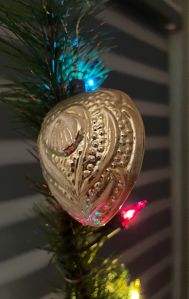
heart shaped antique glass Christmas ornament on tree with three lights (blue, red and yellow)

We celebrated my Mom’s 99th birthday on Thursday.  She still lives in the house my Dad built 60 years ago.  During the past few months, she has undertaken a new task – finding those things she has not used in years and feels she no longer needs.  Nearly every day, when I call her, she proudly describes what she has moved to the small green bedroom (her designated collection point) there to await my next visit when I will deliver these gently used items to the thrift store.

Following her example, I have started de-cluttering our house.  It is amazing just how much stuff is tucked up on closet shelves, hidden in desk drawers, or stashed in the way-back corner of the bottom kitchen cupboard; items that certainly served a purpose or filled a want but which have mostly been forgotten.  It feels good put into practice the three Rs – reduce, recycle, reuse..

My first thoughts about 2023 were tinged with wariness.  After all, this past year was filled with false starts and yet more uncertainty.  Then I began nudging myself toward a change in attitude; if only a shift in semantics.  Rather than looking at the coming tomorrows with trepidation, I am trying to change my language and look at the new year as time of mystery; balancing cautiousness and excitement; looking at the days ahead with a sense of wonder. 

I recently rediscovered a volume of poetry by Langston Hughes, originally published for children, but with lyrical phrases that offer weighty advice to children of all ages.  His poem, “The Dream Keeper” gave me insight as to how I might approach my attitude adjustment.  He wrote:

Bring me all of your dreams, 
You dreamer,
Bring me all your
Heart melodies
That I may wrap them
In a blue cloud-cloth
Away from the too-rough fingers
Of the world.

That phrase “That I may wrap them in a blue cloud cloth” rang true as I gently wrapped my Grandmother’s heart-shaped mercury glass ornament and put it away for another year; carefully handling the fragile heirloom all the while joyously celebrating childhood memories and thoughts of future holidays. 

The poet’s words also reminded me that my hopes for today and tomorrow will need tender protection from “too rough fingers of the world” and that I need to keep that “blue cloud cloth” close at hand so that I might safely wrap my dreams while looking for the wonder and the mystery in the days ahead.

Happy New Year!

Spirituality

All Souls: Sunday Reflection (a tad late)

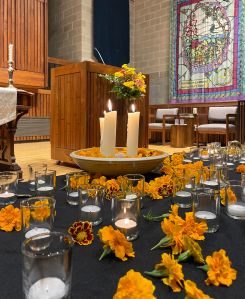
Yesterday, as I sat in a pew of an old Lutheran church nestled among recently harvested rolling fields, I hummed along as my friend sat at the organ and played For All the Saints.  I reflected back a week to our All Souls service.  In the days leading up to All Souls Day, Richard and I toted five pots of marigolds to church.  In the spring, small seedlings had been planted in hopes of warding off nibbling critters while anchoring the corners of our garden; they provided brilliant color throughout the summer; and then, with frost warnings forecasted, these hardy plants were transplanted into pots and moved under grow-lights to thwart the season’s chill just so the bright blossoms could render one last service scattered among a hundred clear glass votive lights on our Altar of All Souls – a visible symbol of remembrance to honor our ancestors.

I believe it says a lot about who we are as individuals, as a church community, as a society, in how we honor our dead.  In our ever more hectic, every day world with corporate-driven practices that define grief in HR policy and relegate just three days for sorrow before it is back to business as usual, there is a lot to learn from studying the traditions of other cultures.

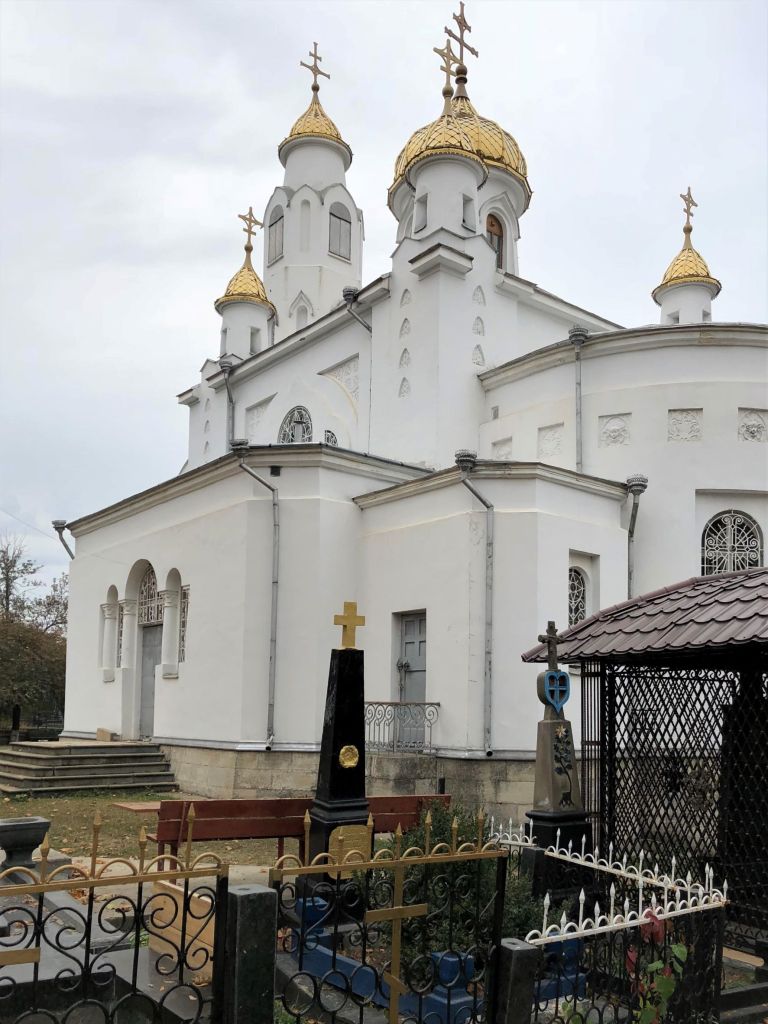
In the Romany graveyards of Eastern Europe, nestled next to gold domed, centuries-old churches and scattered among the headstones of family plots there are often elaborate gazebos built with permanent tables and benches that provide regular gathering places.  When family and friends come together they bring their tastiest culinary treats, a portion to be enjoyed among the living and a portion left for the spirits.  Flowing with the libations are the shared memories which braid together the stories of the departed and the lives of the next generation.

In her poem, Into Every Conversation, Carrie Newcomer writes:

Into every conversation,
At least those that matter,
I carry my stories like a book
Tucked under my arm or secured deep in my heart.
A forward written by the ancestors,
Side notes and commentary in the margins, 
Written by mentors, tormentors, and friends.

Not that we should walk lock-step in the beliefs of our ancestors because that would render us unable to see injustice and work for change; unable to recognize inequity and dream of the possibility of a different world.  Rather, in remembering those who have come before us, we need to build on our heritage bringing together the good news and those parts in need of transformation.

Last Sunday, we lit candles for those whose memories live in our hearts.  At a time when the old tales speak of “the thin veil between worlds” – of All Hallows Eve and All Souls Day – it was good that we gathered and remembered.  It was good that we spoke aloud the names of those who have died.  And, having been heard by family and friends and even strangers we acknowledged those individuals.  In the words of the poet we continued to “carry our stories like a book tucked under our arms or secured deep in our hearts.”

Spirituality

“You Can Do This Hard Thing”

Last month, I faced a hard task.  Hard, not in the sense of strenuous work or tough negotiations; not climbing a mountain or training for a marathon or anything else that could really be deemed difficult.  No, it was hard because I was not ready.  It was hard because I simply did not want to do it.  Likewise, my first attempt at this post was so “Wendy Whiner-ish” that I had to set it aside. I knew I needed an attitude adjustment. I just didn’t know when or from whom that inspiration might come.

You can do this hard thing, 
You can do this hard thing
It's not easy I know but
I believe that it's so
You can do this hard thing.

When Richard received his Parkinson’s Disease (PD) diagnosis on July 23 last year, my first, librarian-like reaction was to dig into the research.  I relied on Mayo’s website for my introduction; I joined the Parkinson’s Foundation’s online community which generates lots of helpful emails on a regular schedule; I even downloaded the 174 page care-giver’s guide.  I think that is what stymied me.  I wanted the Cosmo version of a guide.  I wanted 10 easy steps to understanding a complicated, incurable disease or 10 easy strategies to supporting without smothering.  I did not want; I could not handle 174 pages.  I reverted to learning by osmosis – simply observing the changes I saw or listening to what Richard was discovering since he was doing the hard work of research.  I did give PD a new name.  In my head this progressive disorder that affects the nervous system became FD – that F*****g Disease.

Hearts hung like laundry
On backyard clothes lines
Impossible just takes
A little more time

This past weekend, I had the special privilege to spend time with Carrie Newcomer , a musican and songwriter the Boston Globe describes as a “prairie mystic.”  As I served as chauffeur between hotel and church, sat through a rehearsal and sound checks, enjoyed a concert and particpated in two Sunday morning services at which Carrie and her accompanist, Gary Waters, were the featured musicians, Carrie’s poignant stories, inspirational lyrics, and haunting melodies jumpstarted my attitude adjustment.  I felt I could step away from selfish introspective, from frustrated inability to “fix” the problem and into the simple acknowledgement that Richard and I will continue to adapt and manage.

Spirituality

Wide Arrival: Sunday Reflection

two white row boats pulled up onto a shore line with tall green marshy grass and mist hanging in the air

A fundamental question was raised during last week’s sermon.  A question appropriate to living our individual lives as we continue to navigate the details of re-gathering amidst viruses and variants (and move into what is predicted to be a virulent flu season) and especially poignant for a welcoming congregation:

“How are we making a wide arrival?  Enough space for all our grief, our stories, our uncertainties; how to find passageways of life in this changed and changing world?”

Admittedly, in the Hutton household and, I am sure, at your house too in these nearly but not quite post-Covid days some tasks are easier to navigate than others.  Some days we find ourselves almost back to a routine that feels comfortable like a well-worn flannel shirt on a cool September day or going to church on Sunday morning.  But then we arrive in that sacred space and see smiling masked faces and we must admit it is the same but different. 

In the midst of these ambiguous days, Richard and I decided we would add more uncertainty to our daily life.  Since July, our house has been in some form of disarray due to three (count them – 3) renovation projects.  Just to be clear, all of the work has been undertaken by choice and not a crisis with our nearly 100 year old house – built in 1925 and moved in ’27.  All the work is being done so that we might continue to “age gracefully in place.”

Last Sunday’s homiletic imagery of drifting on the water, anchored, but with a shifting shoreline accurately described our days.  Carpenters arriving on a date set two months earlier – anchored.  Getting a call late Friday that the team of painters and plasterers would arrive early the next week – definitely felt like bobbing on choppy water as we scrambled to move all of the furniture from four rooms, take our eclectic collection of art off the walls, and remove all the electric faceplates.  

Knowing our renovations were close to completion but with more work still to be done, I arrived at church last Sunday and felt anchored as we poured our collected water tributes into the large blue bowl and music rang joyfully. Anchored again this morning seeing familiar faces and welcoming new members as we make “a wide arrival”.

Photo credit: iStock