
Reading

A Gathering of Poetry | May 2024

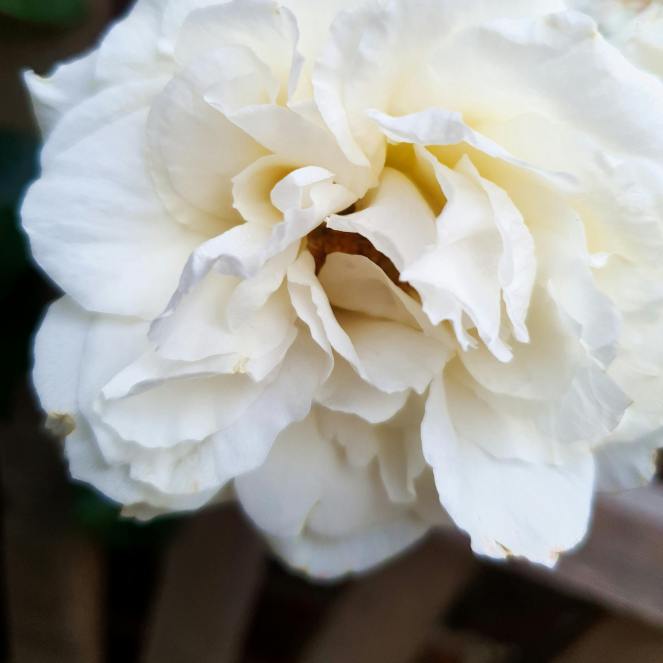
close up photograph of liliac blossoms

While our peonies are still tight buds, our two Miss Kim Lilacs will soon lavish our senses with purple blossoms and sweet fragrance, reaffirming exactly what poet Billy Collins knows about a spring day.

And, a thank you to Kat for the reminder that May days are passing and third Thursdays simply demand poetry.

Bibliographic credit:  Collins, Billy, Poetry magazine, © 2000

Photo credit:  Prexels – Pille Kirsi

Reading · Spirituality

Lectio Divina Revisited

graphic depiction of a flaming chalice on a blue quilted background

The practice of reading, thinking, and praying about a line of scripture was a frequent exercise during my Franciscan and Benedictine school years.  At the time, I did not know this by its Latin name, Lectio Divina, but I received a renewed introduction to this practice last evening.

Possibly because of the widespread dissemination of the Rule of St. Benedict, I associated the four-step practice:  read, meditate, pray, contemplate, with St. Benedict (480-547 CE) when its origins are earlier and have been adapted through time.  There is a Franciscan variation designed by St. Clare of Assisi (1194-1253 CE) and, following St. Ignatius of Loyola (1491-1556 CE), the Jesuits expand their mediation into action.

Recognizing that wisdom may be drawn from many sources, a 21st century adaptation of the Lectio Divina encourages the participant to dwell on sacred words beyond just those of a biblical origin but still integrates four thoughtful steps:  begin, pause, reflect, contemplate.

Begin:  Read the text slowly.

Pause:  Let the words settle.

Reflect:  Meditate, pray, or write.

Contemplate:  Identify what the text calls you to do.

The appeal of Benedict’s Divine Order is that each day’s text is predetermined. The reader joins a communion of others contemplating those same words.  There is extra work required to expand the Lectio Divina to include a modern collection of poetry. Today, on a third Thursday Gathering of Poetry, I will begin my Lectio Divina with words from Lucille Clifton.

True, this isn’t paradise,

but we come at last to love it

for the sweet hay and flowers rising,

for the corn lining up row on row,

for the mourning doves

who open the darkness with song,

for warm rains and forgiving fields,

and for how, each day,

something that loves us

tries to save us.

Graphic credit:  © Peg Green

Reading

A Gathering of Poetry | February 2024

When I think about poetry in February, the images of red and pink children’s valentines from the mid-1950s spring to mind or syrupy sweet verses, so I took a different approach for this month’s Gathering of Poetry and visited Shel Silverstein’s Where the Sidewalk Ends for Love.

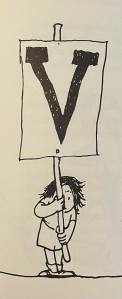
cartoon image holding a sign with a large V

Love

Ricky was “L” but he’s home with the flu,

Lizzie, our “O,” had some homework to do,

Mitchell, “E” prob’ly got lost on the way,

So I’m all of love that could make today.

And, thanks to Kat for reminding me that it is time for a third Thursday poetry post.

Bibliographic credit:  Silverstein, Shel. Where the Sidewalk Ends: the poems and drawings of Shel Silverstein.  Harper & Row. © 1974.

Reading

A Gathering of Poetry | January 2024

branches of yellow leaves against snowy backdrop

As always, Carrie Newcomer offers inspiration in song and verse.  I have been saving her poem, Blessings, to share with you on this third Thursday of January, Gathering of Poetry. Perfect as the old year ends and new days unfold…

Blessings

May you wake with a sense of play,
An exultation of the possible.
May you rest without guilt,
Satisfied at the end of a day well done.
May all the rough edges be smoothed,
If to smooth is to heal,
And the edges be left rough,
When the unpolished is more true
And infinitely more interesting.
May you wear your years like a well-tailored coat
Or a brave sassy scarf.
May every year yet to come:
Be one more bright button
Sewn on a hat you wear at a tilt.
May the friendships you’ve sown
Grown tall as summer corn.
And the things you’ve left behind,
Rest quietly in the unchangeable past.
May you embrace this day,
Not just as any old day,
But as this day.
Your day.
Held in trust
By you,
In a singular place,
Called now.

You can join the poetic fun every third Thursday as shared by Bonnie and Kym.

Bibliographic notes:  From The Beautiful Not Yet:  Poems, Essays and Lyrics.  Available Light Publishing.  ©2016 Carrie Newcomer.

Photo credit:  © Carrie Newcomer

Reading

A Gathering of Poetry | November 2023

blue vintage china, loaf of bread, and tin coffee pot sitting on a wooden table by a window

I recently found A Gathering of Poetry which encourages poetry loving bloggers to offer a personal salute to a favorite poem or a recently discovered poet by sharing the verses on the third Thursday of the month.  (If this is not correct, I hope Kym or Kat will gently nudge me in the right direction.)

As I will help with Sunday morning worship on Thanksgiving weekend, I moved from poem to poem this week seeking that “perfect” reading suitable for this food focused holiday but with a goal not to mention turkeys, pumpkin pie, or marshmallow sweet potato casserole.  Our former poet laureate, Joy Harjo, provided the inspiration.

Perhaps the World Ends Here

The world begins at a kitchen table. No matter what, we must eat to live.

The gifts of earth are brought and prepared, set on the table. So it has been since creation, and it will go on.

We chase chickens or dogs away from it. Babies teethe at the corners. They scrape their knees under it.

It is here that children are given instructions on what it means to be human. We make men at it, we make women.

At this table we gossip, recall enemies and the ghosts of lovers.

Our dreams drink coffee with us as they put their arms around our children. They laugh with us at our poor falling-down selves and as we put ourselves back together once again at the table.

This table has been a house in the rain, an umbrella in the sun.

Wars have begun and ended at this table. It is a place to hide in the shadow of terror. A place to celebrate the terrible victory.

We have given birth on this table, and have prepared our parents for burial here.

At this table we sing with joy, with sorrow. We pray of suffering and remorse. We give thanks. Perhaps the world will end at the kitchen table, while we are laughing and crying, eating of the last sweet bite.

Bibliographic notes:  From The Woman Who Fell From the Sky (W. W. Norton, 1994) by Joy Harjo. Copyright © 1994 by Joy Harjo.

Photo credit:  Pexels-pixabay