Spirituality

A Sunday Reflection on Hope

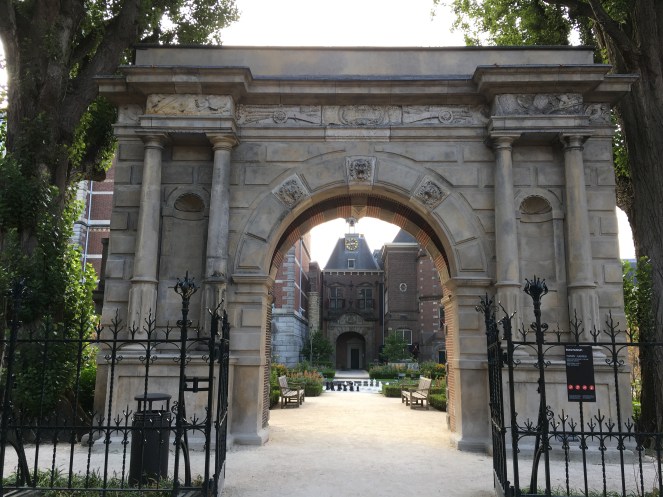
large stone gate at Rijksmuseum in Amsterdam

During my library career a favorite activity was introducing new library boards to their responsibilities. And, not just those duties required by Minnesota statutes, but those responsibilities entrusted to them as caretakers of a community jewel. While there are certainly those individuals who seek such an appointment (especially these days) with a goal of controlling the collection or banning certain books, over all the years, I found most people were interested in doing good within their community. People who believed in the importance of reading, the importance of a safe place, the importance of lifelong learning. They rarely recognized it, but library trustees are individuals of hope. After all, who but a person with hopes for the future builds a library, or a school, or a church? Who but a person hoping for positive change spends time and money supporting something that they might use only for a brief time but builds beyond themselves?

Acts of hopeful resistance take many forms:

  • When Richard and I submitted our Breaking Ground pledge form so that we can do just that this spring – break ground at Eliza Place.
  • When the offertory plate is passed and the funds we collect go out the church door to be shared with our social justice partners.
  • When we don our gold scarves and Side With Love t-shirts, whether on a sunny summer day or a frigid afternoon.
  • When we work side-by-side, shout out the injustice and work for change.

As this hectic month begins and I wonder how I will accomplish all the tasks – which cookies to bake, how to decorate the new house – last weekend’s snowfall served as a reminder to slow down and take a breath. To remember in these days of Advent that we are waiting for the gentle lights of Hanukkah, and Solstice, and Christmas. In these challenging days, I take solace from the poetic prayers of Rev. Victoria Safford, who reminds us we are at:

New House · Writing

Embracing Change: Our Move After 40 Years

We kept waiting to be sad. For that tsunami of nostalgia to overwhelm. After-all, we were leaving our first house, our abode of 40 years, where we had celebrated the births of nieces and nephews and mourned the death of beloved family and friends; undertook remodeling and renovation projects, planted and transplanted blueberry bushes and rhubarb, prepared countless meals (the menus for which ran the gamut from a quick bowl of popcorn to gourmet auction prep).

One person suggested that our move was not just a move but a life choice and that distinction felt accurate. This was a decision arrived at over time, necessitated by health challenges and softened by the hundreds of details that comprised our construction project which also served as salve to lighten the mental soreness of loss. While we missed the opportunity of a topping off ceremony on Solstice Place, we carefully monitored construction progress – from the hole in the ground to the final walk-through.  Each visit rooted us in the “rightness” of this change.

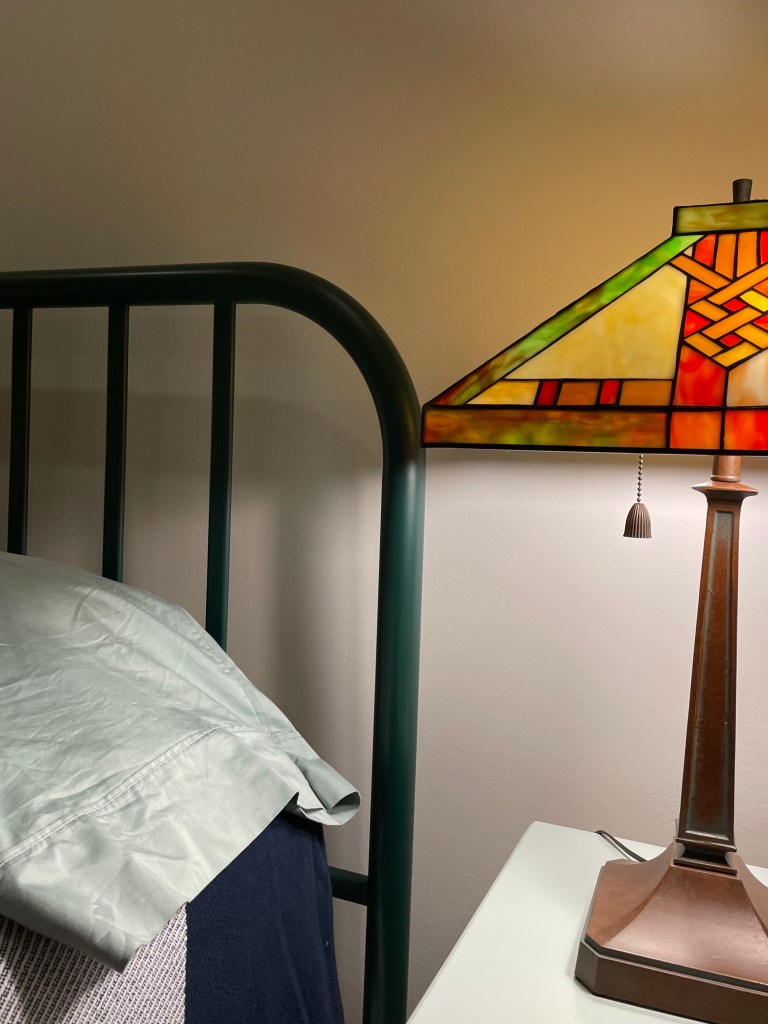
We spent a comfortable first night in the new house on September 25. We placed the bed slats on floor, having first put down an old flannel sheet to protect the new LVF (luxury vinyl flooring), followed by the twin springs and the king comfort mattress. The result – a tad lower than sleeping on the couch but higher than a futon. This odd predicament, of being bed-less (that is without a frame) was due to our decision to have the two antique metal bedstead that were once in my Grandma’s house, stripped via glass bead blasting and then dipped to powder coat them a rich forest-green. During their 100+ years, the color has gone from chocolate brown (the color in my childhood, as well as Momma’s memories of her early years in the 4th street house) to yellow, to creamy peach, and now to forest-green. Momma estimates these may have been her parents’ first purchase after arriving in the U.S.A. from Switzerland in July 1922, as by October Grandma was giving birth to Billie and most certainly had a bed for this home delivery.

Now, a month after closing, we have most (not quite all) of the boxes unpacked and flattened. Finding a place for everything has required expanding our decluttering skills yet again and each time we cannot find space we admit that we simply have too much stuff.

Still to be done – placing our eclectic collection of prints, paintings, and objets d’art. Once that is complete Solstice Place will be open for visits.

Spirituality

Creating Margins

geese on open water with snowy trees in foreground

If there were weather badges, I would wear winter proudly on a scout-like sash. When friends question why we live in Minnesota, this land of 10,000 frozen lakes, I extol the efficiency of our Toro electric snowblower. When family members encourage us to move where winter temperatures are more moderate, I describe the warmth of my 10-inch, shearling-lined L.L. Bean boots and the safety of their legendary chain-tread sole.

In November and December, the blog posts I was reading, the poetry that landed in my in-box, and even the Sunday morning worship readings often focused on the change of seasons – autumn to winter; harbingers of shorter days and chilly winds necessitating down filled jackets. While not going so far as to advocate hibernation like a black bear, these readings encouraged taking a cue from nature to rest; to slow down and allow space for reflection and, maybe, creativity.

On winter solstice we light candles and sang of that “gentle darkness soft and still.” This year, more than any other, I felt the need to rest and re-charge. As I left church that evening my intention was to breathe deeply; appreciate the dark evening sky and embrace the quiet.

Yet just 10 days later, amidst bubbly toasts and video images of firework displays from Sydney to London, I was ready to surrender to mass media’s flurry of new year’s suggestions all urging “do more.” It was as if the small act of pinning a new calendar on the kitchen wall infected my mind. Rather than mere seconds passing at midnight, one day to the next, one year to the next, I felt I was eons beyond that “gentle darkness soft and still.”

Musician Carrie Newcomer helped me step back from that frenzy and from creating a checklist of busy work, a worksheet of old actions. She proposed moving away from New Year’s resolutions, the resolving of old problems and shifting to New Year’s revolutions. She wrote:

As January progresses, I continue to be resolute in my decision to join Carrie Newcomer with a New Year’s revolution. I will strive to revel in that which gives joy (despite the fractious political environment.) To explore the art of creating margins and leaving space for the unexpected – whether walking in the woods, discovering a previously unknown poet, or answering a call to justice. To remain open to the changing world “full of things that have never been.”

Spirituality

Our time to dream

graphic depiction of a chalice and flame surrounded by 2 circles

Together, our church community has been engaged on a critical path of Building Our Future activities.  We find ourselves, as a congregation, its members and friends, in the midst of a great call for creativity.

After a successful congregational vote supporting the purchase of the Viola Road property as our future church home and having concluded that purchase this past week, we are entering into what our board president has described as, “our time to dream.”

I can sometimes be a broken record.  I never miss an opportunity to remind anyone who will listen that there is a long wish list for our new space; a list that has been growing since 2019 with heartfelt suggestions offered at forums and casual comments shared during mahjong games in the Chapel.  But even with this long bulleted list, I believe there is more creativity out there. 

Rest assured, the Building Our Future team is grounded in reality and we know that not everything will be possible whether prohibited by cost, or time or discovering that today’s technology is not quite ready for the future we want.  Even knowing that, we want to hear everyone’s dreams. Every idea will be held tight and, if not incorporated into our 2025 building, then that bit of dream will be saved and maybe implemented in 2035 or 2050 or even 2125.

I feel the advice shared by Rev. William Sinkford’s in a recent article entitled “On Predicting the Future” pertains to what we are doing – Building Our Future – Beyond Ourselves. His words were intended to offer guidance as congregations continue to re-gather and try to understand how we, as faith communities, will behave after having lived through a significant worldwide experience.  But I believe his message is not just about post pandemic activities but also about how we acknowledge; how we embrace change.  His article is based on an essay by the award winning science fiction writer Octavia E. Butler and her rules for predicting the future:  In that essay she wrote:

All that you touch
You Change
All that you change
Changes you
The only lasting truth 
Is Change

I know our congregational world is changing, that this beloved community will be simultaneously the same and different in a new church home.  In the early morning hours, I will admit to the same worries and concerns that may be on each member’s mind and in each heart when thinking about the magnitude of this project.  But then I look at the person next to me at a Tupper Supper, I look at the faces of people sitting in the sanctuary on a Sunday morning and the librarian in me begins cataloging the depth of the talent pool, the variety of skills in our toolbox and I am infused with confidence.

We have over 150 years of history in this community; a history that includes drawing blueprints, fundraising, constructing, and moving into four different buildings. But before any of that hard work began so many times before, so many years ago, before ground was broken, or rafters set, before church bells were hung or buildings dedicated, those that came before us dreamed of what their new home might be.  So let creativity soar and let us dream of the place Rev. Luke has described as:

“A church at the intersection of public witness and preserved wilderness. . . A Sanctuary for community, for nature, and the soul.”

It is our time to dream.

Graphic credit:  Chalice Art © Karin Lindsey

Spirituality

“Wrapped in blue cloud cloth…”

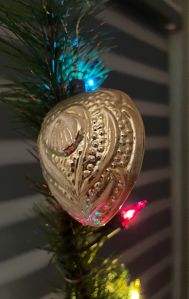
heart shaped antique glass Christmas ornament on tree with three lights (blue, red and yellow)

We celebrated my Mom’s 99th birthday on Thursday.  She still lives in the house my Dad built 60 years ago.  During the past few months, she has undertaken a new task – finding those things she has not used in years and feels she no longer needs.  Nearly every day, when I call her, she proudly describes what she has moved to the small green bedroom (her designated collection point) there to await my next visit when I will deliver these gently used items to the thrift store.

Following her example, I have started de-cluttering our house.  It is amazing just how much stuff is tucked up on closet shelves, hidden in desk drawers, or stashed in the way-back corner of the bottom kitchen cupboard; items that certainly served a purpose or filled a want but which have mostly been forgotten.  It feels good put into practice the three Rs – reduce, recycle, reuse..

My first thoughts about 2023 were tinged with wariness.  After all, this past year was filled with false starts and yet more uncertainty.  Then I began nudging myself toward a change in attitude; if only a shift in semantics.  Rather than looking at the coming tomorrows with trepidation, I am trying to change my language and look at the new year as time of mystery; balancing cautiousness and excitement; looking at the days ahead with a sense of wonder. 

I recently rediscovered a volume of poetry by Langston Hughes, originally published for children, but with lyrical phrases that offer weighty advice to children of all ages.  His poem, “The Dream Keeper” gave me insight as to how I might approach my attitude adjustment.  He wrote:

Bring me all of your dreams, 
You dreamer,
Bring me all your
Heart melodies
That I may wrap them
In a blue cloud-cloth
Away from the too-rough fingers
Of the world.

That phrase “That I may wrap them in a blue cloud cloth” rang true as I gently wrapped my Grandmother’s heart-shaped mercury glass ornament and put it away for another year; carefully handling the fragile heirloom all the while joyously celebrating childhood memories and thoughts of future holidays. 

The poet’s words also reminded me that my hopes for today and tomorrow will need tender protection from “too rough fingers of the world” and that I need to keep that “blue cloud cloth” close at hand so that I might safely wrap my dreams while looking for the wonder and the mystery in the days ahead.

Happy New Year!

Spirituality

All Souls: Sunday Reflection (a tad late)

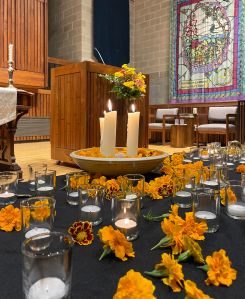
Yesterday, as I sat in a pew of an old Lutheran church nestled among recently harvested rolling fields, I hummed along as my friend sat at the organ and played For All the Saints.  I reflected back a week to our All Souls service.  In the days leading up to All Souls Day, Richard and I toted five pots of marigolds to church.  In the spring, small seedlings had been planted in hopes of warding off nibbling critters while anchoring the corners of our garden; they provided brilliant color throughout the summer; and then, with frost warnings forecasted, these hardy plants were transplanted into pots and moved under grow-lights to thwart the season’s chill just so the bright blossoms could render one last service scattered among a hundred clear glass votive lights on our Altar of All Souls – a visible symbol of remembrance to honor our ancestors.

I believe it says a lot about who we are as individuals, as a church community, as a society, in how we honor our dead.  In our ever more hectic, every day world with corporate-driven practices that define grief in HR policy and relegate just three days for sorrow before it is back to business as usual, there is a lot to learn from studying the traditions of other cultures.

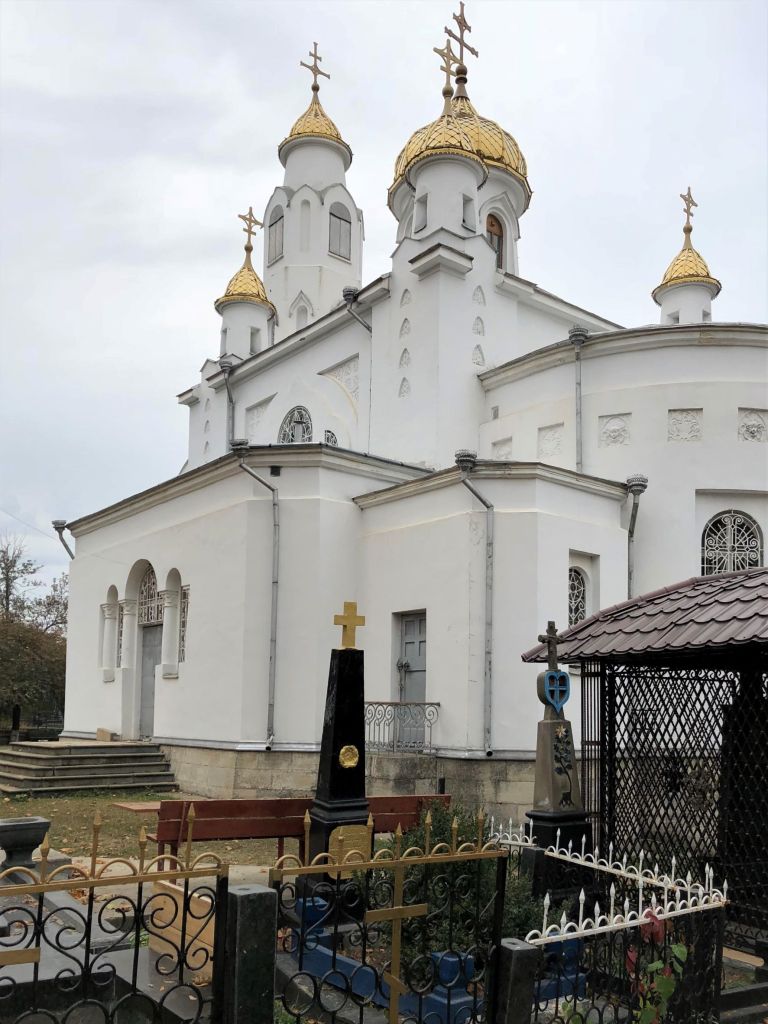
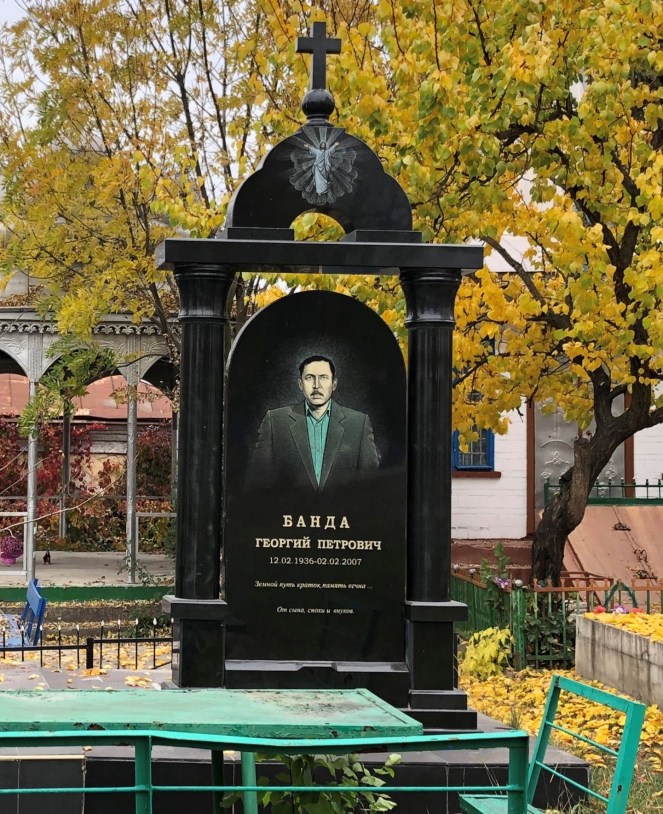
In the Romany graveyards of Eastern Europe, nestled next to gold domed, centuries-old churches and scattered among the headstones of family plots there are often elaborate gazebos built with permanent tables and benches that provide regular gathering places.  When family and friends come together they bring their tastiest culinary treats, a portion to be enjoyed among the living and a portion left for the spirits.  Flowing with the libations are the shared memories which braid together the stories of the departed and the lives of the next generation.

In her poem, Into Every Conversation, Carrie Newcomer writes:

Into every conversation,
At least those that matter,
I carry my stories like a book
Tucked under my arm or secured deep in my heart.
A forward written by the ancestors,
Side notes and commentary in the margins, 
Written by mentors, tormentors, and friends.

Not that we should walk lock-step in the beliefs of our ancestors because that would render us unable to see injustice and work for change; unable to recognize inequity and dream of the possibility of a different world.  Rather, in remembering those who have come before us, we need to build on our heritage bringing together the good news and those parts in need of transformation.

Last Sunday, we lit candles for those whose memories live in our hearts.  At a time when the old tales speak of “the thin veil between worlds” – of All Hallows Eve and All Souls Day – it was good that we gathered and remembered.  It was good that we spoke aloud the names of those who have died.  And, having been heard by family and friends and even strangers we acknowledged those individuals.  In the words of the poet we continued to “carry our stories like a book tucked under our arms or secured deep in our hearts.”

Spirituality

Wide Arrival: Sunday Reflection

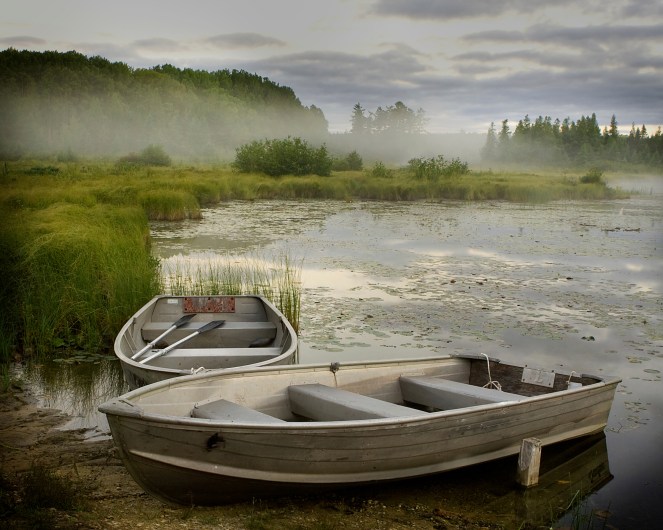
two white row boats pulled up onto a shore line with tall green marshy grass and mist hanging in the air

A fundamental question was raised during last week’s sermon.  A question appropriate to living our individual lives as we continue to navigate the details of re-gathering amidst viruses and variants (and move into what is predicted to be a virulent flu season) and especially poignant for a welcoming congregation:

“How are we making a wide arrival?  Enough space for all our grief, our stories, our uncertainties; how to find passageways of life in this changed and changing world?”

Admittedly, in the Hutton household and, I am sure, at your house too in these nearly but not quite post-Covid days some tasks are easier to navigate than others.  Some days we find ourselves almost back to a routine that feels comfortable like a well-worn flannel shirt on a cool September day or going to church on Sunday morning.  But then we arrive in that sacred space and see smiling masked faces and we must admit it is the same but different. 

In the midst of these ambiguous days, Richard and I decided we would add more uncertainty to our daily life.  Since July, our house has been in some form of disarray due to three (count them – 3) renovation projects.  Just to be clear, all of the work has been undertaken by choice and not a crisis with our nearly 100 year old house – built in 1925 and moved in ’27.  All the work is being done so that we might continue to “age gracefully in place.”

Last Sunday’s homiletic imagery of drifting on the water, anchored, but with a shifting shoreline accurately described our days.  Carpenters arriving on a date set two months earlier – anchored.  Getting a call late Friday that the team of painters and plasterers would arrive early the next week – definitely felt like bobbing on choppy water as we scrambled to move all of the furniture from four rooms, take our eclectic collection of art off the walls, and remove all the electric faceplates.  

Knowing our renovations were close to completion but with more work still to be done, I arrived at church last Sunday and felt anchored as we poured our collected water tributes into the large blue bowl and music rang joyfully. Anchored again this morning seeing familiar faces and welcoming new members as we make “a wide arrival”.

Photo credit: iStock

Reading

Small Kindnesses

This spring, I learned about a new creative project led by Suleika Jaouad that encouraged participants to “create one tiny beautiful thing each day” for 100 days as a way to bridge the isolation of Covid and return to an as-yet-to-be defined new normal.  The choice of how to excite the imagination was to be determined by each participant.

When I was young, I enjoyed reading poetry but somewhere along the way, poems assumed an impenetrable guise and poetry become something I rarely read.  Although I did take a significant plunge into well written verses during the summer of 2012 when I joined Karen Sandberg and Rose Mish in presenting a summer service comprised entirely of poetic readings.  With the 100-Day Project the timing seemed right to revisit poetry.  I decided I would read a poem each morning and discover (or re-discover) a poet every day.

I created a poem calendar to track my daily progress complete with hyperlinks so that I could re-read the gems I discovered.  One such beautiful verse is Small Kindnesses by poet Danusha LamĂ©ris.  She asked 1,300 teenagers about the small kindnesses that make a difference to them and then used their answers to write this poem:

Small Kindnesses

I’ve been thinking about the way, when you walk
down a crowded aisle, people pull in their legs
to let you by. Or how strangers still say “bless you”
when someone sneezes, a leftover
from the Bubonic plague. “Don’t die,” we are saying. 
And sometimes, when you spill lemons
from your grocery bag, someone else will help you
pick them up. Mostly, we don’t want to harm each other. 
We want to be handed our cup of coffee hot,
and to say thank you to the person handing it. To smile
at them and for them to smile back. For the waitress 
to call us honey when she sets down the bowl of clam chowder,
and for the driver in the red pick-up truck to let us pass.
We have so little of each other, now. So far
from tribe and fire. Only these brief moments of exchange.
What if they are the true dwelling of the holy, these
fleeting temples we make together when we say, “Here,
have my seat,” “Go ahead—you first,” “I like your hat.”
Spirituality

Board meetings as grout

For a large portion of my professional career I managed a library cooperative.  The cooperative’s life blood was meetings; meetings to discuss when to offer ebooks; when to discontinue the 16mm rotating film collection; whether or not to charge fines.  You get the gist – lots of discussions about everything. 

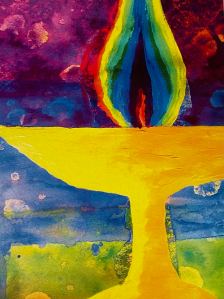
graphic of bright yellow chalice with rainbow colored flame set against a blue background

Since my days were already full of agendas, I was judicious when agreeing to anything involving yet more meetings during my sparse personal time.  Even at church, I was selective.  I chose activities I deemed enjoyable although some might doubt my sanity since “fun” included three stints on a bylaws committee.  But, for the most part, I stayed on the sidelines of church governance.  I always offered tacit support by voting at every annual meeting but then, having voted, I stepped back and let the Board members do the work.  Until one Sunday (thank you Amy N.) when I realized I needed to do more. 

With the next election, I moved from the sidelines to the Board, first as member at large, then as secretary, vice president and most recently having been granted the privilege of serving as president for two years which, despite Covid challenges and wonky Zoom connections, a tenure that proved very rewarding.  And now, eight years after agreeing to have my name placed in nomination, I have handed the gavel to another and rejoined the sidelines of church governance.  Along the way I have grown spiritually, learned more sincerely about the impact of injustice, and felt supported in the hard work of striving for justice.

Several stanzas in a prayer entitled The Grout by Marcus Harlief capture my sense of purpose as I leave the Board:

. . . Religion not only lies in the beautiful mosaic bits and pieces but also in the grout – that chalky, gritty stuff squeezed between the cracks. . .  

In a mosaic, the grout holds the image together, unifying disparate pieces into a whole.  The grout of a community takes years to lay and settle.  Grout happens in board meetings and committee meetings and endless emails. . . 

And so we pray - Hold us, O Grout.  Gather us in, through time and space, and make all our broken pieces whole in community.  In our multiplicity, make us one.  From each of our jagged edges, give us the shape of a communal beauty.

Graphic credit: © Tony Baldwin

Spirituality

Draw the Circle Wide

I cannot remember the conference city or the name of the hotel lobby bar where I joined my friend for a late afternoon glass of wine but, even after all these decades, my memory of our discussion is clear.  My friend Estelle arrived agitated and ready to resign from a prestigious committee.  As I tried to discover what had caused her distress, she kept telling me I would not understand.  I, of course, argued I would.  Finally, she said “I am tired of being responsible for representing an entire race of people.”  And she had been right, I didn’t understand. 

Even when serving as the sole female on an otherwise all male committee, no one thought I spoke for all women.  But Estelle was constantly expected to speak for all people of color.  As a talented black woman, often the only person of color in a sea of white, she was put in that untenable situation; expected to know of the needs of an entire community as if the rich, complexity of life was a simple monolith and she held the key. 

There is a challenge within every cultural exploration; to learn and celebrate the beauty of that which is different without inadvertently co-opting a tradition not our own.  To not to fall into that misguided complacency that created such stress for my friend.  While I can revel in the lyrical quality of an Amanda Gorman poem; agonize over the brutal reality of black life in white America as portrayed in a cinematic adaptation of an August Wilson play; even get caught up in a who-dun-it following Walter Mosley’s infamous detective Easy Rawlins through the grime and glitter of LA, I must remember – whether fiction or fact – that those descriptions are just a brief glimpse into lives different from my own.

The challenge is to appreciate the uniqueness of each person’s life, to recognize that each difference in upbringing, family food tradition, or the myriad of diverse life choices that make a whole person, is to recognize that the opportunities for personal growth are endless.  That with each book I read, movie I see, or story that I hear, I only hold a very small thread in a rich tapestry of another’s experience.