Gardening · New House · Writing

Missing Rhubarb

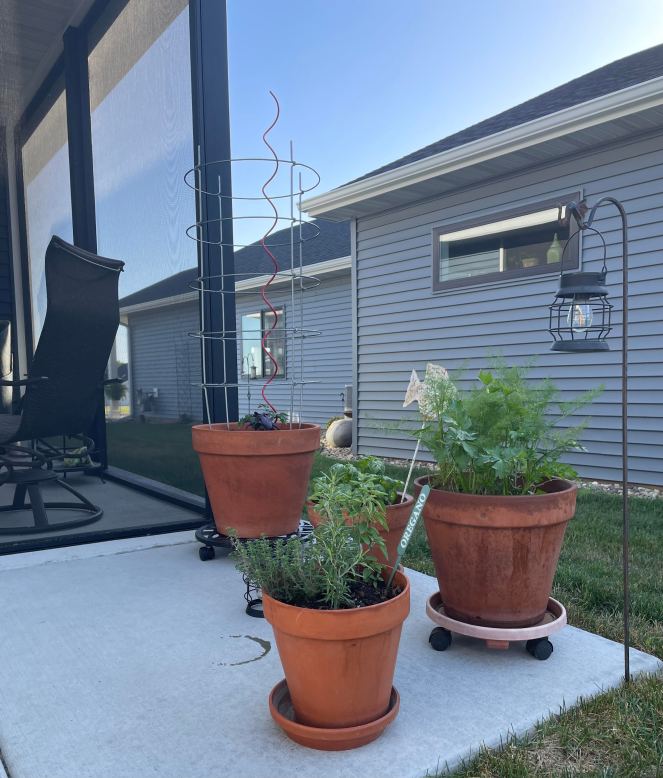
terra cotta pots with herbs sitting on concrete patio

It is curious what you miss after a life change. A year ago today, a blog post announced the hole in the ground at Solstice Place. And, in the days and months that followed, we focused on choices – which granite slab would best anchor our kitchen, the paint color for the walls (Sherman Williams Zurich White), and the location of extra grab bars to safely grow old in place.

Among our many decisions, I deliberated about transplanting three key garden features from the First Street house. The four blueberry bushes – gifts from Momma; the chives – inherited with the house; and the rhubarb – from Grandma’s Vine Street garden transplanted to Rochester via my childhood house on Fourteenth Street. But in the end, timing simply didn’t comply. Too many other tasks demanded our focus as we decluttered for rightsizing, packed, and moved. Plus, there were just too many unknowns with a “little house on the prairie” (our one lone boulevard tree would not be planted until weeks after moving in.) Add to that, the vagaries of first-time membership in a Homeowners’ Association and thoughts of future gardens was remote.

And so, my Grandmother’s rhubarb (that is no longer mine) grows vibrant green on the south side of the new owner’s garage and not at Solstice Place. Rationally, I knew when we moved that I could easily source rhubarb from friends or through a visit to the farmers’ market. But a month into Spring and I haven’t done either. It was so much easier to walk out the door and simply twist and pull the needed stalks. Then finally last week, before returning from birthday celebrations at Momma’s, I harvested a small quantity of the tart vegetable from her garden. But rather than immediately gather flour and eggs and set to baking, I curiously treated them like stashed treasure vacillating between scones and crisp, with the crisp winning the baking challenge.

Even without these garden mainstays, I have been “playing in the dirt” at our new location. I planted the first four of what may be a proliferation of pots with companion pairings – Early Girl Tomato with purple basil, a combo of oregano, rosemary, and English thyme in another along with dill paired with parsley in a third, and then a pot filled with just sweet basil as you can never have too much of this fragrant culinary herb. Yet to come, this weekend, I will be filling the blue ceramic pots with bursts of color to set against the indigo backdrop of the front porch. I am still debating which perennials will best suit our two compact north facing front beds, currently landscaped with river rock and hosting one lone Hosta, three small grass mounds, and a hydrangea of yet unknown color.

All the while missing rhubarb.
Gardening

Thyme: From pot to cupboard

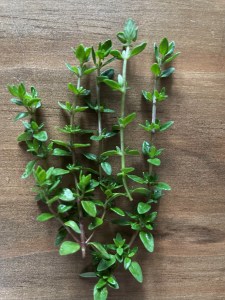
five sprigs of time on a wood background

Just as menus change seasonally – from crisp salads with freshly picked mixed greens and vibrant plump berries to hearty, wintery weather stews – my choice of herbs also shifts. Dried dill is among our often-used winter herb adding a smidge of flavor in a vegetarian quiche or a sprinkling of color to fresh Spätzli. Whereas thyme is a nearly daily summer additive on lightly sautéed yellow squash or roasted green beans (each later garnished with 25-year-old balsamic vinegar), it tends to be rare in my winter recipes.

Regardless of the season, basil and oregano are cooking staples and each has, for years, transitioned from backdoor terracotta pots to the kitchen shelf. For the first time and in an effort to prolong the lazy days of summer and its menus, I dried some of the potted English thyme.  It took two harvestings as the first snipping of tiny, dried leaves filled less than a quarter of one 5-ounce glass bottle.  With the words of the brilliant songwriter Jim Croce in my head while carefully monitoring the oven drying so as not to char the fragrant herb, I have thymus vulgaris in a bottle.

Gardening

Fresh to Dried

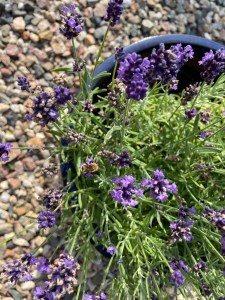
close up of lavender with a bee on a bloom in a blue pot sitting in river gravel

With two large written notes, one on the stove dial and the other on the oven door handle, I carefully monitored yesterday’s oregano harvest as it dried in the oven at low temp.  Two fragrant bottles of dried herbs are now tucked on the cupboard shelf ready for future Italian menus after having paid attention – this time.

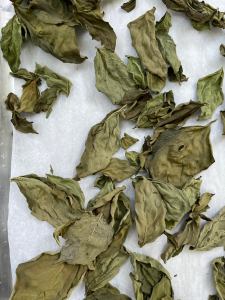
Earlier this gardening season, I destroyed three pans of oregano leaves.  Not right away, of course, which made my brain fade all the more irritating.  I had spent a morning washing and de-stemming the little green leaves and then I repeatedly checked the drying process from green to withered to brittle before leaving the baking pans in the oven to cool.  Later, focused on an afternoon task of making the next day’s rhubarb pecan scones, I set the temp to 450 degrees, totally forgetting the resting herbs until a scorched smell eventually reached my senses.

Still suffering from the indignant memory of oven burnt oregano, I dried the lavender with a more time-tested method.   Left to air dry on racks over many days, I captured the fragrance of potted lavender in sachets which will protect my wool knitting projects until they can find perfect homes. 

Gardening

Backdoor garden

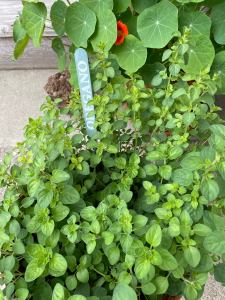
The potted herbs clustered around the backdoor are mid-summer hearty and offer a veritable Pantone spectrum from dusty silver sage to vibrant Genovese basil – my version of “50 shades of green.” 

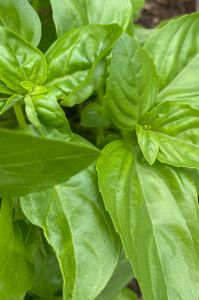
The basil crop is the best I have ever grown although, as to what might be different, I cannot claim credit as a variety of factors are equal – bought at same greenhouse as previous years, planted in the large Italian terracotta pot that formerly held a St. Thomas, V.I. lime tree from Dad, and tucked under the wind chimes on the left side of the doorway.  Every day with easy morning sun and cool afternoon shade.  

In an attempt to capture the lazy summer day in a jar, this morning’s task included harvesting and drying fresh basil.  Great for aromatic hearty winter stews or tasty marinara sauce garnished pasta.

Happy Gardening and Bon Appétit!

PS – Ever the librarian, my backdoor crop in alpha order:  basil, bay leaf, dill, nasturtiums (although technically not an herb but an edible flower – both leaf and blossom), oregano, parsley, rosemary, sage, tarragon, and thyme.