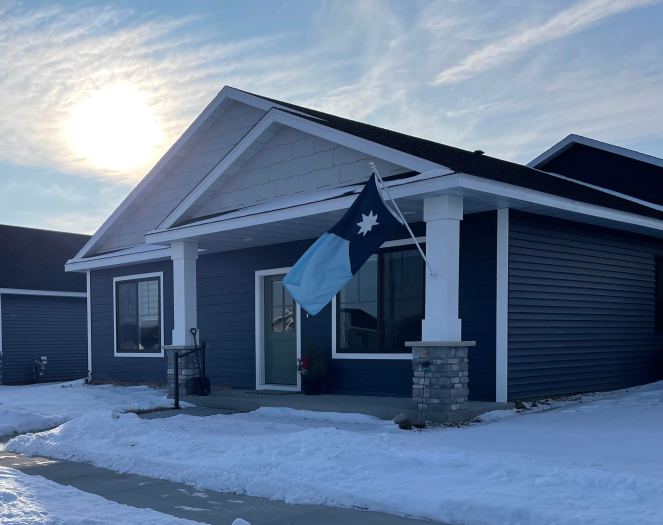
In August 2024, I bought a Minnesota state flag to hang on our Kutzky Park front porch. It was a point of pride that my Governor was a vice-presidential candidate. I unfurled the flag again on that frigid Saturday last month, the day of the first of reoccurring ICE out of Minnesota NOW! marches. This time the flag on our front porch is a subtle sign of protest on a quiet street in a new neighborhood but also a sign of resilience; proud that Minnesota residents will not be bullied.
Like you, I am experiencing the challenge of how to watch the news and yet stay sane. How to be aware of the life and death actions happening in our community and just a few miles up the road, and around the country, as well as celebrate how good people are coming together. Since it is easy to get caught up in the onslaught of news, I am trying to avoid the trap of doomscrolling. As you know, that is tough when the most basic of American tenants are dismantled before our eyes. When those principles – literally written in stone – “Give me your tired and your poor…” are discarded.
I limit my morning routine to checking several reliable news sources but then shift to the arts – knitting sometime during each day and a daily dose of poetry, a gentle salve for a bruised soul. Simple words on paper (or a screen) that capture the complexity of modern emotions. There are times when the Poetry Foundation’s Poem for the Day is a good fit while other days, I dig a little deeper often returning to the words of former poet laureates Joy Harjo, Ted Kooser, or Amanda Gorman.
Gorman, the youngest inaugural poet, an award-winning author, a banned book author, is an accomplished writer who captured our angst within hours of the murder of Renee Nicole Good and again after the fatal shooting of Alex Jeffrey Pretti. Her words honoring Renee Good reminded us:
Change is only possible,
& all the greater,
When the labour
& bitter anger of our neighbors
Is moved by the love
& better angels of our nature.
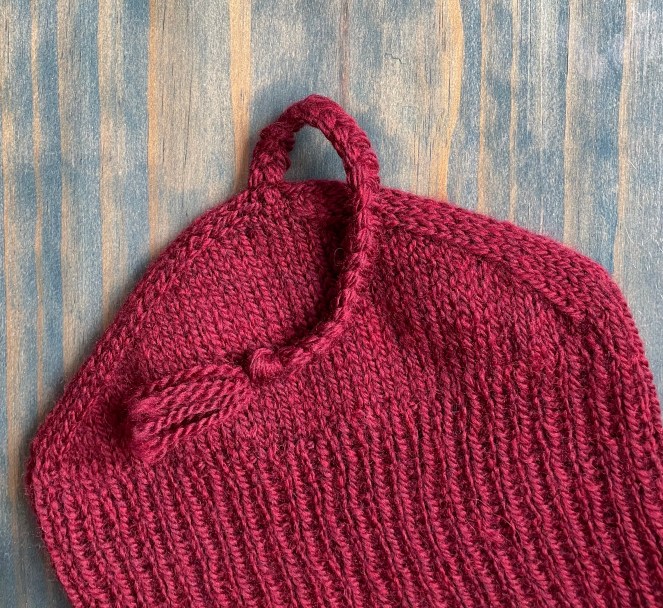
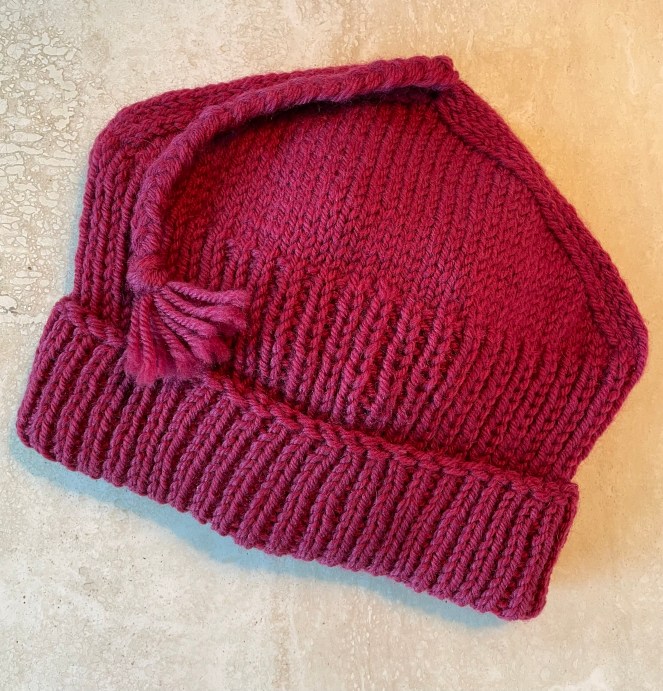
Some mornings, I listen as her lyrical voice recites poignant words that go with the quiet flow of fiber through my fingers; a meditative quality of one stitch after another, moving from skein to project to finished item which, at the moment, are red Melt the ICE hats.
I am an early participant in today’s red hat phenomenon. You may have heard how the owner of a small yarn store in St. Louis Park wanted to re-create the visual impact of the sea of pink hats seen worldwide at rallies in 2016. The design draws on Minnesota’s Norwegian heritage and that country’s resistance to Nazi occupation during World War II
The Norwegian Resistance Museum in Lillehammer has on display red beanies from that era and copies of the Nazi alert forbidding anyone, under threat of punishment, from possessing a red hat, regardless of age. Red hats have become a worldwide statement. Over 100,000 copies of the pattern have been sold to crafters in 43-countries and over $650,000 has been distributed to metro area non-profits supporting immigrants.
Today, whether we march, or sing, or knit, let’s follow Bruce Springsteen’s call to “take a stand for this land and the stranger in our midst.” Words that universally resonate and are making this new anthem a number one song in countries around the world. May love unfurl and lead us wherever we go: into the streets, into caucuses or voting booths, at public meetings or any place where love creates community, justice, art – and into a practice that makes the fibers of our hope into something strong enough to give us warmth, shelter, and resilience – much like red Melt the ICE beanies.

 Knit+ Librarian