Spirituality · Writing

Balancing Dreams and Budget: Pausing our church building journey

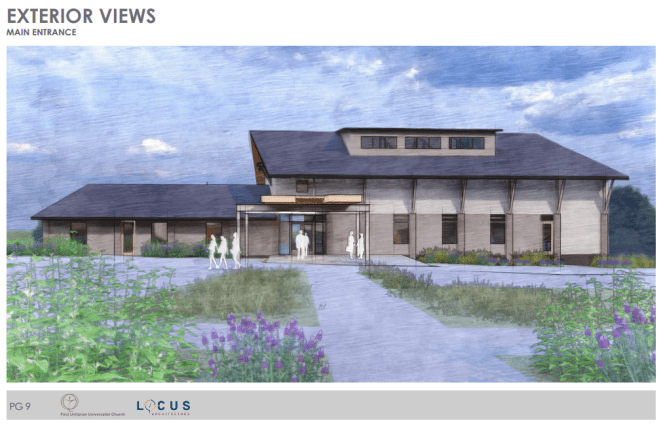
computer generated drawing of building with purple flowers in the foreground, dark roof and biege-brown walls
An exterior view from Locus Architecture following the schematic design phase of development.

I am a pen-and-paper note taker, a behavioral remnant leftover from long-ago college history courses. As we began discussing a new church home, it was natural that I would jot down ideas shared by congregants, whether during large group forums or even while enjoying a one-on-one coffee time conversation. Those notes evolved into an eight-page, single spaced, bulleted list. The ideas range from a visible entrance to natural light in the sanctuary; from an industrial kitchen to chairs with book racks for the hymnals; from energy efficient construction to a dedicated space for young adults. Some requests were overly broad – good acoustics. Others offered minute description – bench seating in the coat room for ease of putting on and taking off boots, with built in AC powered cubby holes to store and charge electric bike batteries during Sunday morning worship. Despite its length, the list contained very few contradictions. Even when there were preferences, for example, one-story versus two, Rev. Victoria Safford’s words captured the overarching sentiment which called for “a building that sits gently on the land.”

After seven years, through discernment, three congregational votes, a successful capital campaign, and reams of architectural renderings, we have a beautiful schematic design. Now we must pause.

There are a variety of factors conspiring against our project: current commercial interest rates are discouraging developers, and the design and location of our current building requires a unique buyer in a niche market. Add to this, the post Inauguration Day chaos and Presidential Executive Orders that, in the stroke of a pen, eliminated significant energy funding, as well as the threats of tariffs that will increase the costs of already expensive building supplies. A pause is prudent. My rational mind acknowledges that continuing to refine the architectural elements would be fiscally irresponsible, but my heart wants to buy a lottery ticket or host a bake sale or two or three. How to reconcile mind and heart?

With our most recent schematic design in hand, I decided to review the list and compare the dream with the elements on paper. In keeping with our vision statement for this land and the building: Do we have a design that will contribute to a compassionate and welcoming environment? How might this space contribute to our justice work? How inclusive have we been of the congregation’s creative suggestions?

Without the benefit of any scientific methodology, I rate our efforts: B+ to A-. The design incorporates many of congregants’ top priorities:

  • Large windows in the sanctuary with a panoramic southern view of the rustic landscape
  • A building footprint that can be expanded east and west to meet growth over the next 100 years
  • Easy workflow in a large kitchen.

Some highly desirable elements such as, the solar array or geothermal heating and cooling, are currently off the table due to cashflow. At best, we will build the needed infrastructure and add these highly-desired energy efficiencies in the future.

The questions that fill my mind these dark winter nights , as well as on snowy-bright days, are less about spreadsheets and the discrepancy between revenue and expenditure but focus on the nebulous side of the human psyche. How do we maintain the congregational momentum that got us to this point? How to convey that this project is like working on a post-graduate degree or taking the vacation of a lifetime, the dream will happen just not next year? How to gain financial support from everyone and spur our generous donors to give more? How to refine the design to realize cost savings without losing the heart and soul of the project?

While I do not wish sleepless nights upon any of my building team members or fellow congregants, we have a hard task ahead. Everyone’s thoughts and creativity will be needed and, maybe even, a lottery ticket.
Writing

Lean into Generosity

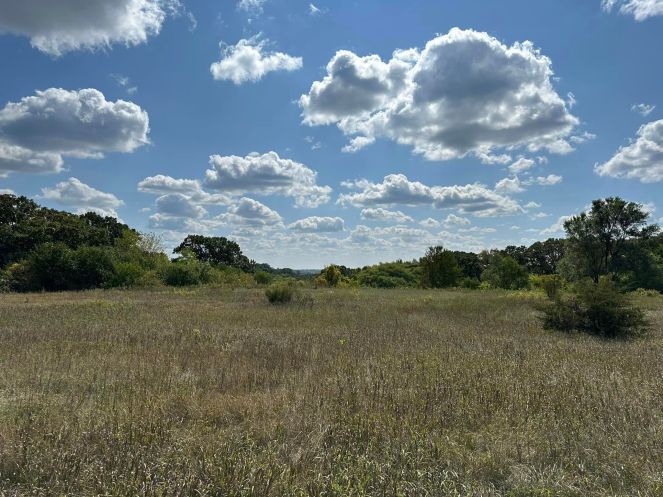
blue sky with clouds, prairie with trees on the horizon

Stuffing or Dressing?  When planning holiday menus at my mother’s house, we call the herby bread mixture “stuffing” even though it is usually never stuffed but baked as a side dish, which technically makes it dressing.  This is one of those times when the word I use doesn’t really matter other than to clarify or maybe create culinary confusion.  But there are times when the words I chose are important and I appreciate the generous nature of my building team members who, with gentle nudges, assist in broadening my vocabulary.

Initially, I referred to the land at the corner of Viola Road and East Circle Drive – the location of our new church home – as property.  After all, our elected board president and treasurer signed legal documents, F&M Bank holds a mortgage, and we are already making improvements to the site as we mow hiking paths and undertake buckthorn eradication – all actions associated with owning “property.”  But we are not so much the “owners” as the stewards, the caregivers, especially when we consider what the land generously offers to us – the wonder of the wetlands, the bounty of old apple trees, and the glory of an oak savannah. 

Even as I am successful in this naming or re-naming feat there are more language challenges.  There are ongoing discussions as to how we might generously allow access to the land but still be mindful in preserving the fragile ecology of the sedge meadow.  How to minimize our liability without posting No Trespassing signs, especially once we recognized the racially charged history surrounding the posting of land; how this practice only began after the Civil War to prohibit the movement of recently emancipated slaves, to make their journey to safer territory longer, as well as offer legal recourse to incarcerate those individuals of color who were caught trespassing.  How can we be generous in sharing the uniqueness of nearly 40 acres of wilderness within the context of our litigious society?

When faced with these and other niggling questions I take consolation and direction from the words Rev. Michelle Collins offers in her blessing entitled Freely Shared:

Let us be reminded of the many things that are freely shared with us
And that we freely share with others.
May we lean into generosity shared from the hearts.

I love that phrase “lean into generosity.”  Our principles encourage us to share from our abundance and our church mission challenges each of us to generosity.  There are times when we may plunge headlong into a fight against injustice and there are those times we can move with care “leaning” into the questions with mindful deliberation.  As our congregation continues its journey of Building Our Future – Beyond Ourselves and I participate in tough discussions, I do so with the knowledge I can lean on the kindness of others freely shared and offer my support generously from my heart.

Photo credit: Robin Taylor

Spirituality

A Year of Choices

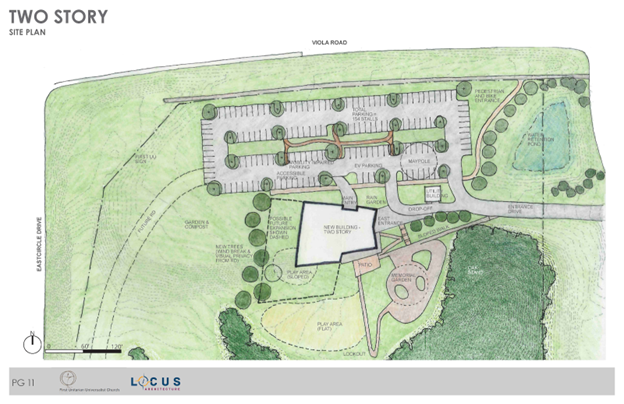
architectural drawing showing the potential layout on the new church property prepared by Locus Architecture
A preliminary design from Locus Architecture and one of many choices

After years of discernment during which we studied what was merely possible, defined what might be potential, and created a long wish list, 2023 has become a year of choices.  Two congregational votes clearly defined our direction.  Our first choice being the “stay/go” vote in January which set us firmly on the path to leave a building that has been home for 55 of our 157 years in Rochester.  Then came the second and equally momentous April vote authorizing the purchase of 38 Acres on Viola Road – that intersection of public witness and preserved wilderness – our choice of place where this liberal faith community may thrive.  And, our choices continue.

Locus Architecture presented two preliminary designs earlier this month after wading through a very long wish list, reviewing pages and pages of notes which captured the ideas voiced at more than 15 listening sessions held this spring, and participating in hours of conversation with the Building Our Future team.  The emphasis being on “preliminary” since our task of choosing continues:  1-story or two?  What constitutes the best blend of adjacencies?  Sanctuary and large gathering space on one level or large gathering space leading directly to the wide outdoors?  Ground or roof-mounted photovoltaic system or a combination?  Do we simply meet “code” or exceed minimum building requirements, especially if we feel the code crimps our values.  And, through all these discussions, just out of sight but waiting in the wings, are the financial decisions.  Just what will it take to realize our choices and turn our vision into constructed reality?

Based on the voices of the congregation, the Building Our Future team crafted a Vision Statement for the Building and the Land.  This statement introduced the architects as they presented their preliminary designs to the congregation; it was shared again at the dedication of the land on a sunny Sunday afternoon, September 17, and it is frequently chosen as chalice lighting words to focus our work at building team meetings.  Every day these words guide our choices.  In the days, weeks, and months ahead, more opinions will be needed from each member and friend of the congregation before we break ground in September 2024 and dedicate a new building a year later.  We do so with the hope that each choice will work towards our vision.

A Vision Statement for the Building and the Land

May we:
Welcome people with inclusive spaces and universal access.
Nurture spirituality and personal growth with beauty, art, and inspiration.
Practice justice with eco-restorative design.
Expand our community with flexible and multi-purpose space.
Create joy and resilience with places for play.
Care for sacred space to honor ancestors and nature.
Grow by embodying the intersection of public witness and preserved wilderness.

May it be so.  Amen.

Graphic credit:  © Locus Architecture

Other items of interest

Building Notes

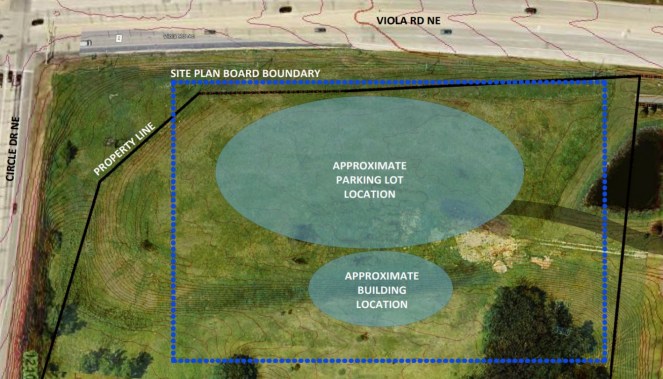
satellite map with two large areas marked for parking and building site

When I worked with the architects (nearly 25 years ago) to design the SELCO building, I blended all that I knew about library operations, office flow, and the ILS (integrated library system) connecting over 70 libraries with the practicality garnered through decades of home renovation projects.  While some features, such as the Novabrik™ exterior, were unique to the project, the construction was conventional enough that I never hesitated.  Five years into retirement and having agreed to co-lead the Building Our Future team at church, I am a bit more realistic about my learning curve.

I had anticipated the need to study solar reverse metering or options for EV plug-ins but I was surprised when the first term I needed to check in the dictionary was charette – a meeting in which stakeholders attempt to resolve conflicts and map solutions.  Our church architects suggested this opinion gathering process as a way to define key proximity questions. 

With proportionally sized, color-coded wooden blocks, church members placed the blocks on a site map.  They shared their rationale for each placement or shift as they discussed the spatial relationships for such questions as:  One story or two?  Where is the gathering space in relation to the sanctuary?  Are the classrooms near the kitchen?  How to keep the little ones near but still give parents “adult” time during coffee hour?  While each of these questions (and many more) still needs resolution, the architects came away with insights into the everyday practical use of church space and the participants have a greater understanding of the challenges inherent in designing a new church building.

An interesting historical tidbitCharette is derived from the French word for “little cart” & a time when beaux arts professors in Paris collected student drawings.

Photo credit: Locus Architecture

Knitting

Tempted but not this summer

Step back to a May (nearly June) day one year ago, or two, or three, or four years and you would find me studying pattern release notes and making yarn and color choices for Marie Greene’s annual 4-day sweater knit-along (KAL) but not this summer.  Instead, with July’s arrival, I will observe rather than participate in this summer’s KAL since I have a full task list as the co-lead of the church building team.

After spending several years in discernment, in what now feels like it was a leisurely drive on a blue-line road, it is like we are in the F1 pit lane prepping for 78 fast laps on the streets of Monaco.  As May began, we purchased 40 wooded acres of urban wilderness, engaged the architects, performed soil borings and tested for Decorah Edge.  In just weeks, we will begin listening sessions when we will dream of all this building might represent and then move into conceptual and schematic designs before breaking ground in September 2024 and dedicating a new building in September 2025. 

With weekly planning meetings, frequent discussions with the architects, and writing regular eNews updates intended to keep member congregants and friends informed and engaged, the 4-day sweater KAL, just doesn’t gel with my mindset.  But my needles will not be still as yarn for a summer silk shawl and two scarves are tucked in the rattan basket by my TV room chair.

Happy knitting!

Spirituality

Our time to dream

graphic depiction of a chalice and flame surrounded by 2 circles

Together, our church community has been engaged on a critical path of Building Our Future activities.  We find ourselves, as a congregation, its members and friends, in the midst of a great call for creativity.

After a successful congregational vote supporting the purchase of the Viola Road property as our future church home and having concluded that purchase this past week, we are entering into what our board president has described as, “our time to dream.”

I can sometimes be a broken record.  I never miss an opportunity to remind anyone who will listen that there is a long wish list for our new space; a list that has been growing since 2019 with heartfelt suggestions offered at forums and casual comments shared during mahjong games in the Chapel.  But even with this long bulleted list, I believe there is more creativity out there. 

Rest assured, the Building Our Future team is grounded in reality and we know that not everything will be possible whether prohibited by cost, or time or discovering that today’s technology is not quite ready for the future we want.  Even knowing that, we want to hear everyone’s dreams. Every idea will be held tight and, if not incorporated into our 2025 building, then that bit of dream will be saved and maybe implemented in 2035 or 2050 or even 2125.

I feel the advice shared by Rev. William Sinkford’s in a recent article entitled “On Predicting the Future” pertains to what we are doing – Building Our Future – Beyond Ourselves. His words were intended to offer guidance as congregations continue to re-gather and try to understand how we, as faith communities, will behave after having lived through a significant worldwide experience.  But I believe his message is not just about post pandemic activities but also about how we acknowledge; how we embrace change.  His article is based on an essay by the award winning science fiction writer Octavia E. Butler and her rules for predicting the future:  In that essay she wrote:

All that you touch
You Change
All that you change
Changes you
The only lasting truth 
Is Change

I know our congregational world is changing, that this beloved community will be simultaneously the same and different in a new church home.  In the early morning hours, I will admit to the same worries and concerns that may be on each member’s mind and in each heart when thinking about the magnitude of this project.  But then I look at the person next to me at a Tupper Supper, I look at the faces of people sitting in the sanctuary on a Sunday morning and the librarian in me begins cataloging the depth of the talent pool, the variety of skills in our toolbox and I am infused with confidence.

We have over 150 years of history in this community; a history that includes drawing blueprints, fundraising, constructing, and moving into four different buildings. But before any of that hard work began so many times before, so many years ago, before ground was broken, or rafters set, before church bells were hung or buildings dedicated, those that came before us dreamed of what their new home might be.  So let creativity soar and let us dream of the place Rev. Luke has described as:

“A church at the intersection of public witness and preserved wilderness. . . A Sanctuary for community, for nature, and the soul.”

It is our time to dream.

Graphic credit:  Chalice Art © Karin Lindsey

Other items of interest

April Sandwich

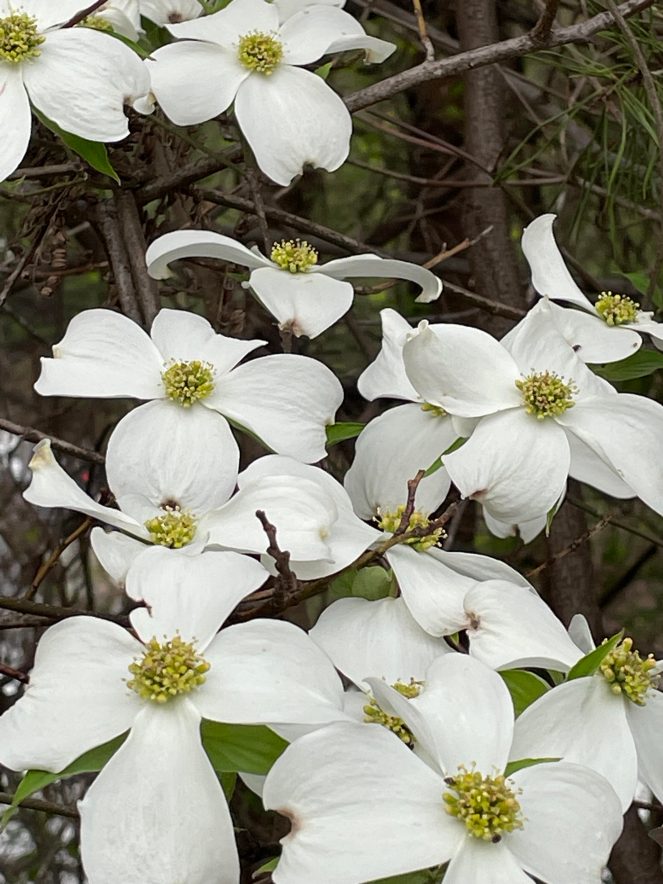
white dogwood blossoms in full bloom

My April felt like a sandwich.  The first week and the last days of the month were sliced treats of delicious, hand crafted sourdough bread filled by almost three weeks of a slimy, slightly off-tasting, maybe even salmonella contaminated filling.

Week 1 – A Tennessee trip and time spent with family, flowering trees in full bloom, and a mountaintop wedding.  For a flavor of that week, check my two April blog posts highlighting wedding presents and travel souvenirs.

The last days of April – A whirlwind of warp speed activities as the church building team performed due diligence exploring zoning and building codes, attaining soil boring reports, performing environmental testing and, peculiar to our southeastern corner of Minnesota, conducting Dakota Edge delineation.  When we submitted our Letter of Intent to Purchase land for a new church, we proposed a 90-day timeline for all of this work.  After back-and-forth negotiations, the seller accepted our financial offer but would allow only four weeks for study.  Unbelievably, the myriad of required professionals were able to find time in busy schedules to accomplish the numerous inspections of the property including all the relevant tests.  The stars aligned and not just “in a galaxy far, far away…”

The middle of my month is a sea of days lost to Covid.  After three years of careful sequestration, masks, and practical activities (as well as not so practical actions like wiping groceries) Richard and I were both sick.  Even after the specific symptoms– fever, congestion, cough, and tiredness – subsided, I felt my brain was Covid-addled to the point I worried I might adversely affect building team decisions.  But, not to fear, my trusted colleagues persevered and double checked my work so that we close on this unique parcel of nearly 40 wooded acres on May 10.