Writing

Drawn to the Library

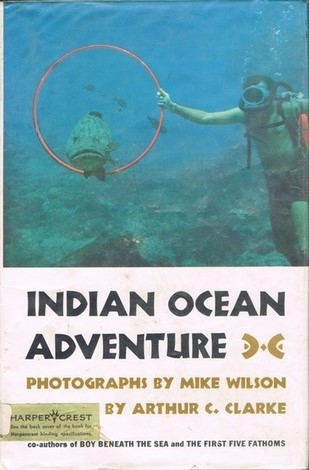
I am a librarian and unabashedly proud of my lifelong career choices. While I was a frequent library visitor as a child, my passion for libraries began when I was ten. During the summer of 1962, between 4th and 5th grades, my mother and a group of her friends worked tirelessly, under the supervision of Mrs. Berlin (the head of children’s services at the public library) to collect and catalog a new school library. It was cobbled together from eight disparate classroom collections and a generous selection of new titles acquired during a successful parish-wide book sale. When school began that fall, along with my best friends Cindy and Jeannie, I began helping in the library after school. As that academic year ended, the PTA sponsored a school-wide contest. I wrote one of the winning essays about the importance of our new library. And, lest you think there as favoritism because Momma was the new volunteer librarian, the essays were submitted anonymously and judged by the PTA officers. I still have the prize – a hard cover copy of the Indian Ocean Adventure by Arthur C. Clarke.

There are those antagonists who claim libraries are no longer needed because everyone can simply buy their books through Amazon. While admittedly a quick source for just about everything from hoses to vitamins, book buying necessitates sufficient discretionary, disposable income. And, even for those of means, there is the practicality of borrowing from the library in solidarity with the 3-Rs – reduce, recycle, reuse.

With nearly five decades of practical experience, I can attest not everything is available through Amazon.

There was the distance learner who was able to complete her PhD. in nursing while employed in a small-town health clinic because expensive medical resources from the University of Minnesota were delivered to her local library though interlibrary loan. Interlibrary loan services that are at risk because the current administration has deemed federally supported intergovernmental library cooperation unnecessary.

The little ones whose caregivers brought them to the library for pre-school storytimes full of stories and pictures, rhymes and alliterations, enhancing early brain development through language.

The students who avoided the dreaded summer slump in reading scores because summer library programs energized curious young minds with books and reading, as well as thematic games and crafts.

The people who filed unemployment claims or submitted job applications at the library’s public access computers because their home situation did not afford internet connectivity, whether because of financial stress or the simple lack of bandwidth in the more rural parts of our state.

With the celebration of National Library Week drawing to a close, remember the times you have been drawn to the library and smile.
Reading

Celebrate Libraries!

horizonal graphic for 2025 national library week theme, drawn to the library

Celebrate your library during National Library Week and every week. Library services enhance your life and the life in your community whether by sparking creativity, offering a safe community hub, empowering job seekers, protecting the right to read, connecting people with technology, or nurturing young minds while continuing to provide a book collection for all ages. Join others under this year’s theme, Drawn to the Library and celebrate.

Special days and focus:

  • Monday, April 7 – Right to Read Day
  • Tuesday, April 8 – National Library Workers Day
  • Wednesday, April 9 – National Library Outreach Day
  • Thursday, April 10 – National Take Action for Libraries Day, a day to rally support for libraries.
Reading

Ruth and Freckleface Banned

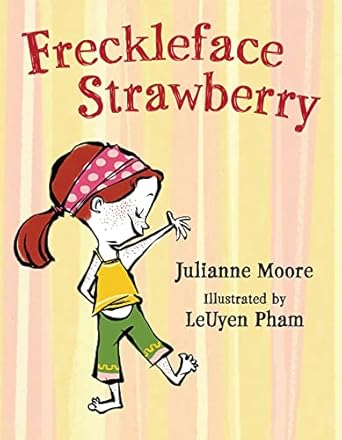
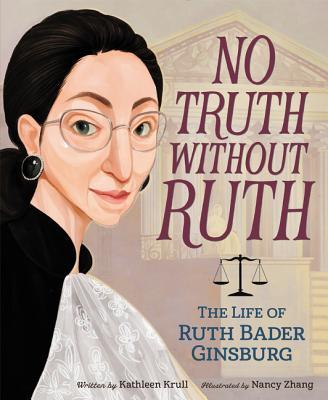
With the firehose of bad decisions spewing forth from this White House, I vacillate between trying to stay informed and wanting to ignore the mistaken path this country blithely follows. As a former children’s librarian, I am dismayed by the administration’s recent order to remove certain picture books from U.S. military schools. In an unstable world with bombs hitting targets in Gaza and Ukraine and civil wars in Sudan and Myanmar, I would think the Department of Defense would have more relevant tasks to undertake than pulling from its school library shelves Freckleface Strawberry by Julianne Moore and No Truth Without Ruth by Kathleen Krull.

Here is a brief synopsis in case you are not familiar with these two picture books.

  • No Truth Without Ruth – An age-appropriate biography of the life of Ruth Bader Ginsburg, from a small girl who chipped a tooth while twirling a baton to Supreme Court Justice making major decisions while donned in a black robe and her signatory lace collar.
  • Freckleface Strawberry – Tired of being teased because of her looks, the story tells of a young girl’s antics to hide her face before accepting her freckles.

While I may be eight years into retirement, my long-held belief in intellectual freedom as basic tenet of librarianship still rings true. As defined by the American Library Association: “Intellectual freedom is the right of every individual to both seek and receive information from all points of view without restriction. It provides access to all expressions of ideas through which any and all sides of a question, cause or movement may be explored.”

I encourage you to read these titles for yourself and determine whether these books are, as described by the administration, “radical indoctrination.” I think not but take a look.

Reading

Derek Anderson, 1969-2024

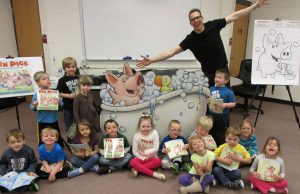
Author Derek Anderson and a group of children each holding a copy of his book, 10 Pigs

Today, I am re-reading the absolutely hilarious counting book, Ten Pigs: An Epic Bath Adventure – one of my favorites!  In 2016, I accompanied author/illustrator Derek Anderson on a round of library visits.  I sometimes acted as stagehand setting up the gigantic piggy bubble bath and, other times, I served as MC.  Derek enchanted hundreds of children, caregivers, and parents as the featured author in the Once Upon a Reader statewide one-book reading program that promoted the early literacy skills to Talk, Sing, Read, Write, and Play.  With wonderful memories of visiting libraries and having thoroughly enjoyed his ever-growing collection playful children’s titles, I am deeply saddened to learn of his death. Children’s literature and Minnesota libraries have lost a star.

Reading

Book Club: Tom Lake

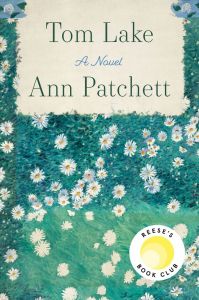
Having migrated from Zoom sessions during those closeted days of Covid self-quarantine, The Directors gathered yesterday at a lunch locale for wine toasts, shared desserts and a book discussion.  While unusual but delightfully so, we discovered that this library loving, book reading, wine-drinking group of retired friends had landed on a title that we all enjoyed – Ann Patchett’s Tom Lake.

While I have become a regular audiobook listener when knitting, I know I would score miserably low should I take an Iowa Basic Skills comprehension test for any of those titles.  I still gravitate towards a hard cover for book club selections.  However, for Tom Lake, I was intrigued by the prospect of hearing Meryl Streep read this story and wondered if I would I hear the actress or the voice of the main character?  I opted to both read and listen.  I read a few chapters and then listened to those same chapters in the audiobook format.  At times, I recognized the text well enough that I could anticipate the next phrase and, then again, a detail I missed in reading the ink on paper would be a surprise in my ear.  Even though reading2 is time consuming, I may repeat this paper copy / audiobook combo for future book club selections.

Synopsis:  Three daughters listen and question their mother’s stories about her long-ago budding acting career on stage and screen, her first love, a spotlight on summer-stock, and her life choices; some made with intention and others by happenstance.  From the New York stage to poolside Hollywood to a cherry orchard in northern Michigan, the story gently shifts between past and present. Patchett artfully reveals common threads and the different hopes and dreams of each family member.

Knitting · Reading

Book Club: Knitlandia

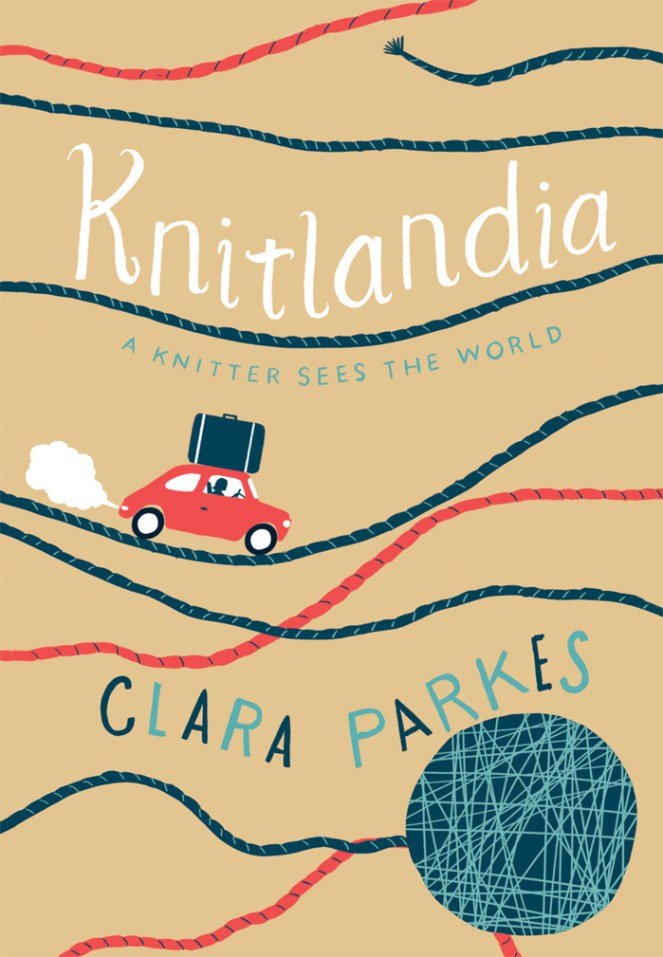
cover art for Knitlandia by Clara Parkes

A retirement gift from my friend Amy, I re-read-Knitlandia:  A Knitter Sees the World by Clara Parkes for this month’s Knit Camp Reads book club.  This collection of travelogues necessitated a different type of discussion as we could not rely on old standby questions about character development, unexpected mystery twists, or conflict resolution.  Instead, we talked about which chapter or chapters resonated with each of us.  Mine were the chapters on New York and Iceland. 

My visits to New York have been limited but each trip holds a Cinderella moment – meandering slowly down the grand concourse of the Guggenheim all by myself at 16, the breathtaking view at a top floor reception in the World Trade Center, my first (and only) taste of caviar in the Waldorf Astoria ballroom.  As well as remembering that sense of relief when cresting the Hampton hills just north of Zumbrota on my homeward trek after a summer trip and seeing green which washed away the overwhelming vision of nothing by undulating yellow sheet metal racing and then screeching to red light stops. 

Unlike the New York chapter where I could draw upon memories of real sounds and smells, Parkes’s description of her Icelandic fiber tour moved into the realm of wishful thinking but Covid dashed hopes.  In 2019, I booked a Rowan Tree Travel tour to Copenhagen and the Faroe Islands but the 2020 and the 2021 September trips were canceled and I eventually opted out of the April 2022 rescheduled tour.  While I recognize Denmark and Iceland are distinct countries with unique cultural differences, they share a Nordic heritage and a deep appreciation of northern clime woolens.  I could easily imagine myself with Clara visiting an Icelandic sheep farm just as I had hoped to spend a day in the home of a Faroese fiber artist with Rowan Tree Travel guides Heather and Suzie.  I do have one tangible connection to Iceland in the form of four skeins of yarn purchased by Amy (the same person who gifted me this book) when she was in country for a destination wedding; yarn I later knit into a Solène Le Roux Cable Promenade Cowl.

As we slowly emerge from our Covid existence, I take to heart Clara’s advice: “There is a time for sitting at home in your pajamas, watching and clicking and quietly forming connections in your mind.  And, there’s a time for getting out and being with others, for reaching into the picture and becoming part of it.

Reading

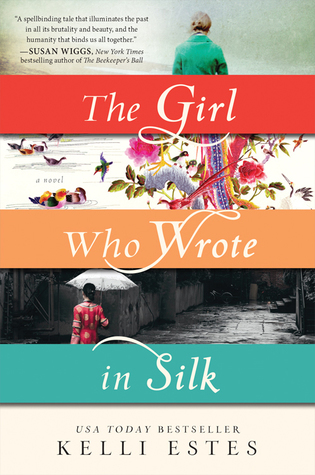
Book Club: The Girl Who Wrote In Silk

cover art for The Girl Who Wrote with Silk by Kelli Estes

Synopsis – The novel is written from the perspective of parallel protagonists whose stories intertwine on a Pacific Northwest island – Mei Lein in the late 19th century and Inara in present day.  While undertaking the restoration of an island cottage, Inara discovers a long hidden, intricately embroidered silk sleeve.  As she explores its meaning, she discovers a hidden secret within her own family surrounding an unspeakable act which draws a full circle.  Through Mei Lein’s voice we hear about her life in frontier Seattle, how she survived genocidal atrocities performed by Inara’s ancestors without repercussions under the Chinese Exclusion Act of 1882, and her life on a small, secluded farm during which time she artistically depicted her story through thousands and thousands of hand stitches, one silk stitch at a time so her son might know his ancestors.

This debut novel by Kelli Estes was the most recent title discussed with my library loving, book reading, wine-drinking group of retired friends dubbed The Directors.  We felt it was a “readable” book although we each agreed that Mei Lein’s story was the more believable.  Our next title has yet to be chosen but we are leaning toward non-fiction with a bit of oomph.

Reading

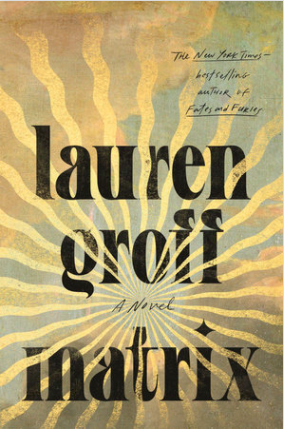
Book Club:  Matrix

cover art for Matrix by Lauren Groff

The Story – – – At a time when women were often considered less than a commodity the farmer’s cow or the nobleman’s land prized above a wife or daughter, Marie de France, by sheer force of will and bolstered by what she believed were divine visions, created a religious stronghold where women were not only safe but valued as industrious leaders.  Considered an unmarriageable orphan within the court of Henry II, Eleanor of Aquitaine relegated Marie to a nunnery.  But rather than allow herself to be forgotten, Marie transformed the impoverished abbey, where the nuns were dying of starvation when she arrived, into a religious center where women illuminated manuscripts (considered a task suitable only for men) and built a cathedral.

While written as fiction, Lauren Groff’s protagonist did exist in the real life of the 12th century although little is known of Marie.  Even her name has been lost to the centuries as she is simply dubbed Marie de France.  Reputable sources – the British Library and the Encyclopedia Britannitica – consider her the earliest known French female poet.

Our Matrix book discussions occurred during two gatherings, the first when The Directors – my library loving, book reading, wine-drinking group of retired friends – ventured into the frigid January weather for soup in St. Paul.  But we were too starved of lively catch-up banter to give this title our focused concentration and hence came back to it on another frigid day, this time over Zoom with everyone snug at home.  Everyone agreed Groff’s stylized writing flowed lyrically off the page even if the degree of enjoyment brought by this “read” varied. 

Happy reading!

Reading

What to read next?

A pleasantry in retirement and augmented by the ongoing pandemic isolation is time for reading – both good literature and, sometimes, those fun but not so well written books.  I find my next read is just as likely to come from a friend’s casual comment or an intriguing cover spotted among BookBub’s daily offerings as from my lengthy (189 title) Want to Read electronic shelf on Goodreads.  Thus, it is easier to report what I am reading rather than guess what I might read next. 

In eBook format – A re-read of Dune by Frank Herbert spurred on by the newly released movie directed by Denis Villeneuve, which is as impressive an adaptation as critics claim.  The actors capture adeptly the characters’ personalities, the scenery is as harsh as the reader might envision the treacherous desert planet, and the masterful CGI depict the scale of futuristic intergalactic travel.  And, simultaneously, to prepare for next week’s Knit Camp Reads book discussion, The Girl Who Wrote in Silk by Kelli Estes.

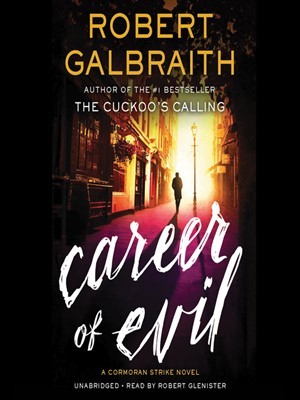
And, for multitasking while knitting my red Vivi sweater – #3 in the Cormoran Strike mystery series, Career of Evil by Robert Galbraith (a.k.a. J.K. Rowling) in audiobook.

Nothing in paper at the moment; although The Rose Code by Kate Quinn is on the book rack next to the couch and most likely to be the next read among The Directors (my library loving, wine drinking group of retired friends) and thus the logical response to Bloganuary’s 18th prompt:  What book is next on your reading list?

Reading

Book Club: Four Winds

Even as The Directors – my library loving, book reading, wine drinking group of retired friends – have begun carefully venturing out into our Covid plagued environment, we continue our online book discussions.  Our most recent title was Four Winds by Kristin Hannah.

Our intrepid discussion leader prepared 26 questions, each with such perceptive depth that responding to any one of them could easily have filled a college exam blue book.  With our limited time, we focused on the millenia of challenges women have endured and those specifically presented by the author through the lens of the protagonist Elsa Martinelli.

book cover of four winds by kristen hannah

We wondered how so much strife could affect one person but coalesced around the knowledge that there are those whose lives seemed blighted by every bad thing that can happen – whether as a result of misguided decisions or circumstances beyond their control or an unlucky combination.  And, indeed, we each realized that there was someone we knew who could be identified as Elsa-like.

Of all of Hannah’s descriptions of her charcter’s hard life, (Dust-Bowl storms which my mother remembers, a deadly flash flood, and hours of bloody, back-breaking labor picking cotton which my father did for only one day) I connected most closely with the unending debt created at the company store.  When I was small, maybe around five while visiting Alabama, I walked to the store with my Granddaddy. I had a nickel (a large amount to a child in the 1950s) to buy whatever I wanted.  But I could not spend my precious five cents.  I remember being both elated and disappointed.  Excited that the penny candy was free (or so I thought) and deflated that I could not make the cash transaction like a big girl.  Years later, long after the company store had became just a corner grocery did I realize that even a child’s treat went “on account” against Granddaddy’s next payday.  Tennessee Ernie Ford’s classic song, I Owe My Soul to the Company Store was a truism for thousands of workers including the tragic heroine of Four Winds.