Reading

Book Club:  Matrix

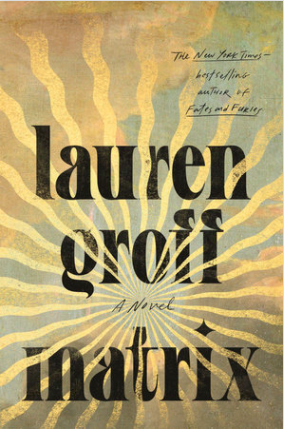
cover art for Matrix by Lauren Groff

The Story – – – At a time when women were often considered less than a commodity the farmer’s cow or the nobleman’s land prized above a wife or daughter, Marie de France, by sheer force of will and bolstered by what she believed were divine visions, created a religious stronghold where women were not only safe but valued as industrious leaders.  Considered an unmarriageable orphan within the court of Henry II, Eleanor of Aquitaine relegated Marie to a nunnery.  But rather than allow herself to be forgotten, Marie transformed the impoverished abbey, where the nuns were dying of starvation when she arrived, into a religious center where women illuminated manuscripts (considered a task suitable only for men) and built a cathedral.

While written as fiction, Lauren Groff’s protagonist did exist in the real life of the 12th century although little is known of Marie.  Even her name has been lost to the centuries as she is simply dubbed Marie de France.  Reputable sources – the British Library and the Encyclopedia Britannitica – consider her the earliest known French female poet.

Our Matrix book discussions occurred during two gatherings, the first when The Directors – my library loving, book reading, wine-drinking group of retired friends – ventured into the frigid January weather for soup in St. Paul.  But we were too starved of lively catch-up banter to give this title our focused concentration and hence came back to it on another frigid day, this time over Zoom with everyone snug at home.  Everyone agreed Groff’s stylized writing flowed lyrically off the page even if the degree of enjoyment brought by this “read” varied. 

Happy reading!

Other items of interest

. . . and it is racing!

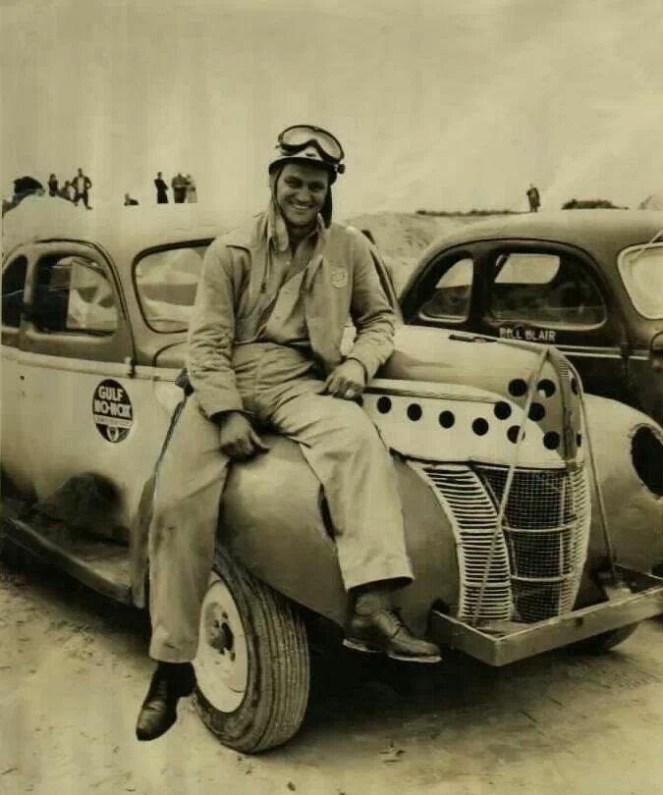
James McMichael – My Uncle “Mac”

Since Formula 1 testing in Barcelona is still 24 days out and we must wait until March 20 for the inaugural F1 Grand Prix in Bahrain, the Hutton household launched the 2022 racing season by watching the Rolex 24 at Daytona.  The drivers and crews are from around the globe, performing in five different classes of cars, making for fast, faster, and the fastest driving, start-to-finish for 24-hours through the night and in unseasonably cold Florida temps.  This race celebrates a 60th anniversary, but there is a deeper racing history in Daytona.  Certainly not ecologically sane by today’s standards but my Uncle Mac gives me a family tie to an early era of beach racing.

Photo Credit: G. McMichael Anderson

Other items of interest

From the Days of Tire Bags

white Porsche 944 at speed

After numerous Covid related postponements, Richard finally had his PT assessment today.  While the physical therapist approved of our TV room Ekornes Stressless recliners, he recommended more lower back support and so this afternoon I had a craft project.  While I readily admit my skills as a seamstress stagnated sometime after I earned my Girl Scout sewing badge, I did manage to make a small 4 inch x 10 inch lumbar support pillow. 

Most of my remnant stash dates from the mid-1990s when I undertook the translation of Richard’s wearable art (jewelry) into soft sculptures (pillows).  Despite having some lovely high quality upholstery fabrics from which to choose, he picked a left over from our Porsche days. 

Most might consider the Porsche 944 a small car especially since its two back seats would only accommodate very young children before the days of safety required car seats.  But we transformed our 1987 944S two-seater coupé into a station wagon on “race” weekends.  We had enough room for suitcases, cooler, tools, jack, and a complete set of track wheels and tires.  To protect the car’s interior when packing the Bridgestone R1s, I made four large drawstring bags using an easily washable cotton-poly blend that matched the car’s maroon leather interior.  The bags were especially needed for the trek home when the wheels were covered in fine black brake dust after two days of driver education classes at the track.

Reading

What to read next?

A pleasantry in retirement and augmented by the ongoing pandemic isolation is time for reading – both good literature and, sometimes, those fun but not so well written books.  I find my next read is just as likely to come from a friend’s casual comment or an intriguing cover spotted among BookBub’s daily offerings as from my lengthy (189 title) Want to Read electronic shelf on Goodreads.  Thus, it is easier to report what I am reading rather than guess what I might read next. 

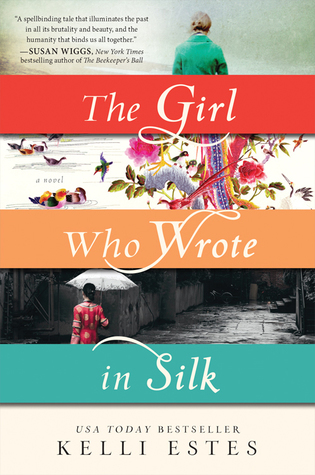
In eBook format – A re-read of Dune by Frank Herbert spurred on by the newly released movie directed by Denis Villeneuve, which is as impressive an adaptation as critics claim.  The actors capture adeptly the characters’ personalities, the scenery is as harsh as the reader might envision the treacherous desert planet, and the masterful CGI depict the scale of futuristic intergalactic travel.  And, simultaneously, to prepare for next week’s Knit Camp Reads book discussion, The Girl Who Wrote in Silk by Kelli Estes.

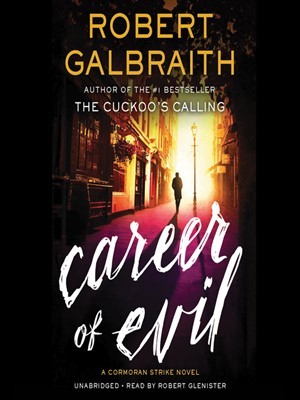
And, for multitasking while knitting my red Vivi sweater – #3 in the Cormoran Strike mystery series, Career of Evil by Robert Galbraith (a.k.a. J.K. Rowling) in audiobook.

Nothing in paper at the moment; although The Rose Code by Kate Quinn is on the book rack next to the couch and most likely to be the next read among The Directors (my library loving, wine drinking group of retired friends) and thus the logical response to Bloganuary’s 18th prompt:  What book is next on your reading list?

Writing

Bloganuary?!?

Today’s whim – – join a blogging challenge.  I’ve done Squares times four with BeckyB of Winchester, reading challenges with The Uncorked Librarian and this month I signed up for Bloganuary.  (There is even a badge for participants!)  With a promise of daily writing prompts from WordPress, the challenge is intended to nudge writers to write.  Now, lest you worry you will be inundated with posts, I promise only sporadic musings.

With today’s prompt:  “What does it mean to live boldly?” Mary Oliver comes to mind.  While her poems, inspired by our miraculous natural world, might not on first reading seem audacious – they are. And, her advice in Sometimes is bold indeed. 

Instructions for living a life:
Pay attention.
Be astonished.
Tell about it.
blue and white badge graphic denoting bloganuary 2022 participation
Baking

Chilly Day Chocolate Cake

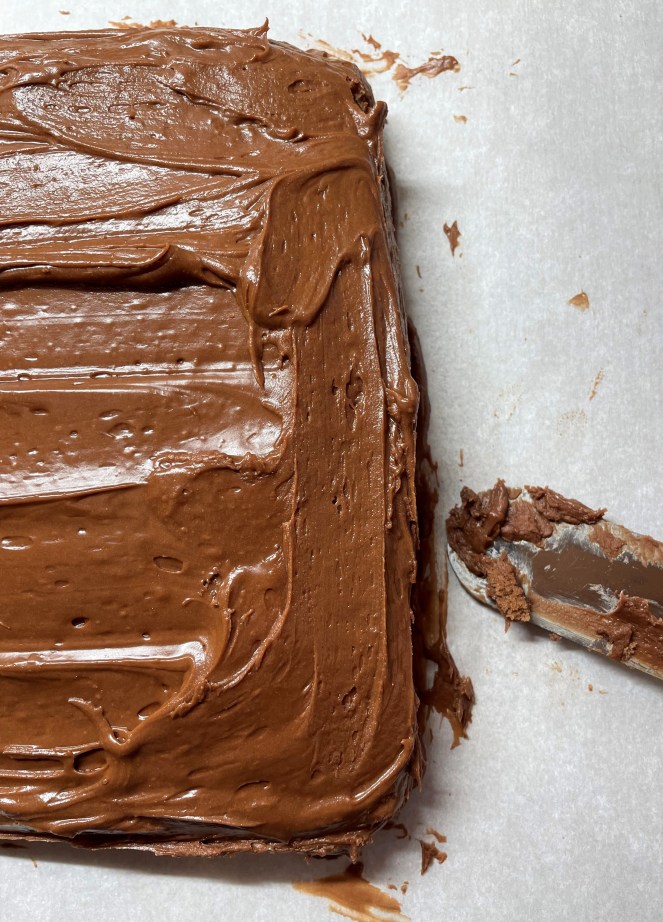
portion of a square chocolate cake and spatula with frosting

While not the most photogenic dessert (cake decorating has never been a skill in my baking tool box), I can tick off a list of positives accomplishments:

  • Meets Richard’s dessert request
  • An easy mix using Joy of Cooking Quick Cocoa Cake and Chocolate Butter Icing recipes
  • Very moist and deliciously tasty with Divine Cocoa in the cake and Ghirardelli bitter sweet chocolate in the frosting
  • Just the right size (as Goldilocks would say) and, as directed, baked in two-8 inch square pans; perfect for eating one and freezing another.
Knitting

Vivi KAL 2022

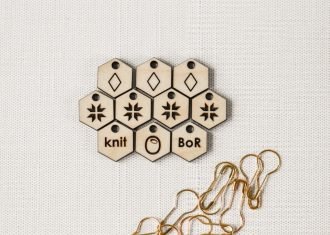
ten laser cut knitting stitchmarkers and gold coil-less safety pins on linen background
Vivi custom stitch markers from Olive Knits

After a wardrobe review, I admit I do not need another sweater. Having knit two in 2021 that I wear infrequently due to our continued Covid stay at home-ness, I initially decided to pass on Marie Greene’s 4th annual January Workshop KAL (knit-along).  But then I was swept up in the enthusiasm of my fellow Knit Campers’ yarn selections and color choices, plus Marie’s newest design features (my favorite) cables!

Ironically, while my September trip to Copenhagen and the Faroe Islands was cancelled, I will enjoy Danish artistry virtually with Vivi. Pattern pictures reveal a lattice of cabled diamonds gracing the sweater’s front and Danish stars decorating the sides.  Unlike the intricate colorwork of Scandinavian cousins, these Danish designs rely on subtle stitch definition against a monochromatic backdrop.  And, as always, during the eight weeks of this annual workshop KAL, Marie will share historical background, new techniques via video tutorials, and ethnic recipes for culinary exploration, as well as a large dose of “hygge” – perfect for this lingering pandemic.

Happy knitting!

Photo credit: © Marie Greene

Knitting · Spirituality

Mistakes Encouraged

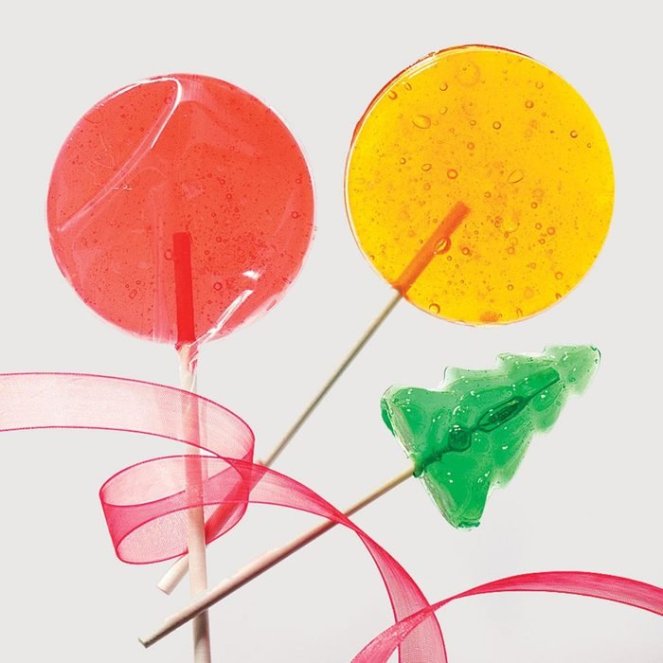
red, yellow and green pine shape lollipops with red ribbon

When I was little girl, I used a variety of rhymes to help make choices.  You may have as well.  A syllable paired with each point of the finger to choose the grape or the cherry lollipop or to determine which of two sides would kick first in kickball.  Back then, the very act of recitation felt quite magical.  A difficult decision simplified.  As adults we know the decision was made with the first point of the finger because of a set number of syllables.  

And yet, even knowing that in many aspects of our lives there are a set number of syllables, I am always surprised when what appears to be the disparate aspects of my life come together.  How is it that liturgical preparations and searching for a new knitting pattern can blend so seamlessly?

Living with Intention is the theme of my spiritual reflections this month and I discovered very similar language in these meditations and recent blog posts by two of my “go-to” knitting designers.  Christina Campbell in Iowa and Solène Le Roux in France both infuse nature into their designs, whether incorporating leaf patterns or revealing rippling water as yarn is transformed from skein to knitted object.  Both designers take a very holistic approach to their craft.  It is not about just the design or the fiber, but the whole experience; encouraging the reader, the knitter to pause, to develop the muscle of inspiration, to connect with nature and each other; encouraging the knitter, encouraging the person to act with intent.

In Navajo weaving every thread tells a story.  The weaver brings the strands together not just to accomplish a function – a finished blanket or rug – but with the specific intention to communicate the culture, the land, a way of life.  Traditional Navajo weaving requires the weaver to incorporate a mistake.  This is done in homage to the belief that only the creator is perfect and acknowledges the weaver is not.  To live with intention or in this case to weave with intention. 

Now, I admit I have a difficult time with mistakes when I am knitting.  I have been known to rip out an evening’s work – rows and rows, thousands of stitches when I discover a break in the design, something that jumps out as an eyesore.  Even with all my experience knitting the same row again and again, I cannot claim that I have ever come close to knitting anything without error and I am certainly not good enough to emulate the Navajo weavers such that the mistake becomes a design element enhancing the final piece.  And so the advice from English writer, Neil Gaiman, spoke to my heart and hands and I hope his words will resonate with you as well as we move into a new year; a new year in which there are sure to be plenty of unknowns.  Gaiman writes:

I hope that in this year to come, you make mistakes.

Because if you are making mistakes, then you are making new things, trying new things, learning, living, pushing yourself, changing yourself, changing your world. You're doing things you've never done before, and more importantly, you're Doing Something.

So that's my wish for you, and all of us, and my wish for myself. Make New Mistakes. Make glorious, amazing mistakes. Make mistakes nobody's ever made before. Don't freeze, don't stop, don't worry that it isn't good enough, or it isn't perfect, whatever it is: art, or love, or work or family or life.

Whatever it is you're scared of doing, Do it.

Make your mistakes, next year and forever.

Photo credit: Old Fashion Lollipop Recipe from Taste of Home
Travel

Crossing the River

Mississippi River with lock and dam mid-frame
The Mississippi River at Lock & Dam 4 – August 2005

Every time I cross the river, I take a quick glance upstream and down through the blue bridge girders.  With the season for barge traffic and pleasure cruising long since complete, I check ice buildup along the shoreline.  Knowing only later, after deep-freeze temperatures, will the ice floats appear in the main channel.

When you go “over the river and through the woods” as often as I do at Wabasha it is easy to see this small segment of a massive watershed as simply another sight along the trip.  But the Mississippi is anything but commonplace.  It is a river that people from around the country, from around the world, wish to visit; simply to claim they have seen, or crossed, or boated on the Mississippi.  And while the scenery may not be as dramatic as the Matterhorn, numerous Swiss cousins (once – fünf Frauen am Fluss) have enjoyed a day spent along the river, watching barges work their way through Lock 4 at Alma.

Starting at the confluence of the Mississippi and the St. Croix Rivers (Hastings, MN and Prescott, WI) the Mississippi becomes more than just a navigable waterway, it takes on the monumental task of separating governmental units, state-by-state, as it flows south to the Gulf.  But, before Hastings, west and north, the Mississippi wends its way through fields, prairie, and forests to humble beginnings at Lake Itasca.

While history books, written from the perspective of the white immigrant, attribute the discovery of the headwaters to the Henry Rowe Schoolcraft expedition in 1832, this small beginning of a massive waterway was known and sacred to Indigenous People for millennia.  And, it must be noted, Schoolcraft reached his destination only with the aid of an Anishinabe guide.

Poet Mary Oliver, whose poems always present the perfect blend of words to describe our world, offers us this observation:  “It is the nature of stone to be satisfied.  It is the nature of water to want to be somewhere else.”  Each time I stand on the sandy shore where a small stream flows into Lake Itasca there is a sense of awe.  Regardless of the number of people laughing and splashing from one side to the other, I recognize I am in a holy place.  My 21st century, rational mind knows that the droplets sprinkling in the sunlight may cease to exist as flowing water; diverted to human consumption, agricultural irrigation or simply becoming part of a natural evaporation – precipitation cycle.  But there is also the real possibility that the very water that I see flowing over the CCC-placed stepping stones, water that will touch millions of lives before a wide river slides muddily past New Orleans, will finally blend with the warm waters of the Gulf of Mexico.  That connection with an entire continent transforms each visit to Lake Itasca into a spiritual experience.

Baking

Candy Cane Cookies

three red and white candy cane cookies on a pine tree shapped plate framed by holiday greens

I cannot remember the year I first made these almond flavored cookies but I do remember the kitchen. The front of the house, second floor apartment on 2nd Street, above the chiropractor’s (my landlord’s) office, and across the street from the Brodhead Public Library.  That gives me a three-year window of Decembers from 1976-1978.  The recipe was part of a multi-year Betty Crocker recipe club subscription (think book-of-month club only recipes) where the tangerine orange recipe box and the first 24 recipe cards were the free gift for subscribing and a thematic packet with 24 additional cards arrived each month for the next two years.

These candy cane cookies are my must-bake Christmas treat.  If I make nothing else, it will be these.  The result is a shaped cookie without the extra steps of frosting and decorating cutouts or requiring the technical skill of applying the perfect pressure necessitated for Spritz cookies.  Although I do own a Sawa 2000 Deluxe Swedish cookie press complete with 24 nozzles, circa 1985.

As we gingerly plan for another Covid Christmas, Mom and I have agreed less is acceptable.  She baked only two batches of family traditional sweets – Pecan Crisps (a double batch, of course) and Holiday Fruits – instead of the usual six varieties; to be served with her purchase of Rosettes, Pizzelles, and Sandbakkles courtesy of the St. James ethnic bakers.  With what is in her cookie jars plus my Candy Canes and a vanilla cheese cake on a chocolate wafer crust topped with cranberry glaze for Christmas Day, our holiday cookie platter should be merry and bright.