Other items of interest

It all began with a bat…

I was already upstairs and Richard had nearly finished brushing his teeth when he caught a moving shadow in the corner of his eye.  A bat was making sweeping figure-8s from one end of our galley kitchen to other.  While Richard stood in the open archway between kitchen and dining room, waving his arms to deflect possible sonar waves, I dashed to the garage for a snow shovel (in hindsight a broom might have been the better tool, but I admit to reactionary thinking.)  Whether or not the arm and snow shovel waving created the desired interior air current, we were successful in directing the unwelcome visitor into the night.  Thus began our most recent construction job which has included:  bat extraction from the attic, remedying a damp basement with a WaterGuard® Below-Floor Drain system, and hiring an electrician to bring power to the sump pump. 

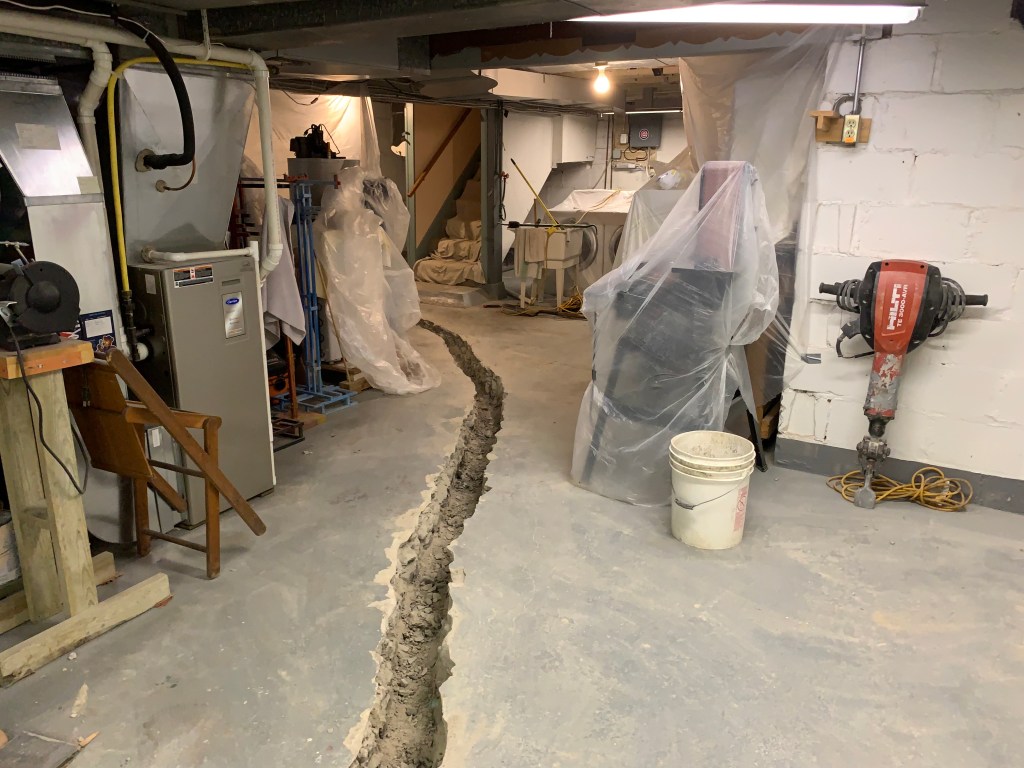
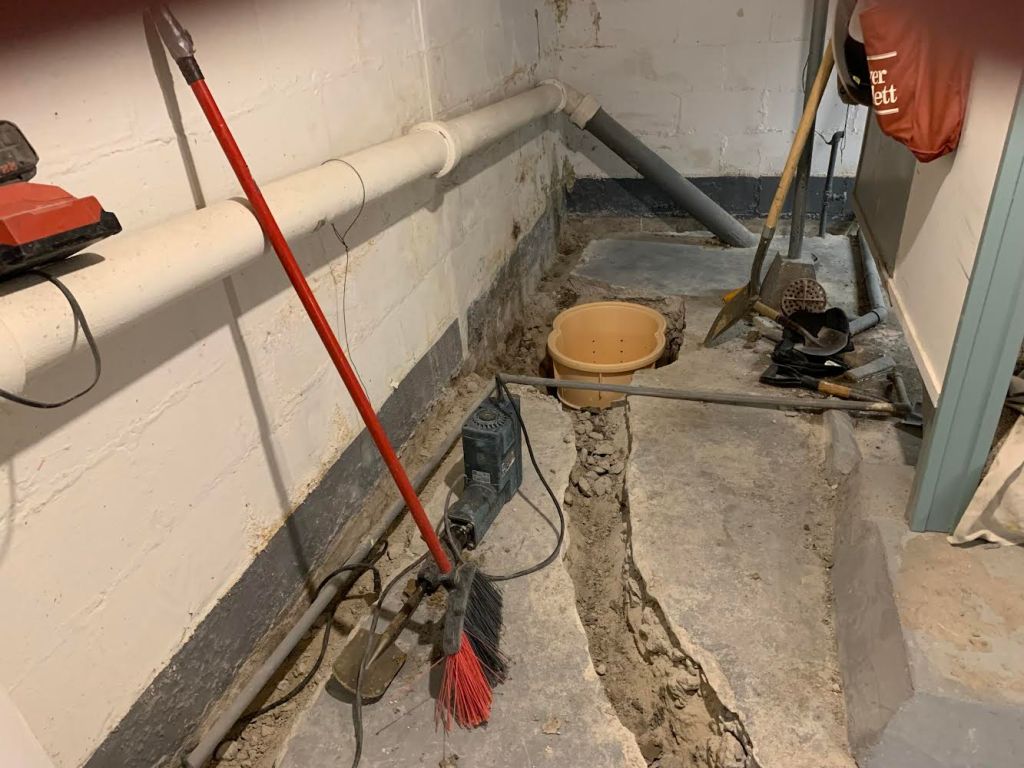
Prep work for the new drain system required handling everything in the basement to create an 8-foot open corridor around the perimeter, including five trips to the county waste-to-energy center.  Once the work was completed, (jack hammering, old concrete removed, and new concrete troweled into place) everything was handled a second time to remove the thin layer of concrete dust that coated every surface.  We spent September getting ready for the contractors and it feels like we will need all of October to recover.

Spirituality

A Year of Choices

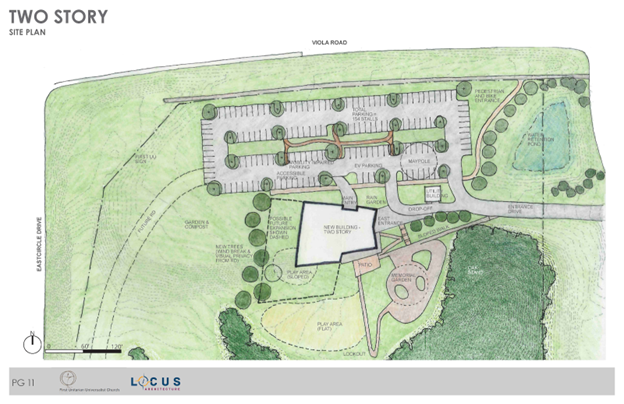
architectural drawing showing the potential layout on the new church property prepared by Locus Architecture
A preliminary design from Locus Architecture and one of many choices

After years of discernment during which we studied what was merely possible, defined what might be potential, and created a long wish list, 2023 has become a year of choices.  Two congregational votes clearly defined our direction.  Our first choice being the “stay/go” vote in January which set us firmly on the path to leave a building that has been home for 55 of our 157 years in Rochester.  Then came the second and equally momentous April vote authorizing the purchase of 38 Acres on Viola Road – that intersection of public witness and preserved wilderness – our choice of place where this liberal faith community may thrive.  And, our choices continue.

Locus Architecture presented two preliminary designs earlier this month after wading through a very long wish list, reviewing pages and pages of notes which captured the ideas voiced at more than 15 listening sessions held this spring, and participating in hours of conversation with the Building Our Future team.  The emphasis being on “preliminary” since our task of choosing continues:  1-story or two?  What constitutes the best blend of adjacencies?  Sanctuary and large gathering space on one level or large gathering space leading directly to the wide outdoors?  Ground or roof-mounted photovoltaic system or a combination?  Do we simply meet “code” or exceed minimum building requirements, especially if we feel the code crimps our values.  And, through all these discussions, just out of sight but waiting in the wings, are the financial decisions.  Just what will it take to realize our choices and turn our vision into constructed reality?

Based on the voices of the congregation, the Building Our Future team crafted a Vision Statement for the Building and the Land.  This statement introduced the architects as they presented their preliminary designs to the congregation; it was shared again at the dedication of the land on a sunny Sunday afternoon, September 17, and it is frequently chosen as chalice lighting words to focus our work at building team meetings.  Every day these words guide our choices.  In the days, weeks, and months ahead, more opinions will be needed from each member and friend of the congregation before we break ground in September 2024 and dedicate a new building a year later.  We do so with the hope that each choice will work towards our vision.

A Vision Statement for the Building and the Land

May we:
Welcome people with inclusive spaces and universal access.
Nurture spirituality and personal growth with beauty, art, and inspiration.
Practice justice with eco-restorative design.
Expand our community with flexible and multi-purpose space.
Create joy and resilience with places for play.
Care for sacred space to honor ancestors and nature.
Grow by embodying the intersection of public witness and preserved wilderness.

May it be so.  Amen.

Graphic credit:  © Locus Architecture

Knitting

Blue & Gold Challenge

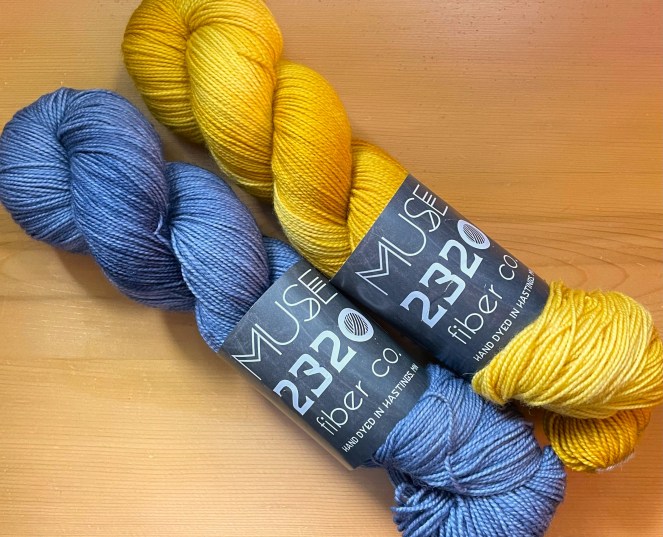
one skein of blue yarn and one skein of gold yarn each with a black Muse2320 paper label

Plans are underway for the Zumbro River Fiber Arts Guild (ZRFAG) golden anniversary, 1975-2025, and the Guild has announced a color challenge as one of its many, year-long activities.  In 2018, I participated in another ZRFAG challenge that stretched my color palate and technical skills when I knit my first short rows.

As the big reveal of color challenge creations will not occur until October 2025, each artist has time to plan and execute the perfect celebratory piece.  The challenge colors are Indigo Blue (representing the waters of southeastern Minnesota, in particular the Guild’s namesake – the mighty Zumbro) and 50th anniversary gold.  The colors in the resulting fiber piece, whether knit or crocheted, quilted or embroidered, woven or tatted, must incorporate at least 70% of the challenge colors.  Glittery metallic gold is certainly allowed to enhance the festive nature of the artwork.

While on my homeward trek after a riverboat lunch on the St. Croix with my library loving, book reading, wine drinking retired friends – The Directors, I took the opportunity to peruse squishy yarn treats at two shops.  And so, reminiscent of my UW-EC Blugold undergraduate days, I have begun my search for the perfect combination of blue and gold, both yarn and beads, as well as exploring shawl patterns that will challenge my expertise and deliver an exhibitable product.

Other items of interest

Brown: September’s Colour Challenge

Even though certain fashion leaders have decreed brown (specifically chocolate brown) to be the new black, I had a hard time finding brown toned photographs to fit this month’s Colour Challenge.  While some may think brown is dull, the rich hues can vary from chestnut to pecan or whiskey to fashionista chocolate.  

My Dad very proudly decreed brown his favorite color. I always suspected his choice directly correlated to his amazing carpentry skills. There was nothing about wood he did not love.  There is a family story that when discharged from the WWII Navy he bought a brown suit with a brown tie to contrast against a white dress shirt, matching brown shoes and socks and that even his new (just having arrived in Wisconsin) winter overcoat and hat were brown. (Lost in the re-telling is the style of the hat whether fedora, homburg, or porkpie.)

Photo details in the colour brown, left to right:

  • Caradori hand thrown, wood fired pottery
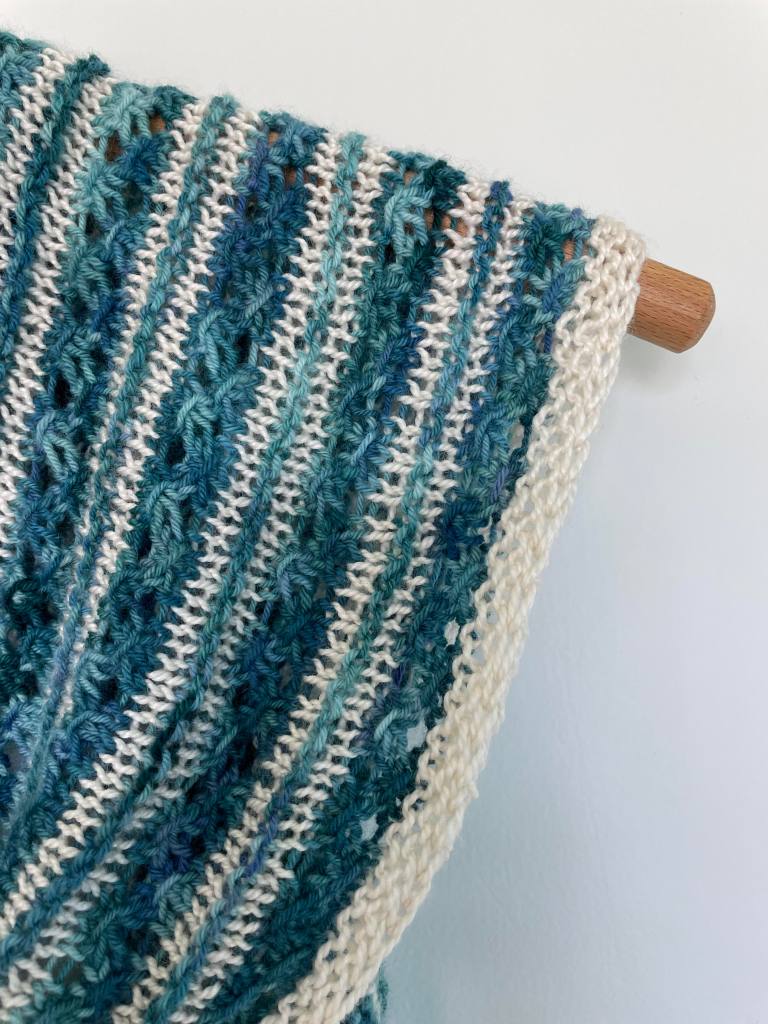
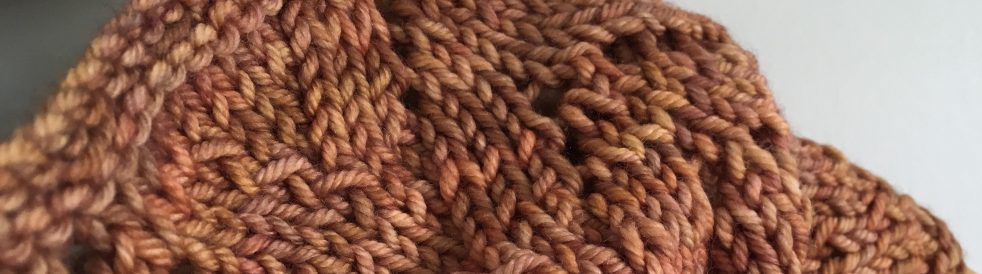
  • Lace detail of the Orage Shawl designed by Solène Le Roux and knit in Hedgehog colorway
  • Two copper pots:  A 1982 purchase in the famous Khan el-Khalili of Cairo.  This public bazaar / souk has provided market space for artisans and vendors since the 14th century.
Knitting

… and it starts today!

round knit camp at the coast retreat badge 2023

From seed beads to bookmark looms to intentionally pooling hand-dyed colors, all will be revealed during Knit Camp at the Coast. In May, when I registered for this 4th annual retreat, September was on the far horizon. I had just planted the Yukon Gold potatoes (now harvested) and the teal Ewe Betcha shawl (the second in a trio of summer projects) was just off my needles.

Through the magic of Zoom, this virtual retreat brings knitters together with artists willing to share their enthusiasm and unique techniques. While certainly instructive all is not studious tedium. There will are WIP (work-in-progress) break-out sessions, thematic recipes, and a toast or two – whether the beverage of choice is a cocktail or a mocktail.

Happy knitting!

Graphic credit:  © Marie Greene

Other items of interest

Pulling Old 16penny Nails

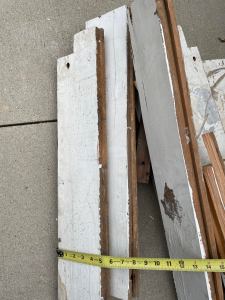
a small messy pile of white painted boards on the oncrete driveway

As Richard swung the sledgehammer and pried old rusty 16penny nails, I thought about all the hard work we did in the late 1980s preparing for our first major renovation project.  Today, his task was to dismantle a shelving unit that was in the basement when we bought the house in 1985.  We can only guess its age by observing that the shelves were made of 2×6 tongue and groove at a time when boards were still milled at a full six inches.  As with much in this nearly 100-year-old house, there are the odds-and-ends of earlier construction projects.  As we wondered what such wood would have been used for, we both responded, simultaneously.  “That’s a question for Dad.”  “That’s a question for Ed.”  We laughed and I got a bit teary eyed.  While the ache of missing him has diminished after 16 years, it has not gone away; especially on a morning when we have carpentry questions.  

Knitting

If knitting was like baseball

… the game would be tied 3 Scarves – 3 Shawls. An earlier decision to skip a summer sweater knit-along (KAL) did not result in a knitting hiatus but rather a steady flow of smaller projects, just perfect for gifts and silent auction donations.

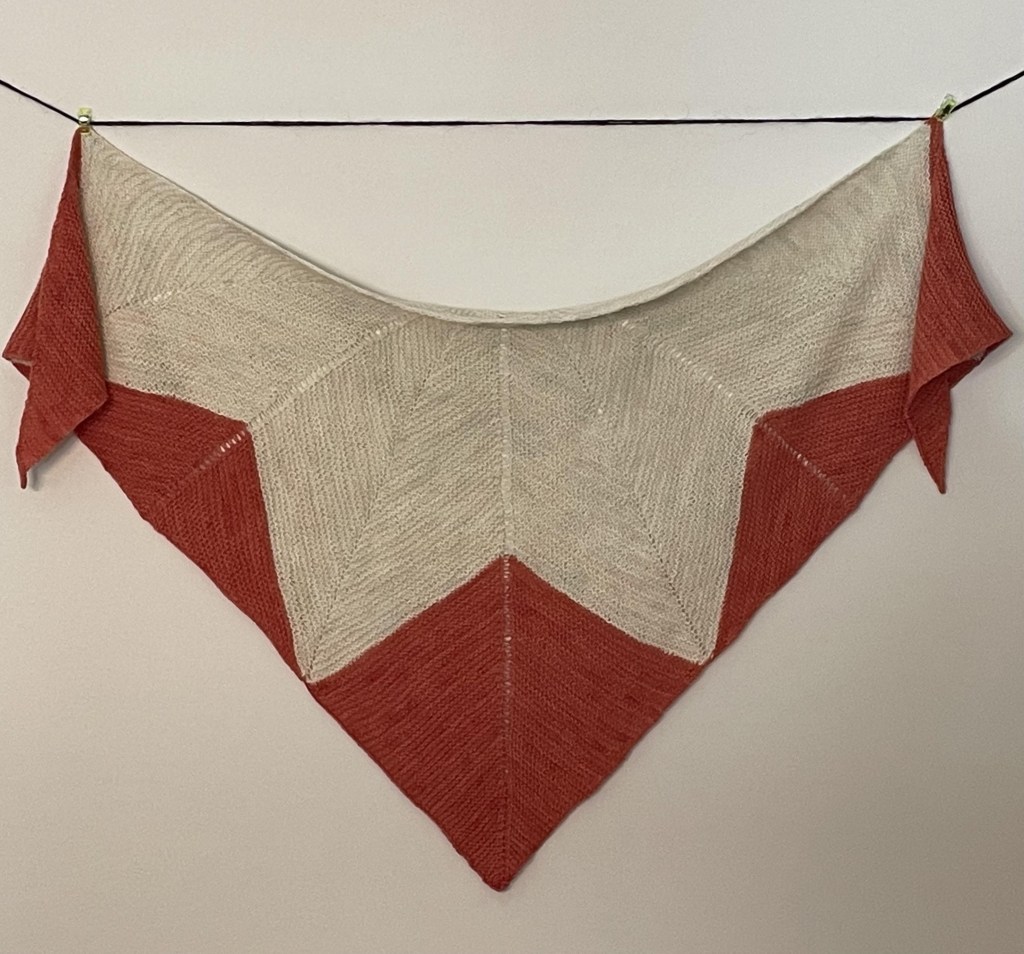
Having worried I would be overwhelmed when I committed to two fingering skeins each month from the Happy Hand Dyed Yarn Club, multiple skeins of Heather Best’s rich color combos have gone directly from mailbox to needles. The purple and white shawl with a whimsical bobble edge was a Knit Camp mystery KAL pattern which paired one of the April skeins with stashed yarn. The deep teal was the second in the April showers yarn offering, again mixed with a lovely merino silk blend. Heather’s dye pots yielded totally different hues for August (reminiscent of a large scoop vanilla bean ice cream served in an old-fashioned waffle cone on a hot day) and these were transformed into Martina Behm’s Half Norwegian. My zigzag choice for Sommer Camp.

Gardening

Thyme: From pot to cupboard

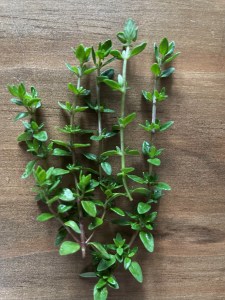
five sprigs of time on a wood background

Just as menus change seasonally – from crisp salads with freshly picked mixed greens and vibrant plump berries to hearty, wintery weather stews – my choice of herbs also shifts. Dried dill is among our often-used winter herb adding a smidge of flavor in a vegetarian quiche or a sprinkling of color to fresh Spätzli. Whereas thyme is a nearly daily summer additive on lightly sautéed yellow squash or roasted green beans (each later garnished with 25-year-old balsamic vinegar), it tends to be rare in my winter recipes.

Regardless of the season, basil and oregano are cooking staples and each has, for years, transitioned from backdoor terracotta pots to the kitchen shelf. For the first time and in an effort to prolong the lazy days of summer and its menus, I dried some of the potted English thyme.  It took two harvestings as the first snipping of tiny, dried leaves filled less than a quarter of one 5-ounce glass bottle.  With the words of the brilliant songwriter Jim Croce in my head while carefully monitoring the oven drying so as not to char the fragrant herb, I have thymus vulgaris in a bottle.

Knitting

Getting Ziggy

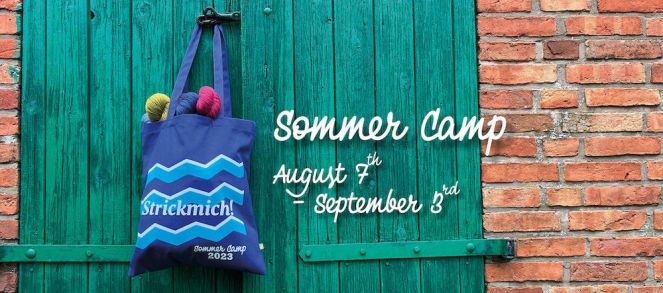
blue bag with yarn hanging on a green door with the German words strickmich sommer camp

While zigzags are not required, they are the theme for the 2023 Sommer Camp hosted by Martina Behm. This annual event begins today and provides the perfect opportunity to mix up my knitting repertoire as I have been stuck on repeat.  My camp project will be Martina’s Half Norwegian; a new shawl pattern designed specifically for seafaring participants of a knitting craft cruise to Norway where she was the featured instructor.

Since the pattern requires contrasting colors, I’ll be able to use two of my stashed combo skeins from the Hand Dyed Happy Yarn Club.  Plus, Sommer Camp will be an ideal bridge from summer fun with Swiss cousins speaking Schweizerdeutsch (Swiss German) while waiting for September’s Knit Camp at the Coast 2023 with Marie Greene.

Photo credit: Martina Behm

Gardening

Fresh to Dried

close up of lavender with a bee on a bloom in a blue pot sitting in river gravel

With two large written notes, one on the stove dial and the other on the oven door handle, I carefully monitored yesterday’s oregano harvest as it dried in the oven at low temp.  Two fragrant bottles of dried herbs are now tucked on the cupboard shelf ready for future Italian menus after having paid attention – this time.

Earlier this gardening season, I destroyed three pans of oregano leaves.  Not right away, of course, which made my brain fade all the more irritating.  I had spent a morning washing and de-stemming the little green leaves and then I repeatedly checked the drying process from green to withered to brittle before leaving the baking pans in the oven to cool.  Later, focused on an afternoon task of making the next day’s rhubarb pecan scones, I set the temp to 450 degrees, totally forgetting the resting herbs until a scorched smell eventually reached my senses.

Still suffering from the indignant memory of oven burnt oregano, I dried the lavender with a more time-tested method.   Left to air dry on racks over many days, I captured the fragrance of potted lavender in sachets which will protect my wool knitting projects until they can find perfect homes.