Writing

A Day of Prayer and Fasting

raised fist painted in the two-tone blues and white north star of the Minnesota state flag

Unlike that classic line from Star Trek, proclaimed in synthesized Borg speech, that “resistance is futile” I still believe that resistance can effect change. It may be a Pollyanna-like personality flaw but, even in these uncertain days when thousands of armed, masked men terrorize Minnesota streets more reminiscent of a gun toting, wild west movie than 21st century modern life, I need to believe hope is not pointless.

Today, on this day of prayer and fasting, I will join thousands around my state in non-violent moral action. We will gather by ones and twos and thousands with the message: Ice Out of Minnesota NOW! Prayer vigils will be held from Bemidji to Blue Earth, in Mankato, Minneapolis, and Moorhead, as well as my town of Rochester. With rallies and marches, despite dangerous frigid temperatures; with fasting and prayers offered heavenward we send the message that the terrorization of quiet residential neighborhoods must stop. We send the message that trolling school yards is unacceptable. We send the message that using kindergarteners as bait to then ship father and five-year old Liam to Texas is wrong.

In the past, I always felt comfortable and proud expressing my constitutional rights. I believed that our most revered public text – the Constitution and the Bill of Rights – would keep me safe. I believed my First Amendment rights of free speech, assembly, and petitioning the government would protect me. I believed, as a gray-haired, white female, I would never be perceived as a threat. The shocking violent murder of Renee Good in Minneapolis disproved my hypothesis that my age and the color of my skin will see me home safely.

A natural reaction would be to stay home, tucked in like a child after a bedtime story. But no matter how snug the blanket may be, there are still wild things under the bed, and those monsters are shredding our representative democracy. And so, I join other Minnesotans and supporters from around the country to say: Ice Out of Minnesota NOW!

Writing

Labyrinth: a meditation on resistance in troubled times

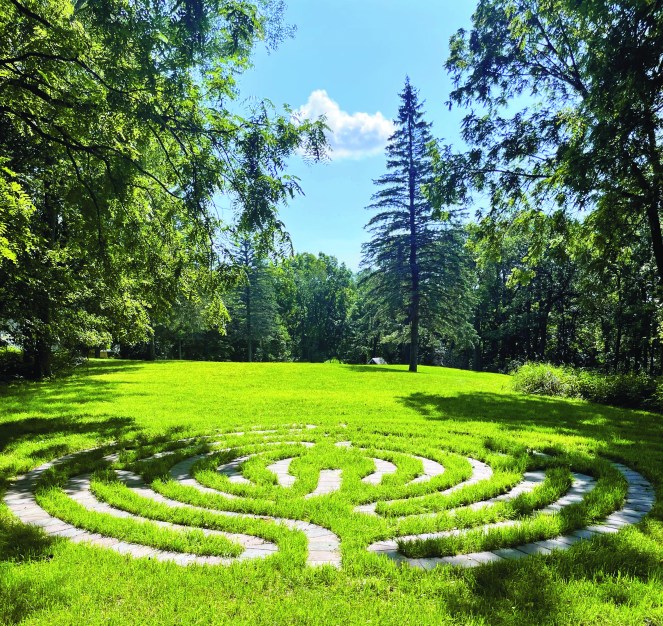
stone labyrinth set in a grassy meadow framed by tall trees

Three hundred ninety-eight stones planted on a grassy Rochester hillside.

Three hundred ninety-eight stones laid from outside to inside in a gentle arching path – a single path intended to provide a walker with a quiet, meditative journey. One sweeping movement – a unicursal path. And, even as it winds back and forth, that one-way is clear, never a maze of confusion.

I thrust the tip of my shovel between grass and concrete. Time and dirt, weight and roots resist my efforts. Another thrust, a little deeper, and the tempered steel blade coupled with the force of my muscle breaks the resistance and the stone moves. Another thrust with the shovel edge more deeply planted, the ground as fulcrum, and the concrete paver is free. I step to the next and repeat the process, breaking resistance another 58 times.

With gentle force we broke the earth’s resistance. We moved three hundred ninety-eight labyrinth stones from a grassy hillside. Now they rest on a different hillside while we wait for warm days to lay another circular path that will encourage quiet contemplation of resistance and resilience.

Photo credit: First UU Building Our Future-Beyond Ourselves, 2025

New House · Writing

Embracing Change: Our Move After 40 Years

We kept waiting to be sad. For that tsunami of nostalgia to overwhelm. After-all, we were leaving our first house, our abode of 40 years, where we had celebrated the births of nieces and nephews and mourned the death of beloved family and friends; undertook remodeling and renovation projects, planted and transplanted blueberry bushes and rhubarb, prepared countless meals (the menus for which ran the gamut from a quick bowl of popcorn to gourmet auction prep).

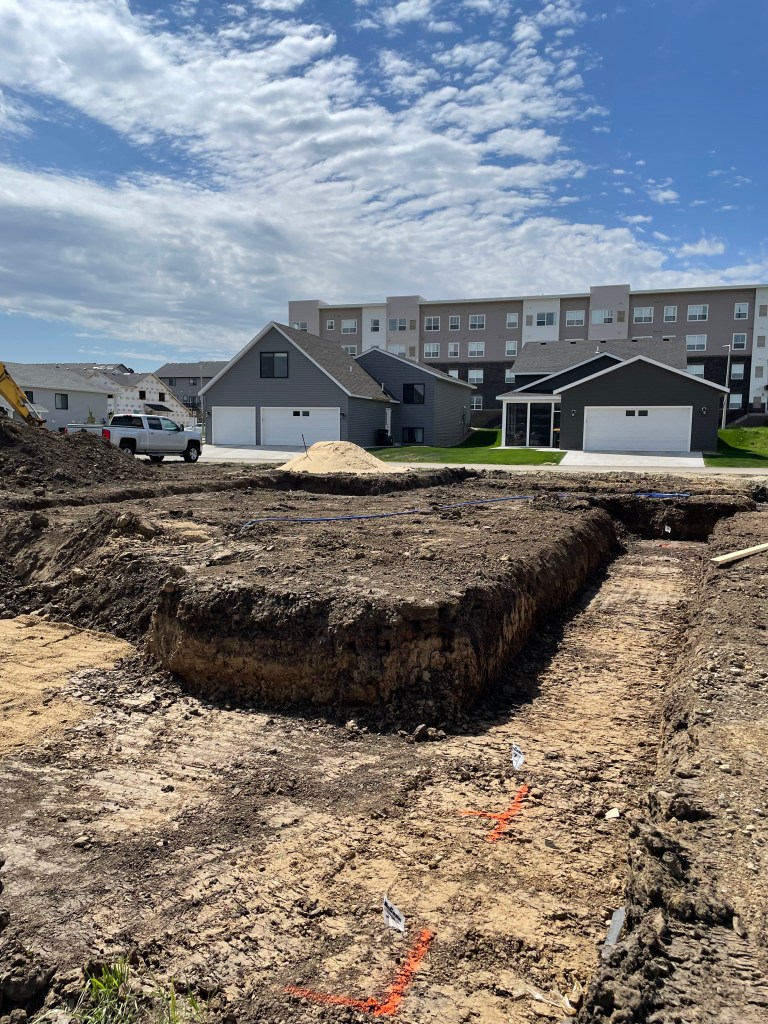
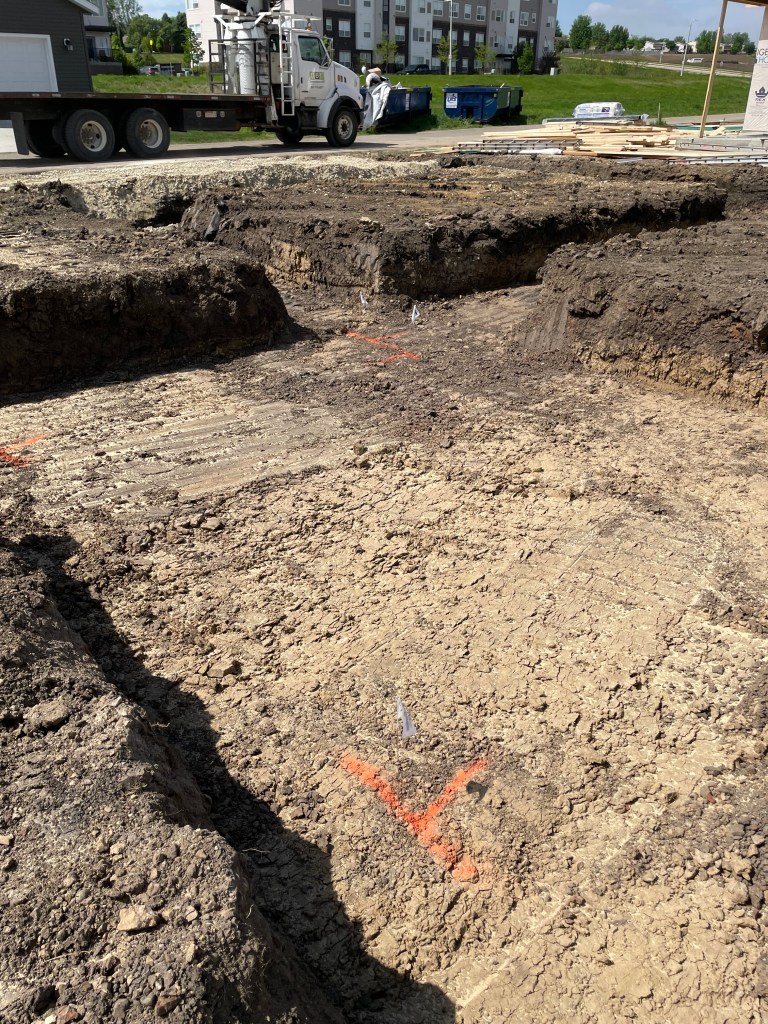
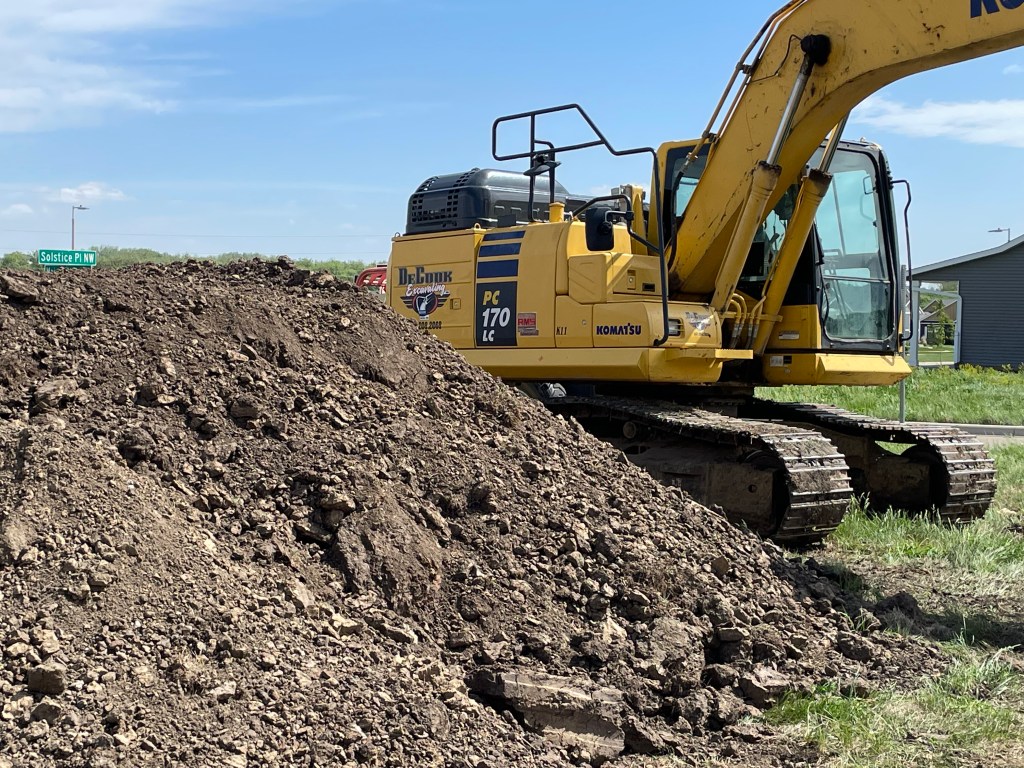
One person suggested that our move was not just a move but a life choice and that distinction felt accurate. This was a decision arrived at over time, necessitated by health challenges and softened by the hundreds of details that comprised our construction project which also served as salve to lighten the mental soreness of loss. While we missed the opportunity of a topping off ceremony on Solstice Place, we carefully monitored construction progress – from the hole in the ground to the final walk-through.  Each visit rooted us in the “rightness” of this change.

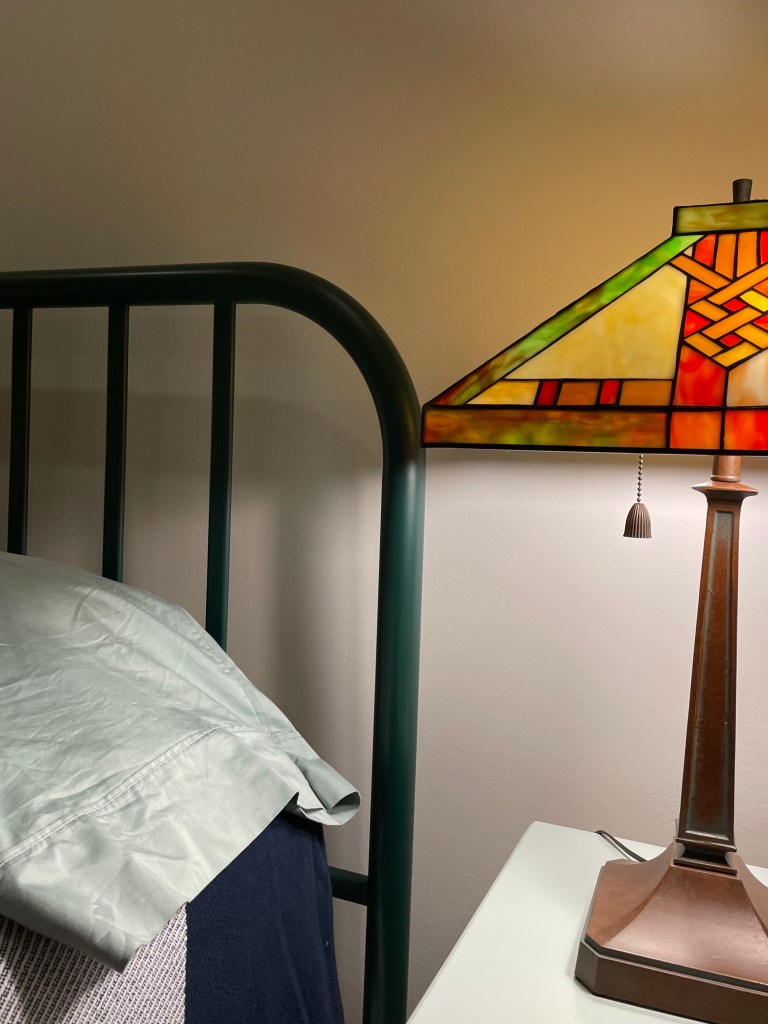
We spent a comfortable first night in the new house on September 25. We placed the bed slats on floor, having first put down an old flannel sheet to protect the new LVF (luxury vinyl flooring), followed by the twin springs and the king comfort mattress. The result – a tad lower than sleeping on the couch but higher than a futon. This odd predicament, of being bed-less (that is without a frame) was due to our decision to have the two antique metal bedstead that were once in my Grandma’s house, stripped via glass bead blasting and then dipped to powder coat them a rich forest-green. During their 100+ years, the color has gone from chocolate brown (the color in my childhood, as well as Momma’s memories of her early years in the 4th street house) to yellow, to creamy peach, and now to forest-green. Momma estimates these may have been her parents’ first purchase after arriving in the U.S.A. from Switzerland in July 1922, as by October Grandma was giving birth to Billie and most certainly had a bed for this home delivery.

Now, a month after closing, we have most (not quite all) of the boxes unpacked and flattened. Finding a place for everything has required expanding our decluttering skills yet again and each time we cannot find space we admit that we simply have too much stuff.

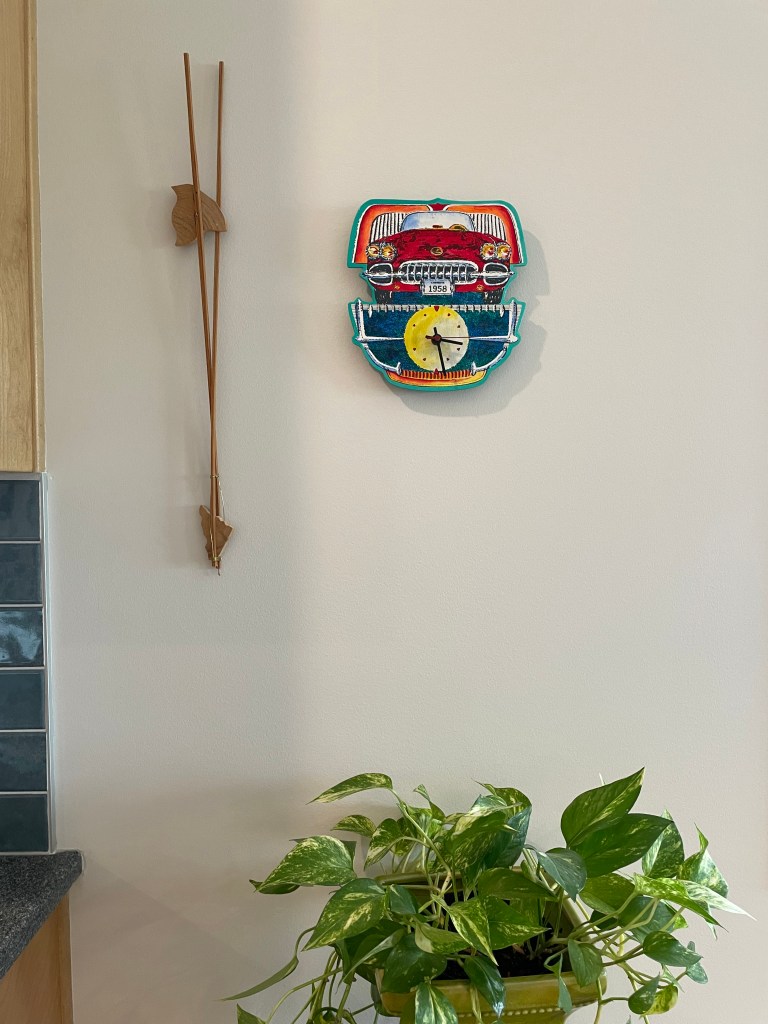
Still to be done – placing our eclectic collection of prints, paintings, and objets d’art. Once that is complete Solstice Place will be open for visits.

New House · Writing

We have a hole!

Writing

Drawn to the Library

I am a librarian and unabashedly proud of my lifelong career choices. While I was a frequent library visitor as a child, my passion for libraries began when I was ten. During the summer of 1962, between 4th and 5th grades, my mother and a group of her friends worked tirelessly, under the supervision of Mrs. Berlin (the head of children’s services at the public library) to collect and catalog a new school library. It was cobbled together from eight disparate classroom collections and a generous selection of new titles acquired during a successful parish-wide book sale. When school began that fall, along with my best friends Cindy and Jeannie, I began helping in the library after school. As that academic year ended, the PTA sponsored a school-wide contest. I wrote one of the winning essays about the importance of our new library. And, lest you think there as favoritism because Momma was the new volunteer librarian, the essays were submitted anonymously and judged by the PTA officers. I still have the prize – a hard cover copy of the Indian Ocean Adventure by Arthur C. Clarke.

There are those antagonists who claim libraries are no longer needed because everyone can simply buy their books through Amazon. While admittedly a quick source for just about everything from hoses to vitamins, book buying necessitates sufficient discretionary, disposable income. And, even for those of means, there is the practicality of borrowing from the library in solidarity with the 3-Rs – reduce, recycle, reuse.

With nearly five decades of practical experience, I can attest not everything is available through Amazon.

There was the distance learner who was able to complete her PhD. in nursing while employed in a small-town health clinic because expensive medical resources from the University of Minnesota were delivered to her local library though interlibrary loan. Interlibrary loan services that are at risk because the current administration has deemed federally supported intergovernmental library cooperation unnecessary.

The little ones whose caregivers brought them to the library for pre-school storytimes full of stories and pictures, rhymes and alliterations, enhancing early brain development through language.

The students who avoided the dreaded summer slump in reading scores because summer library programs energized curious young minds with books and reading, as well as thematic games and crafts.

The people who filed unemployment claims or submitted job applications at the library’s public access computers because their home situation did not afford internet connectivity, whether because of financial stress or the simple lack of bandwidth in the more rural parts of our state.

With the celebration of National Library Week drawing to a close, remember the times you have been drawn to the library and smile.

Spirituality · Writing

Balancing Dreams and Budget: Pausing our church building journey

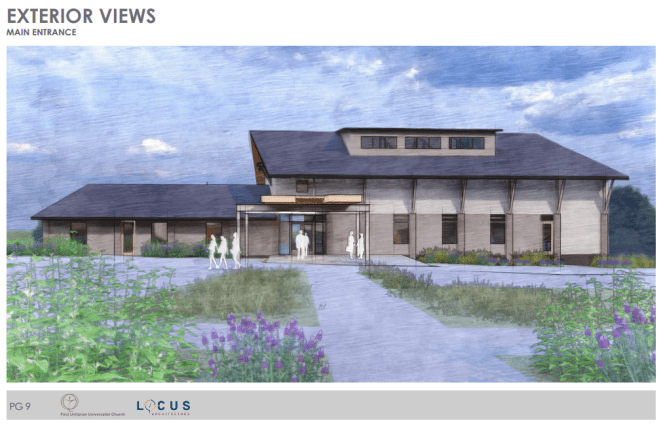
computer generated drawing of building with purple flowers in the foreground, dark roof and biege-brown walls
An exterior view from Locus Architecture following the schematic design phase of development.

I am a pen-and-paper note taker, a behavioral remnant leftover from long-ago college history courses. As we began discussing a new church home, it was natural that I would jot down ideas shared by congregants, whether during large group forums or even while enjoying a one-on-one coffee time conversation. Those notes evolved into an eight-page, single spaced, bulleted list. The ideas range from a visible entrance to natural light in the sanctuary; from an industrial kitchen to chairs with book racks for the hymnals; from energy efficient construction to a dedicated space for young adults. Some requests were overly broad – good acoustics. Others offered minute description – bench seating in the coat room for ease of putting on and taking off boots, with built in AC powered cubby holes to store and charge electric bike batteries during Sunday morning worship. Despite its length, the list contained very few contradictions. Even when there were preferences, for example, one-story versus two, Rev. Victoria Safford’s words captured the overarching sentiment which called for “a building that sits gently on the land.”

After seven years, through discernment, three congregational votes, a successful capital campaign, and reams of architectural renderings, we have a beautiful schematic design. Now we must pause.

There are a variety of factors conspiring against our project: current commercial interest rates are discouraging developers, and the design and location of our current building requires a unique buyer in a niche market. Add to this, the post Inauguration Day chaos and Presidential Executive Orders that, in the stroke of a pen, eliminated significant energy funding, as well as the threats of tariffs that will increase the costs of already expensive building supplies. A pause is prudent. My rational mind acknowledges that continuing to refine the architectural elements would be fiscally irresponsible, but my heart wants to buy a lottery ticket or host a bake sale or two or three. How to reconcile mind and heart?

With our most recent schematic design in hand, I decided to review the list and compare the dream with the elements on paper. In keeping with our vision statement for this land and the building: Do we have a design that will contribute to a compassionate and welcoming environment? How might this space contribute to our justice work? How inclusive have we been of the congregation’s creative suggestions?

Without the benefit of any scientific methodology, I rate our efforts: B+ to A-. The design incorporates many of congregants’ top priorities:

  • Large windows in the sanctuary with a panoramic southern view of the rustic landscape
  • A building footprint that can be expanded east and west to meet growth over the next 100 years
  • Easy workflow in a large kitchen.

Some highly desirable elements such as, the solar array or geothermal heating and cooling, are currently off the table due to cashflow. At best, we will build the needed infrastructure and add these highly-desired energy efficiencies in the future.

The questions that fill my mind these dark winter nights , as well as on snowy-bright days, are less about spreadsheets and the discrepancy between revenue and expenditure but focus on the nebulous side of the human psyche. How do we maintain the congregational momentum that got us to this point? How to convey that this project is like working on a post-graduate degree or taking the vacation of a lifetime, the dream will happen just not next year? How to gain financial support from everyone and spur our generous donors to give more? How to refine the design to realize cost savings without losing the heart and soul of the project?

While I do not wish sleepless nights upon any of my building team members or fellow congregants, we have a hard task ahead. Everyone’s thoughts and creativity will be needed and, maybe even, a lottery ticket.

Writing

Lost curb appeal

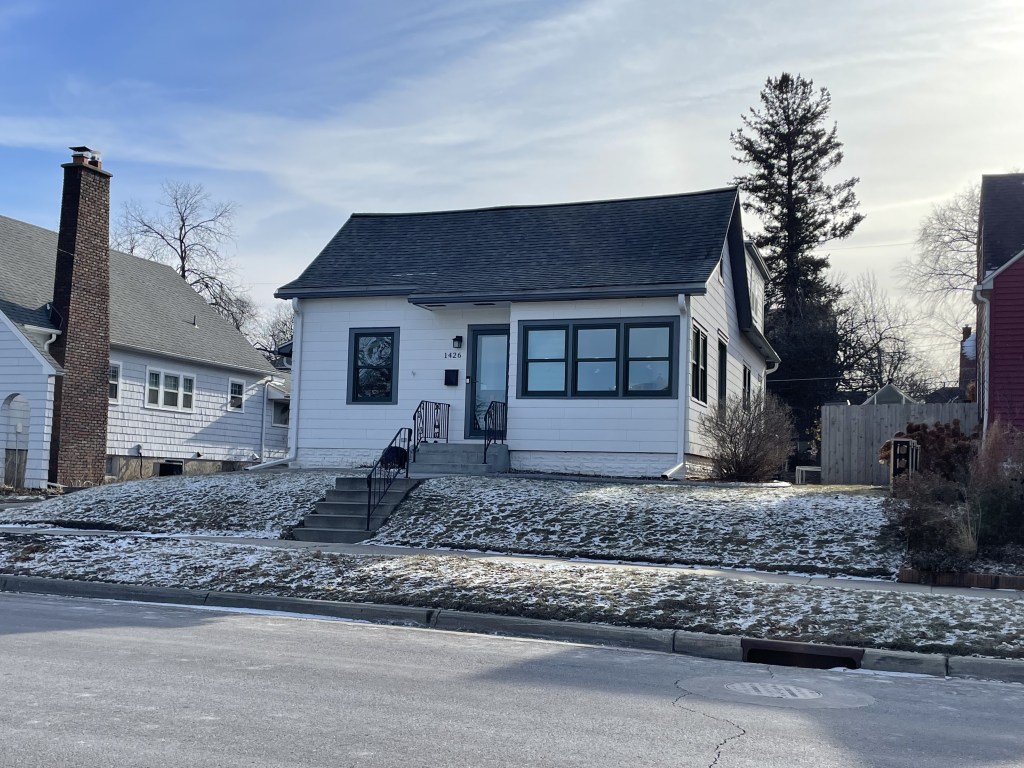
For nearly a hundred years, two trees framed the curb side view of our house. A house that in 1927, early in the development of the second Kutzky addition, was moved from the corner of 5th Ave and 2nd St SW to its current location on First Street NW. The new boulevards in this early expansion of the city limits were planted with elm saplings.

By the time we bought the quirky house that has been our home for the past 40 years, the trees that survived the ravages of Dutch Elm Disease towered over the roof top. For years, we used them as directional markers, telling visitors “Fourth house on the right from Miracle Mile, with the two big trees.”

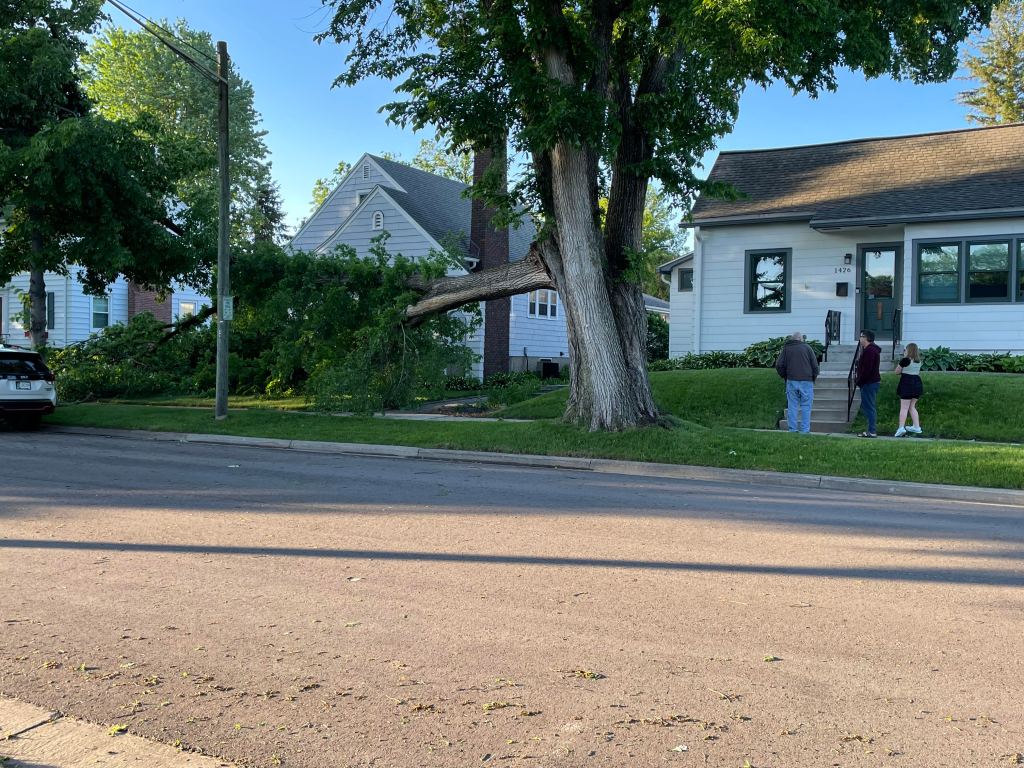
We lost the first half of our pair in July 2013 after the City Arborist determined a thinning canopy was problematic. We were sad to watch it go but also felt a twinge of homeowners’ relief. The previous summer, a thunderstorm felled a matching elm tree across the street with an earthshaking thud. The trunk, branches and a full crown of summer greenery had filled Leona’s driveway and front yard and blocked half of First Street. The systematic removal of the first of our boulevard duo ensured that this weakened giant would not come crashing through our roof.

At the time and using my naked eye and a fingertip, I counted 82 growth rings. Although this methodology may have been unscientific, a tree planted in 1931 did fit nicely into the neighborhood folklore.

With its removal, we noticed an immediate change in summer temperatures. The north-west rooms that had always had deep shade, beginning with spring buds through yellow leafed autumn brilliance, now bore the brunt of the afternoon summer sun. Proving that urban heat island effect is not a myth.

While the remaining tree continued to look healthy, even to the knowing eye of city forestry staff, we began to notice a significant reduction in elm tree seeds. Those flat, papery, almost translucent small disks with a tiny nutlet at the center. Cleanup up formerly required using snow shovels and our vegetable garden plots produced, what I am sure was a ga-zillion sprouts. Recently, tiny tree garden weeds rarely popped up and a quick swipe with the leaf blower over hard surfaces took care of the rest of the seeds.

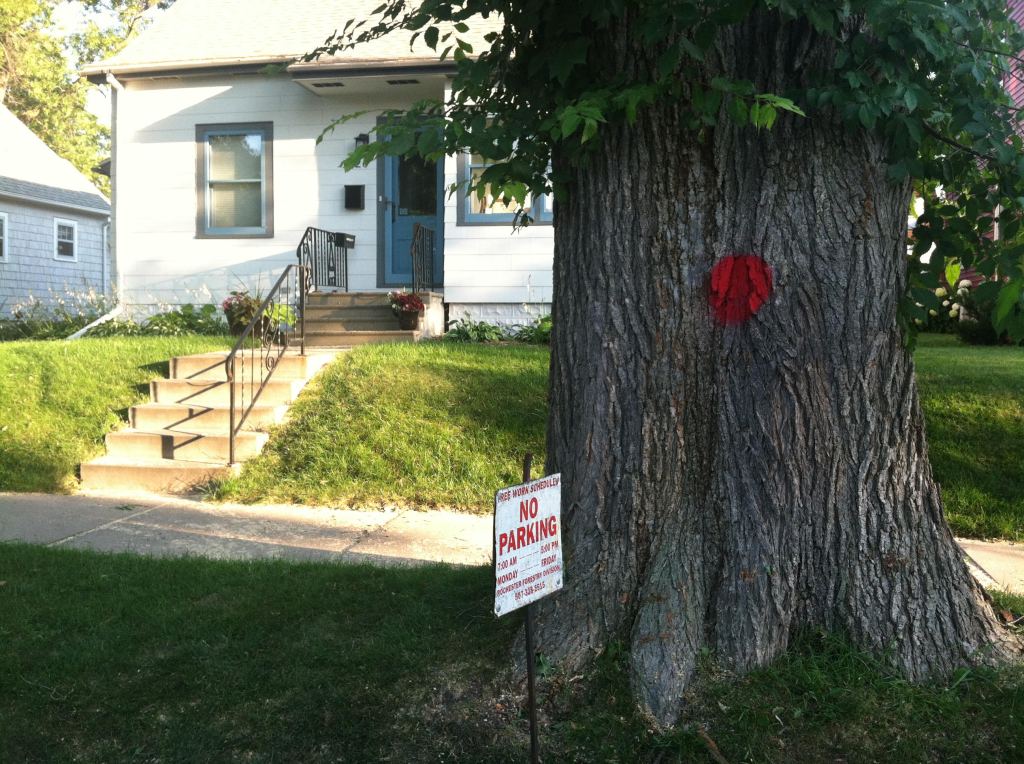
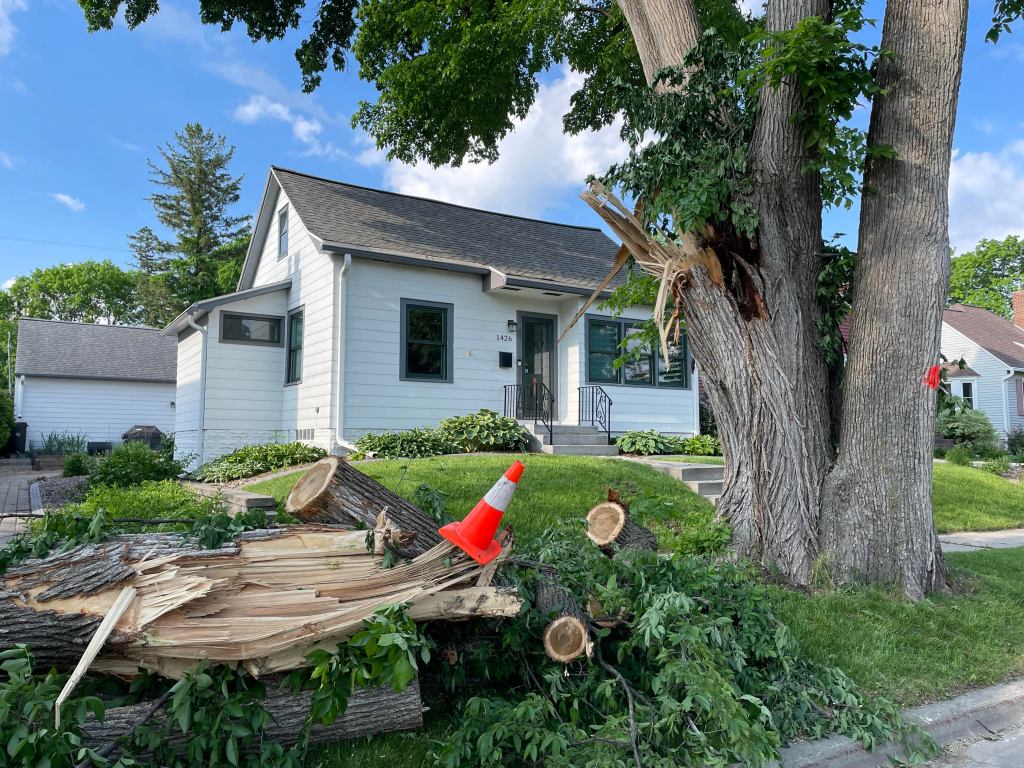
A brisk May-day with freakish high winds, where velocity often exceeded 60-70mph brought down a limb, so large, it filled our next-door neighbor’s yard and half of the next yard. This mammoth splinter revealed a deteriorating center, and the tree received the dreaded orange dot making removal.

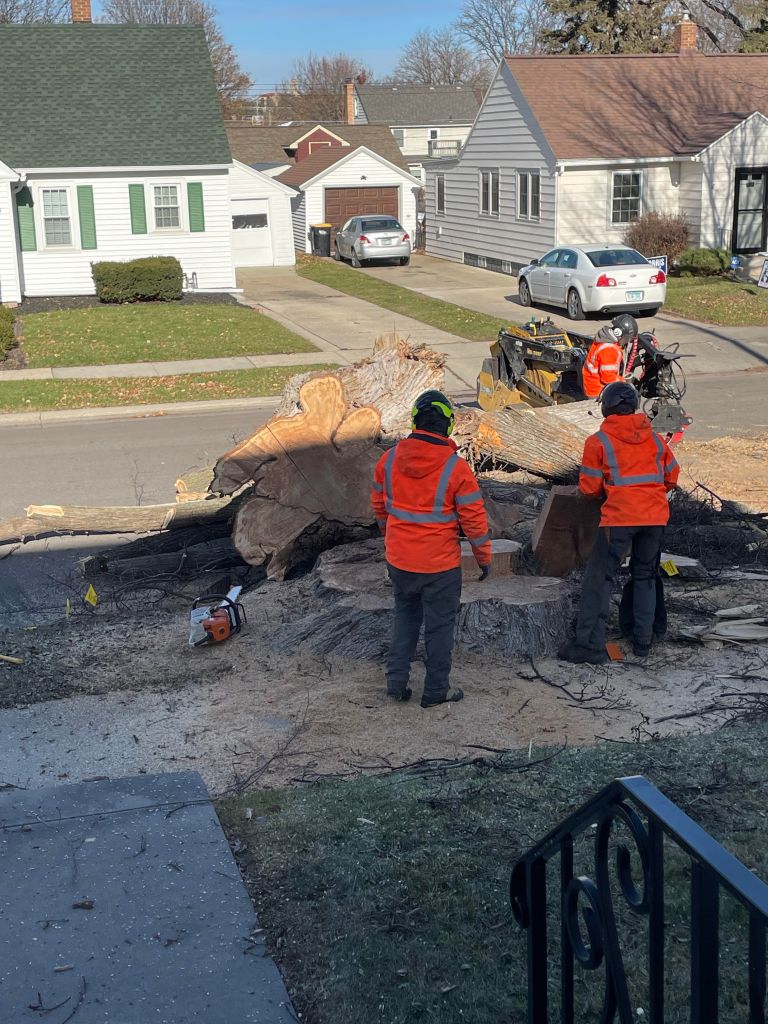
A two-season delay, May until nearly December, gave us one more summer of cooling shade. Now all is bare. The view from the front windows shows only snow-covered dormant grass. No squirrel antics on rough bark or roosting crows. Even the evening streetlight only offers nighttime brightness without the artful shadows from winter’s leafless limbs. The broad trunk with 95 growth rings has been ground to mulch; a lone patch of black dirt with scattered grass seed remains where the majestic ulmus americana once stood. We miss the tall stately life force that has been present for more than half of our lifetimes.

Writing

On the theme of repair and the care of my fragile psyche

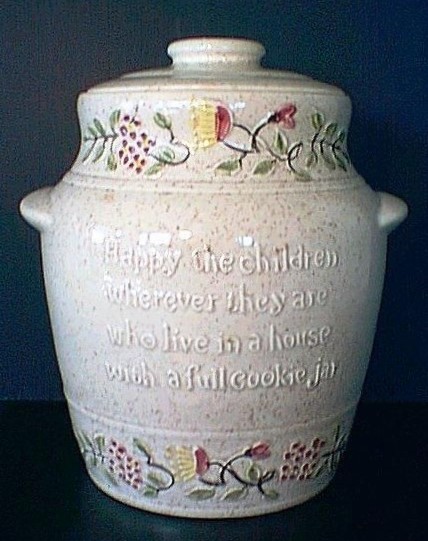
white pottery covered cookie jar with colored decoration at top and bottom edge

My Dad could fix anything.  Or so I believed as a child as I saw the bits and pieces, he made whole.  In the fourth grade, I fell on the ice-skating rink at school and broke my blue glasses that were only three days new.  He closed the break near the hinge (a tricky spot), and I wore those glasses for the next two years.  Or, when he glued together the lid of the Red Wing Pottery Cookie jar, not once but twice.  Both times, years apart, I had dropped the lid while sneaking Pecan Crisp Christmas cookies.  Only the nearly squished frog that I rescued when crossing Vine Street was beyond his saving.  Somehow Momma convinced me, in my very distraught state, that the frog was not really appropriate for a “glue job.” We waited patiently for the small green creature in my hand to stop wiggling.  Then, with care, we dug a hole together for the frog’s safe resting place under the apple trees in the back yard near the black tire retaining wall.  

Unfortunately, the certainty that one’s parents control the whole of the world is an illusion left behind in childhood.  Through years of growth and decades of study, right directions and missteps, love found and health challenges, I realize there is very little within the realm of personal control.  We find reassurance but not control in the predictable (fall leaves cascading in riotous color, the coolness of November days at our 44° latitude, or bluejays frolicking in the neighbor’s crabapple trees.)  Even as I acknowledge those scenes are beyond my control, my brain drifts to November 5 and I slip towards dismay again, shocked by the name of another nominee; worrying about the safety of friends who choose to love differently or whose faces are not the color of mine. 

As a result of this month’s assignment for my writers’ group, even in the midst of these anxieties, I experienced a positive mental uptick.  Yesterday morning, while waiting in the Physical Therapists’ lobby, I realized that my malaise over the election has altered my behavior.  Suddenly, I have been “doom scrolling.”  Spending far too much time scanning social media for an uplifting image, an inspirational quote, or just watching random clips from previously viewed HEA movies. I mean – really – who needs to watch disjointed scenes from Pretty Woman?

Today, I am expanding my self-care regime hoping to repair my bruised psyche.  My plan already included drinking more water and limiting the time spent reading the news.  I will replace “doom scrolling” with reading poetry.  And, following the advice of poet Steve Garnaas-Holmes, I will “seek others who are tenderhearted” rather than cocooning. Today’s gathering of my writers’ group served as my beginning.


Photo credit: Red Wing Collectors (Please note: The cookie jar from my childhood is yellow, still in regular use and it will be filled with Pecan Crisps next month.)

Writing

Charismatic Leadership

My parents met John F. Kennedy in Eau Claire as his campaign swung through Wisconsin in 1960.  My sister and I stood in a sunny hay field near Augusta, waiting over three-hours, for the arrival of Bill and Hillary Clinton and Al and Tipper Gore.  The newly nominated presidential ticket and the soon to be First and Second Ladies had embarked from LaCrosse on a national bus tour that morning.  Richard and I joined a small rally of only a few hundred people at the Rochester Civic Center when Amy Klobuchar first announced her run for the US Senate.  Accompanying her on this round-robin journey to Minnesota’s small bergs, large cities, and the Metro was the junior Senator from Illinois, Barack Obama.

What struck me in July 1992 and stays with me today is the genuine excitement engendered by these candidates, a palpable energy that exemplifies charisma.  While I know there are behind the scenes speech writers refining the text of each presentation, the core message and certainly the delivery belongs to the speaker.  In each case, these campaign stump speeches, whether spoken by the men who would be president, Bill Clinton, and Barack Obama, or presented by unsuccessful candidates, Al Gore, John Kerry, Hillary Clinton, or Bernie Sanders, the speakers clearly conveyed complex concepts, presented plausible policy developments, and inspired hope.  Tim Walz has this same rousing ability. 

While they may appear folksy – Tim wearing a red-and-black flannel shirt and Kamala ready to cook in her kitchen – I believe they are ready to tackle complex national and international issues.  Together they already possess comprehensive knowledge of complicated topics and are quick-studies when presented with updated information.  They each have a history of developing effective strategies in their work towards justice, often with bipartisan cooperation.  And, as a librarian friend described one weekend during those days of speculation when we wondered who Kamala would select as her running mate, Tim really is the kind of guy you invite to your backyard barbeque.  I cling to a fragile optimism for the Harris-Walz ticket, despite a constant barrage of negative news.

But even as I try to maintain a degree of positivity, I am not so naïve to think the world uncomplicated or our societal challenges easily remedied with one election.  Near to home, there are increasing demands on the local community food shelf and growing numbers of unhoused even as we move into frigid months.  TikTok videos reveal unprecedented devastation brought by Hurricanes Francine, Helene, and Milton, each having made landfall within days of each other.  Gaza still holds the nightly news spotlight as death and destruction occur daily and nearly two million people are suffering from severe malnutrition while living in famine-like conditions.  Mentioned less often, despite deaths numbering in the tens of thousands, are the wars in Ukraine, Myanmar, Sudan, Nigeria and other never mentioned places around the globe.

When compared to the gravity of local, state, national, and world issues, my vote feels but a nanometer (that is a measure of only one billionth of a meter) and yet I persist in believing that each vote matters and we won’t go back.  Armed with poetry and a votive candle, I accept my congregation’s invitation to daily reflection using Poetry for Politics ~ Care for the Soul in the days leading up November 5.  

Writing

Invitations

bright colored goldfinch on twig with purple and green thistles in the background

A Hallmark fill-in-the-blank card, handwritten by the niece who will, next month, become a first-time grandmother, was more than an invitation to a baby shower.  It was – connection to faraway family.  It was – memory of times together.  It was – sadness as we remained in Minnesota and did not travel to Oregon as we might have done before Parkinson’s Disease.  And it was – joy at celebrating the miracle of new life.  The simple card sat on the dining room table for weeks; a physical sign that people were thinking of us and we of them.  It provided the gentle nudge to keep knitting so to fulfill my practice of gifting hand-knit sweaters for new great-great nieces and nephews, as well as the reminder to start this baby’s library with the best in children’s literature.

The most prestigious invitation ever received by my family invited my parents to the 1965 inaugural gala for Lyndon Baines Johnson and Hubert Horatio Humphrey.  The Office of Alvin E. O’Konski, Member of Congress representing Wisconsin’s 10 Congressional District, sent the invitation in acknowledgement of how instrumental my parents had been in 1962 during his tough re-election campaign after re-districting and his again successful bid in 1964.  While my parents did not travel to Washington, D.C. for the festivities, the large, engraved invitation issued by the Inaugural Committee, with an embossed gold seal, hung for decades on the wall next to the custom-built oak desk and bookshelves.

As exciting as it is to receive such honored surface mail, Mary Oliver reminds the readers of her poem, Invitation, that not every invitation will arrive printed on heavy bond paper or translate into a party.  Rather, the invitation may come in the form of “goldfinches that have gathered in a field of thistles” calling us “to linger just for a little while.” 

I find it takes a conscience effort to linger, to slow down, and simply appreciate.  Electronic devices, apps, and online meetings both ease and complicate our days so that to pause feels almost wasteful; a guilty pleasure since there are always more tasks on my to-do-list than time in my day.  And yet, Rev. Ruth MacKenzie writes that to be “our whole and holy self” requires us to act in an “absolute present tense.”  That act of being attentive to the whole person is not easy, whether that focus is time for personal introspection, connecting with a friend, or meeting a stranger.  That then is the challenge (or more appropriately stated for this post) the invitation to look beyond that which is unfamiliar due to all the factors that form our individualities – family, heritage, language, ethnicity, education – and to linger with the individual, focused on the “whole and holy.”  And, sometimes, to accept the invitation Mary Oliver describes, to listen to the goldfinches …


Photo credit: Andrew Patrick Photography from prexels