Knitting

The Aquarelle Shawl

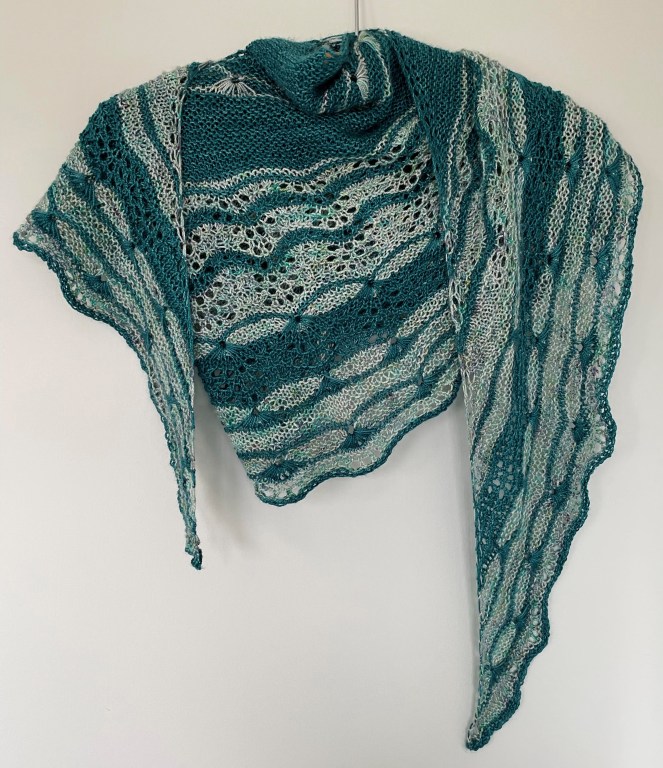
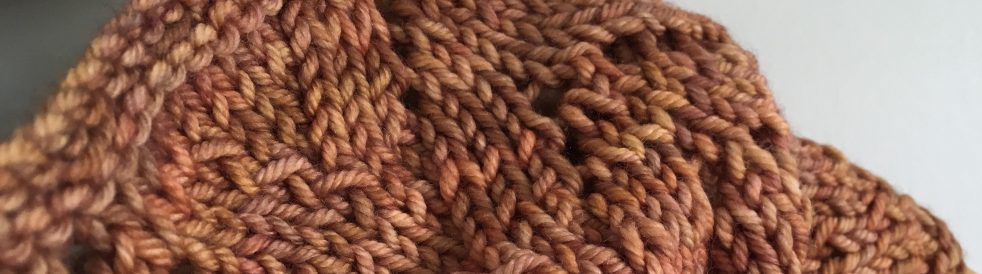
Reminiscent of a walk along the beach collecting shell treasures, Marie Greene describes her latest design as “watercolor-inspired waves opening into shells and scallops”. Using a lovely merino wool and silk blend, The Aquarelle Shawl is my most recent mystery knit along (KAL) project.

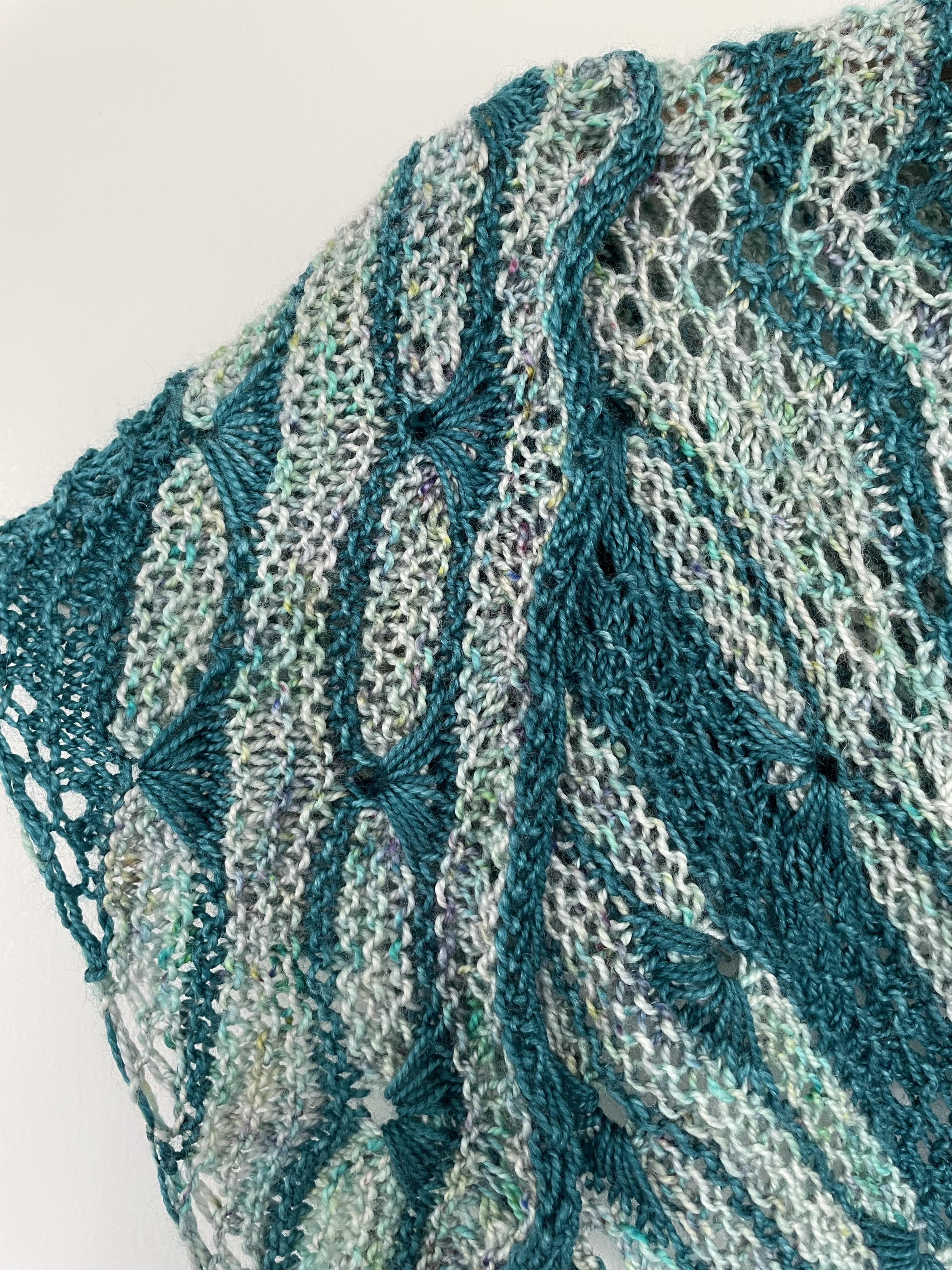
Trusting the designer, I cast on in real time with other Knit Campers on April 1 (no fooling) and watched my project evolve without benefit of knowing a final design other than its crescent shape. The pattern was released over two weeks in four mystery clues and revealed shells constructed with yarn drawn over rows of stitches and then mirrored in lace. The long rows of garter stitch, which anchor the decorative design elements, remind me of tides lines lightly scored in water packed sand.

In addition to the fluidity afforded by the silk, the contrasting colors of the two skeins ripple through the fabric alternating between a solid rich teal and a complimentary fingering with ivory, blue and green tones. The colors flow quite like John Lurie’s watercolors on HBO’s Painting with John proving that The Aquarelle Shawl is true to its painting namesake, aquarelle – a “technique of painting in transparent, rather than opaque, watercolours” as defined by Encyclopedia Britannica.

Reading

Poetry Avoided

For nearly half a century I avoided poetry.  

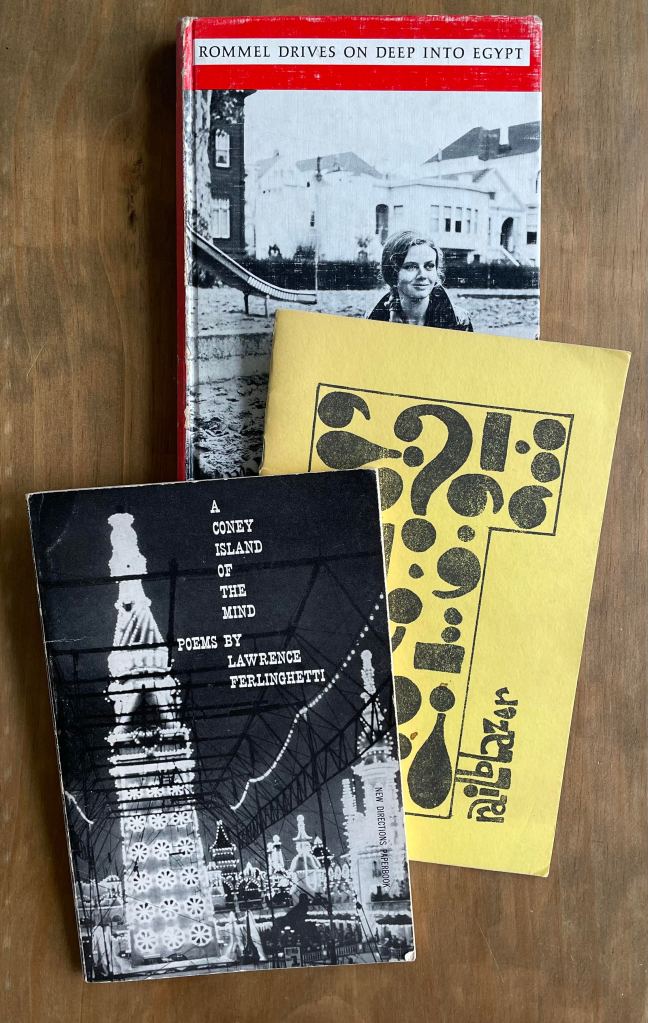
three books against wood background

I have fond memories of rhyming verses in Mrs. Miggawa’s third grade class.  I wrote a published poem senior year in high school.  (Although, to be honest, the small pamphlet printed as part of my Catholic all-girls high school curriculum had a minuscule readership.)  And, Lawrence Ferlinghetti’s Coney Island of the Mind is one of my favorite books.  But somewhere between early enjoyment and today, poetry assumed an impenetrable guise.  I blame this on too many instructors asking “What does it mean?” then being dissatisfied with my blue book reply when the real question was “What do I believe it means?” and, having missed his, her, their personal interpretation, my exam response messed with my college GPA.

My version of The 100-Day Project with Suleika Jaouad will be to read poetry.  It may be a single poem each morning but I want discover (or re-discover) a poet every day.  I intend to banish the judgmental “What does it mean?” question from my vocabulary and let the poem simply rest on the page.  The poet’s meaning may leap off that page or remain mysteriously obscure, either will be fine.  

Writing

The 100-Day Project

Suleika Jaouad’s note to self for the next 100 days

A birthday post from 2020 introduced Knit+ Librarian as a new artistic outlet. In those early Covid days when we were wiping groceries before putting them on the shelves and quarantining the mail for four days before opening letters and bills, I took solace from reading Suleika Jaouad’s posts. She had just launched The Isolation Journals with a goal of kindling “creativity and connection in challenging times.” As someone who only dabbles in writing rather than breathing letters and words, then and now, I stayed on the periphery reading her weekly journaling prompts and writing only sometimes. Like a wallflower in a Julia Quinn ballroom watching the quadrille with curiosity but definitely not joining the dancers. 

As Suleika undergoes her second round of treatments for leukemia, her latest inspirational endeavor is The 100-Day Project and she invites participants to incorporate one creative act into daily life, everyday; something small that gives joy but which may also blossom. Suleika will “paint one small, simple thing and call it a day—a flower, a palm frond, or a pillowy cloud.” As I already knit and read each day (Oh the joy of retirement life!), I am still contemplating what creative act I will undertake in solidarity with this courageous artist.

Photo credit: Suleika Jaouad

Reading

Book Club: The Girl Who Wrote In Silk

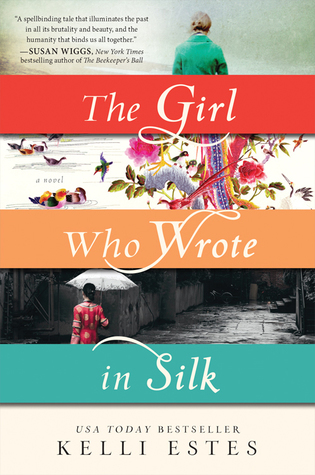
cover art for The Girl Who Wrote with Silk by Kelli Estes

Synopsis – The novel is written from the perspective of parallel protagonists whose stories intertwine on a Pacific Northwest island – Mei Lein in the late 19th century and Inara in present day.  While undertaking the restoration of an island cottage, Inara discovers a long hidden, intricately embroidered silk sleeve.  As she explores its meaning, she discovers a hidden secret within her own family surrounding an unspeakable act which draws a full circle.  Through Mei Lein’s voice we hear about her life in frontier Seattle, how she survived genocidal atrocities performed by Inara’s ancestors without repercussions under the Chinese Exclusion Act of 1882, and her life on a small, secluded farm during which time she artistically depicted her story through thousands and thousands of hand stitches, one silk stitch at a time so her son might know his ancestors.

This debut novel by Kelli Estes was the most recent title discussed with my library loving, book reading, wine-drinking group of retired friends dubbed The Directors.  We felt it was a “readable” book although we each agreed that Mei Lein’s story was the more believable.  Our next title has yet to be chosen but we are leaning toward non-fiction with a bit of oomph.

Knitting

Strategic Stasher

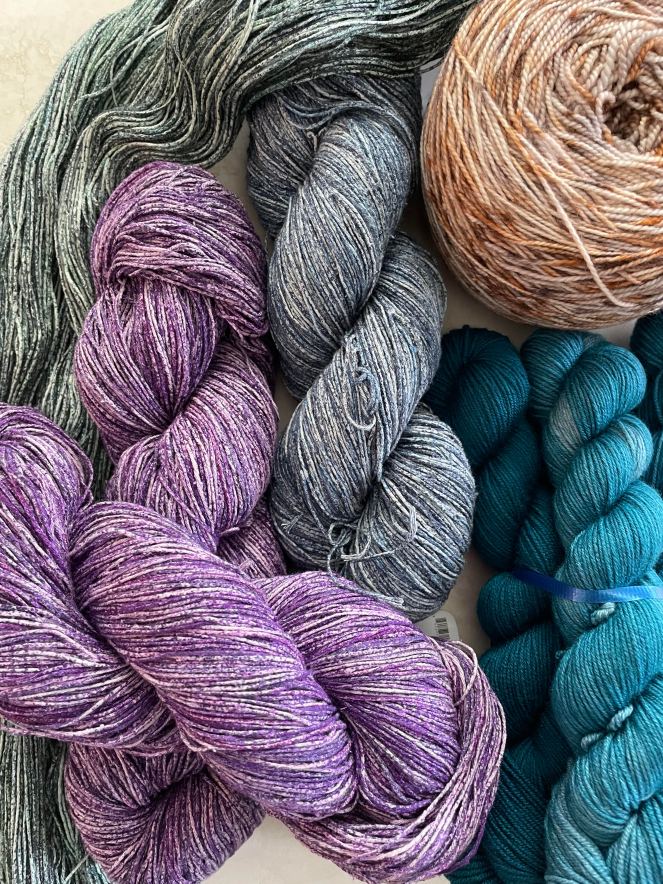
skeins of yarn in multiple colors

While the list of survey questions is not nearly as extensive as a Myers Briggs personality test, the Knit Camp Stash Sprint quiz does incorporate aspects of actual psychological analysis.  Of Marie Greene’s three basic yarn collector types, Fiber Sentimentalist, Optimistic Acquirer, and Strategic Stasher, my profile falls strongly into this last category.  Individual traits include:

  • Well organized stash.  (I pride myself on having every skein carefully cataloged on Ravelry with important details duly noted such as weight, color, dye lot, purchase price and date, including a photo for quick visual ID.)
  • Well planned projects and purchases.
  • Likely to use exactly-the right-yarn for the job which often necessitates purchasing new yarn rather than substituting.
  • Willing to relinquish yarn if a project changes direction.  (As proof, 14 skeins found their way to new homes as prizes for the Zumbro River Fiber Arts Guild: Knitting Group’s first ever annual Winter Finishing Fest.)

During my Stash Sprint class I handled every skein with a discerning eye.  While deciding what to keep and what to give, I made some discoveries.  Fingering weight comprises a third of my reserves but then many of Martina Behm’s designs require this weight and Hitchhiker is my favorite pattern.  DK makes up the next largest quantity but that makes sense as well as it is a great weight for sweaters and my first (and to date, only) dyeing project used this weight.  I have never knit anything in lace weight yarn and gave away two skeins but sentimentally kept two simply because of when and where I purchased them.  Since my access to the Knit Camp Stash Sprint class never expires, it will be interesting to see how my stashing patterns evolve and whether, after taking this online course, if I reframe my approach to yarn acquisition.

Happy knitting!

Knitting

Boost the FOF Tally

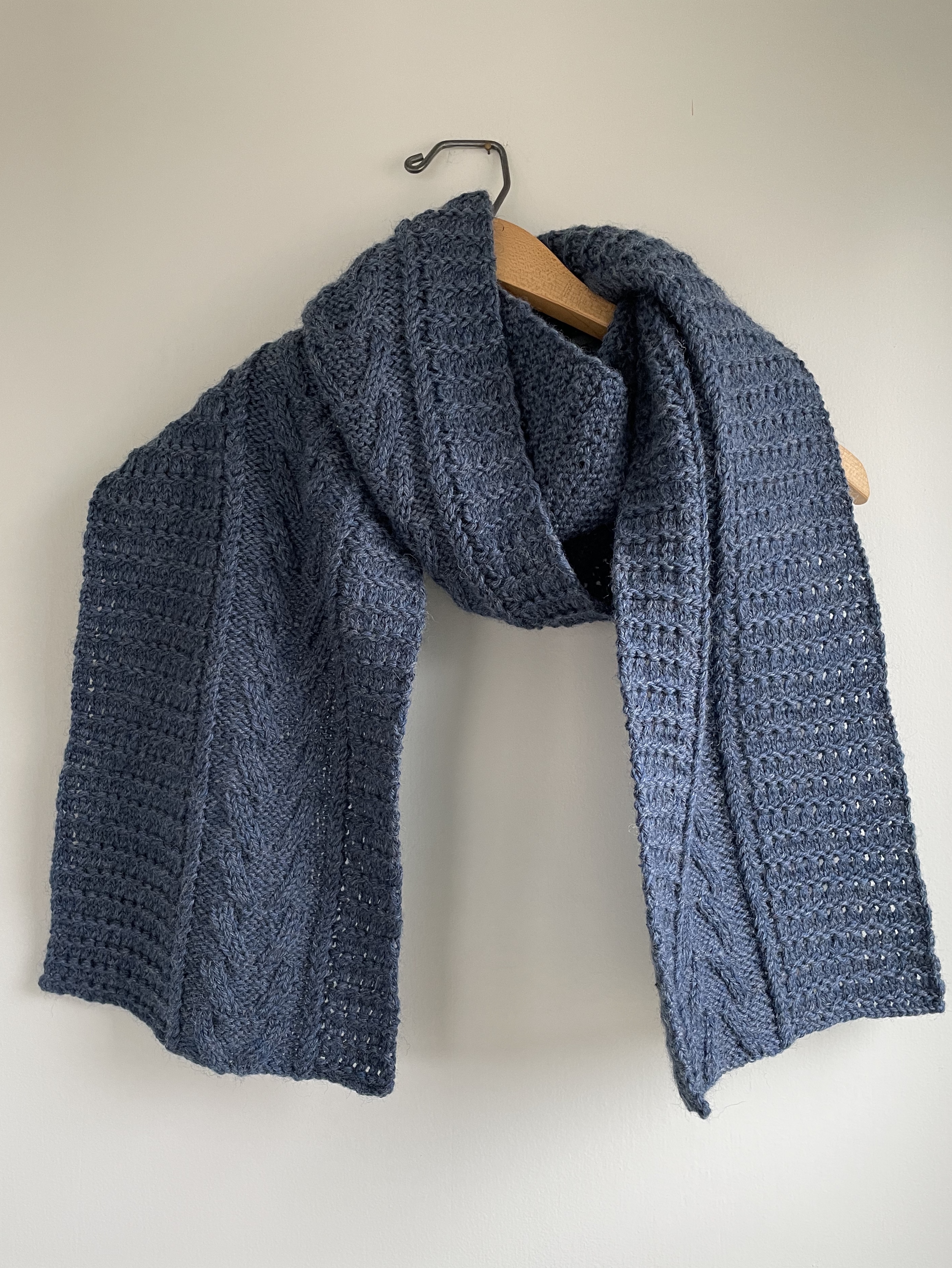
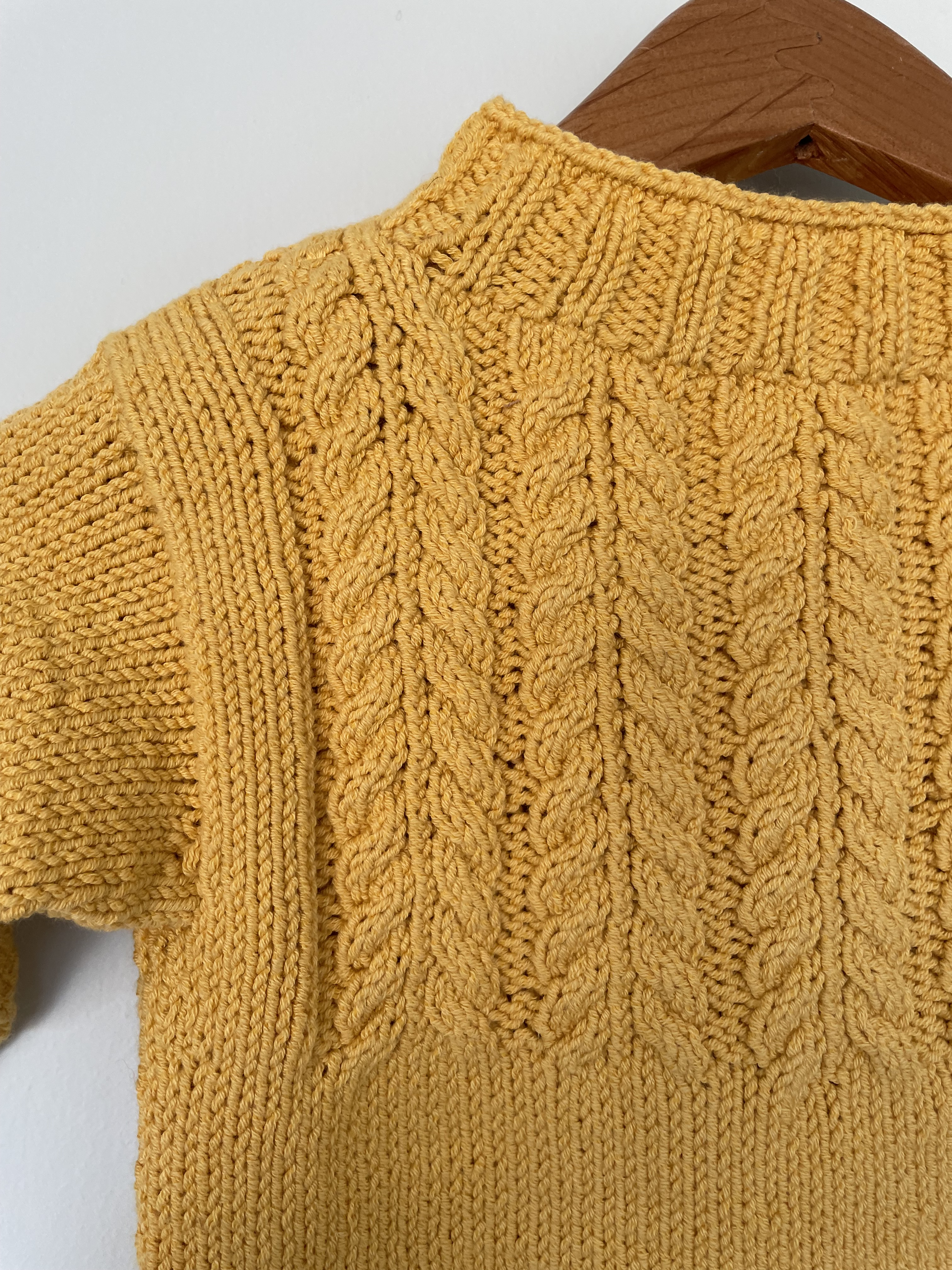
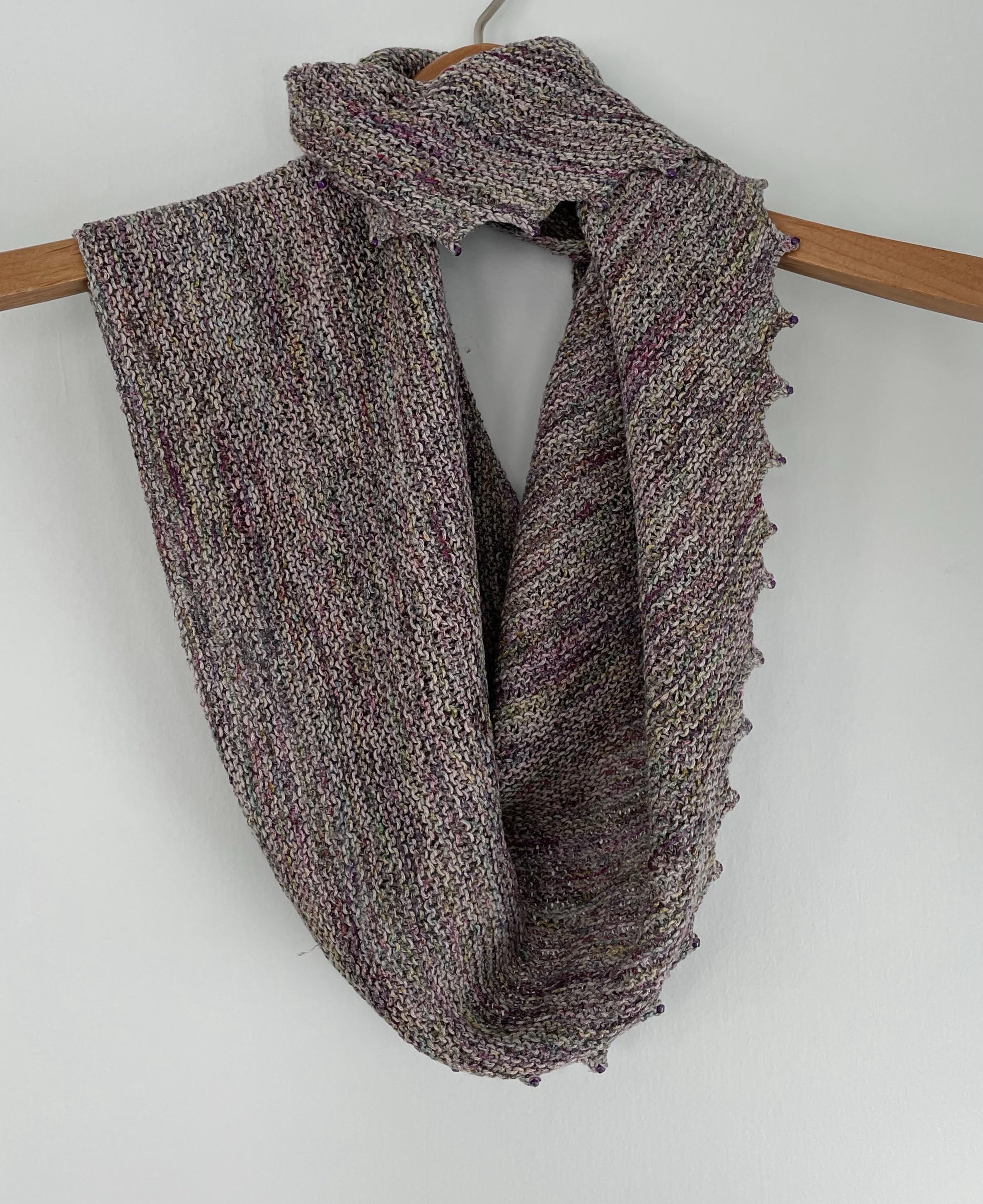
Just in time to tackle a spring mystery knit-along (MKAL) with Marie Greene and to learn brioche with members of the Zumbro River Fiber Artists Guild’s Knitting Group, my WIP (Work-in-Progress) count has been reduced by three on this Finished Object Friday (FOF).  The deep heather blue scarf and muted lavender shawelette have yet to find homes but the vibrant yellow sweater will be gifted to a great niece or nephew arriving in May.  (Shhhh!  It is still a secret for the mom and dad-to-be.)

The small Gansey sweater, designed by Marie Greene, incorporates a cabled yoke for bit of decoration on the practical pullover knit using an easy to care for cotton, nylon, rayon, and silk blend.  Knit in a size 2-4, my new great-great niece or nephew will have something to grow into and, hopefully, will have many days of warm wear.

The blue wool scarf is another of Marie’s designs.  Reminiscent of barrel staves and trellised grape plants, the French Oak pattern reveals off-center cables traveling the length of the scarf like grape vines.  And, I am starting out a new year with another Hitchhiker, perfect for a special person knit in 100% rustic silk with Czech glass beads decorating each tip.  This is Hitchhiker #23 in my collection of hand-knit gifts.

Other items of interest

Saharastaub – Sahara Dust

As Saharan dust swirls in the atmosphere, European skies look like a special effects canopy created for a sci-fi movie. Gone are the normal pristine vistas.  The Swiss Center of North America recently shared this surreal photo of the Stádtkirche steeples and the Facebook post – “Saharastaub over Glarus this morning.  Last seen in early February of last year, a rare weather occurrence has carried dust from the Sahara desert across parts of Europe.” I’ve added a comparison shot on a clear day and what I remember from my visits to this Swiss town.

Photo credit (top) Swiss Center of North America

Photo credit (bottom): mrsphoto.net

Other items of interest

Food Relief in a War Zone

Fans of late night TV may recognize celebrity chef José Andrés for his witty repartee and tasty dishes but millions more know him because the World Central Kitchen (WCK) helped make sure they did not go hungry.  In 2010 after devastating earthquakes in Haiti, Chef Andrés was on the ground collaborating with local chefs to feed the hungry.  His work on that small island nation inspired the creation of his not-for-profit, non-governmental organization based on the belief:  Food is a universal human right.  

With years of experience and regardless of the conditions – hurricane in Puerto Rico, volcanic eruption in Tonga or the unprovoked war on the people of the Ukraine – the WCK moves with lighting speed to provide food, supplies, and logistical support to restaurant partners and volunteers on the front lines.

When you talk about food and water, people don’t want a solution one week from now, one month from now.  The solution has to be now.

Chef José Andrés

Within a day of the Russian invasion of Ukraine, the WCK had set up food distribution centers at border crossings and then began working directly in the war torn cities of Lviv and Kyiv.  The WCK news and Twitter feed share regular updates from Ukraine, Hungary, Poland, Slovakia, Romania and, of particular interest to me, Moldova.  A Tweet early this month caught my attention:

March 1 – In addition to meals being served in Poland, Ukraine, and Romania, WCK’s first meals in Moldova were provided to children and families at the Chișinău Airport. Local restaurants served fresh plates of baked chicken over pasta with a tomato salad and bread. Working with local groups, we will be expanding our reach in the country as needed. 

And more recent WCK #ChefsForUkraine Tweets:

March 11 – The Carpineni Orphanage in Moldova has suddenly become a shelter for Ukrainian families fleeing home. Housing 100 people, the shelter’s kitchen has relied on donations from the small, surrounding community. Now, WCK is supporting this team to provide fresh meals.

March 11 – To reach Mykolaiv, Ukraine—a city targeted by Russian forces—WCK partner Team Humanity left Moldova before dawn with fruit, baby food & more for families in the city. After distributing items, the team evacuated a group of women & children to safety in Moldova.

March 13 – Inside the Manej Sports Arena in Moldova, hundreds of cots now sit where athletes once practiced. The shelter is housing 600-800 mostly Roma refugees who have fled Ukraine. WCK partner Cafeneaua din Gratiesti is delivering daily meals for families here.

For more information on these herculean efforts or to join me in contributing to this worthy cause visit the World Central Kitchen website. Or follow regular Twitter updates @WCKitchen.

Knitting

Vivi Off the Needles

In keeping with the theme of #FOFriday – finished object Friday – I am showing off my finished Vivi from the January/February sweater knit-along (KAL) with Marie Greene.  Based on progress postings and Zoom meeting reports, hundreds of other knitters enjoyed this project as much as I did.

This January Workshop KAL is the fourth of Marie’s annual offerings – something new for the New Year.  Through her integrated curriculum, this community-based project allows knitters to explore the fiber arts from a faraway place; a virtual vacation each year.  During the two month KAL, Marie offered technical lessons on topics such as shoulder construction, provided historical background on Danish “night” sweaters, and even shared scrumptious traditional pastry recipes – Yumm!

The KAL officially launched January 1 although Knit Campers (that’s me) were awarded an early pattern release by a few days.  On December 30, I casted on 292 stitches of worsted Berroco Ultra Wool in Chili Red to start this bottom-up construction and I worked my last bind off cuff stitch on February 26.  Squishy soft after blocking and plenty warm for chilly spring days.

Happy knitting!